Haḍḍa: A Heritage to Reconstruct
Haḍḍa: A Heritage to Reconstruct
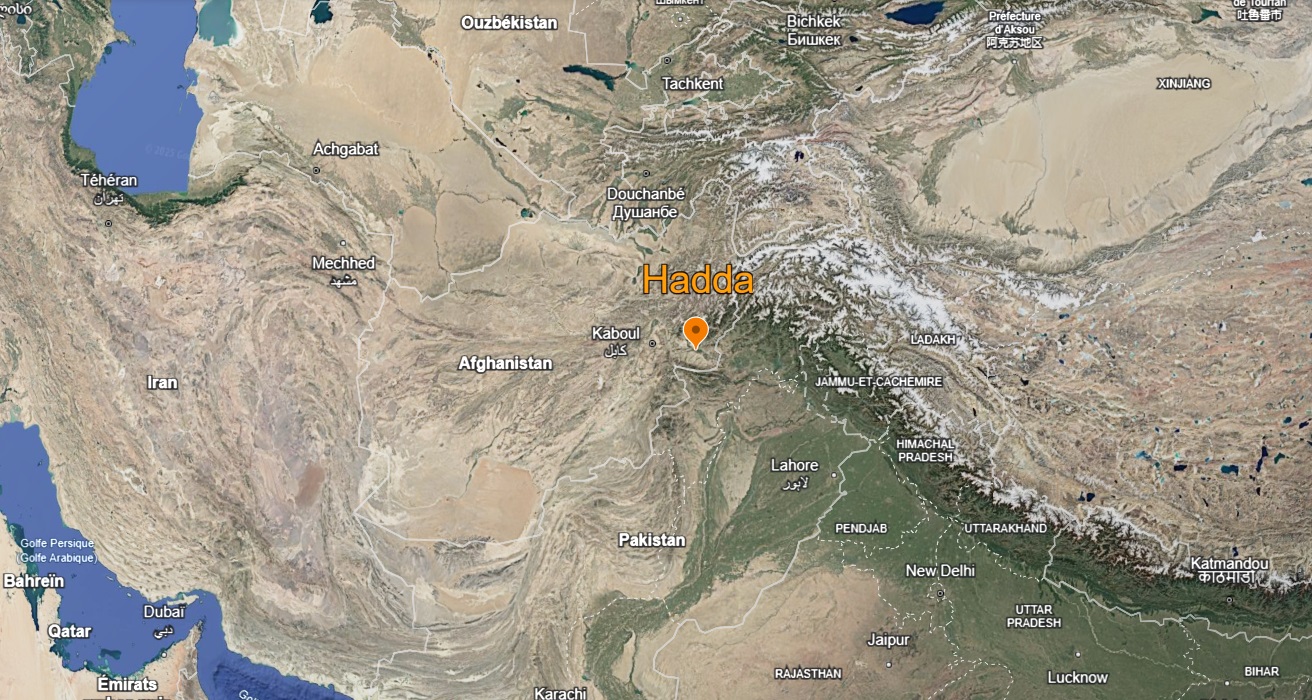
Haḍḍa, located twelve kilometres south of Jalālābād in eastern Afghanistan, was one of the greatest Buddhist monastic complexes of the ancient world. Between 1926 and 1976, archaeologists unearthed approximately 15,000 pieces, a remarkable ensemble of stucco, unbaked clay and schist sculptures testifying to a unique Graeco-Buddhist art.
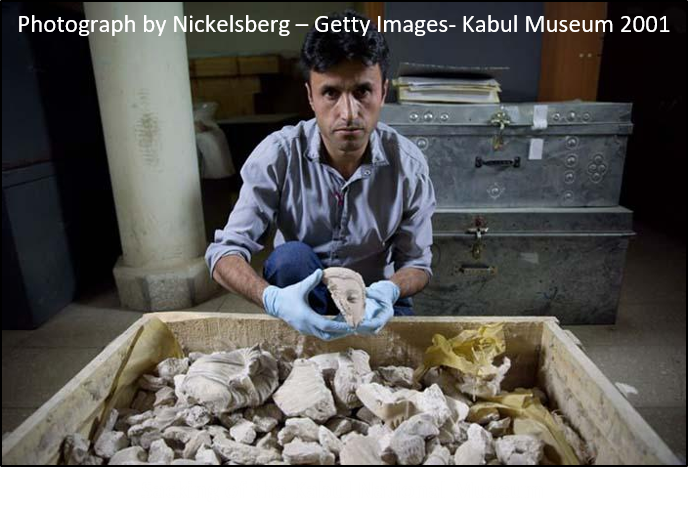
Today, the majority of these works have disappeared: destroyed by wars, looted or dispersed across collections worldwide. In March 2001, more than 7,600 fragments held at the Kabul Museum were systematically smashed by the Taliban regime.
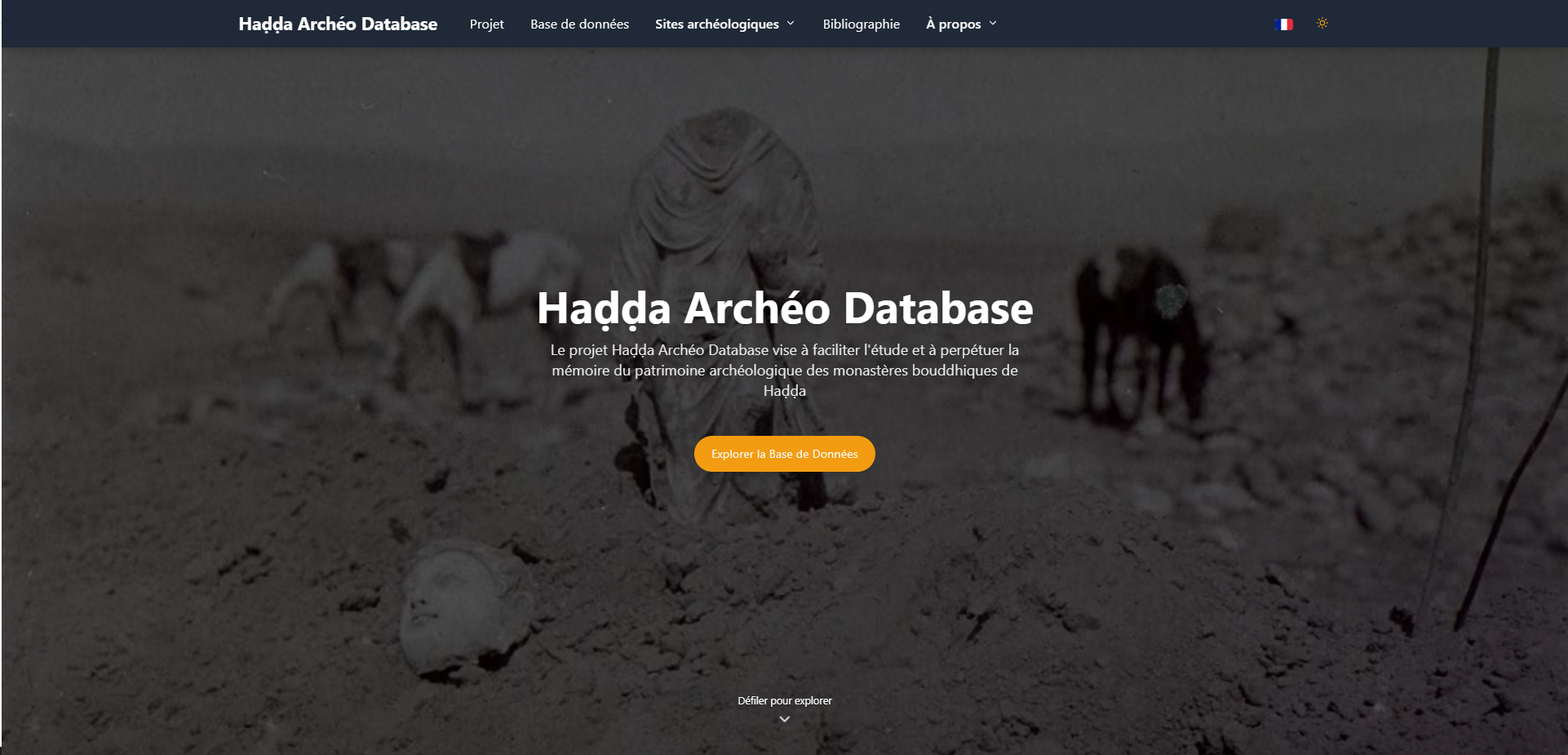
HADB (Hadda Archaeological Database) is an archaeological database designed to virtually reconstruct this fragmented collection. It brings together photographs, descriptions, locations and publications in a structured, freely accessible tool.
For the full history of the excavations, see our dedicated article.
What the Database Contains
HADB currently documents:
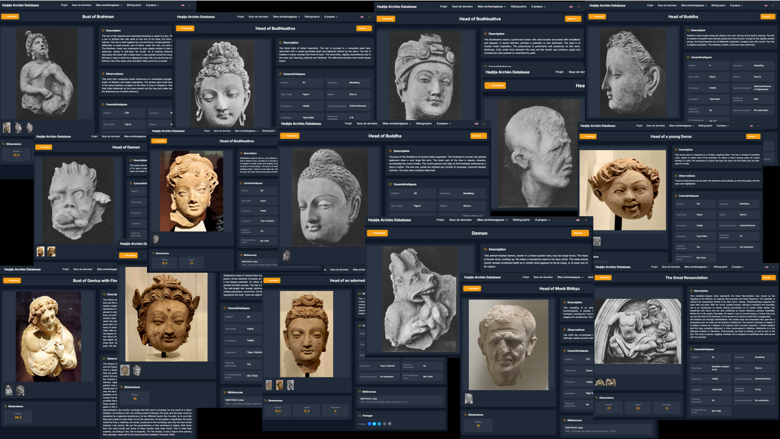
- ~500 objects with detailed records (material, technique, dating, dimensions)
- 12 archaeological sites in the Haḍḍa region
- ~1,500 illustrations in high resolution
- ~530 referenced scientific publications
- 4 languages: French, English, Persian and Chinese
Each object comes with an image gallery, bibliographic references and geolocation by site of origin. Advanced filters allow searching by site, material, technique, object type or current location.
The database is continuously evolving: new objects, illustrations and publications are regularly added as research progresses.
Why Haḍḍa Is Unique
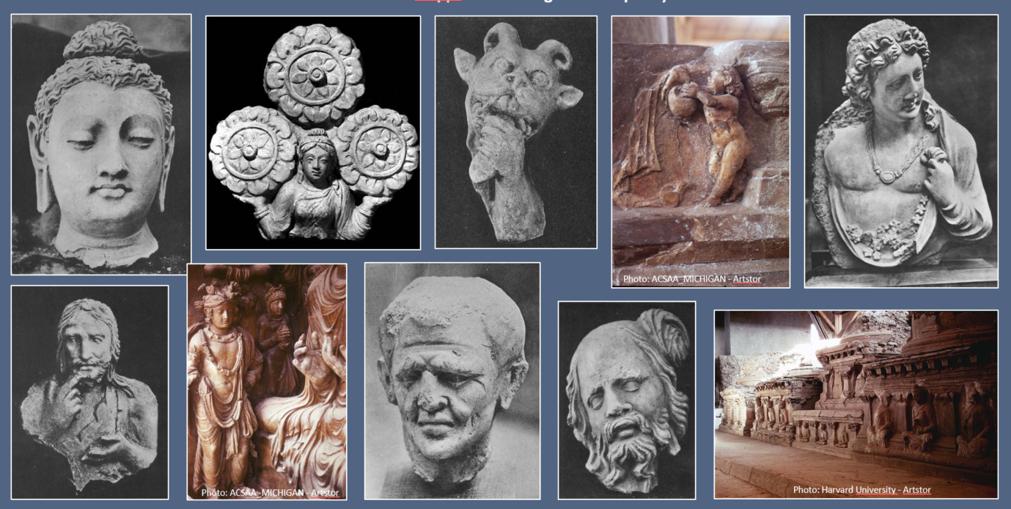
The art of Haḍḍa is distinguished by its extensive use of stucco and unbaked clay, fragile and perishable materials rarely preserved at other Gandhāran sites where stone predominates. This medium allowed sculptors to achieve a striking expressionism and realism, rendering emotions, movements and anatomical details with a freedom that stone does not permit.
Haḍḍa stands at a crossroads of influences: Indian, Iranian, Hellenistic and Central Asian. Its sculptures form a link between Hellenistic stone art of Gandhāra proper and the clay and stucco traditions that would develop at Bāmiyān, Fondukistān and along the Silk Road, as far as the caves of Kizil and Dunhuang.
To study Haḍḍa is to study the moment when classical Mediterranean forms met Asian traditions and produced an original plastic vocabulary.
From Excavations to Destruction
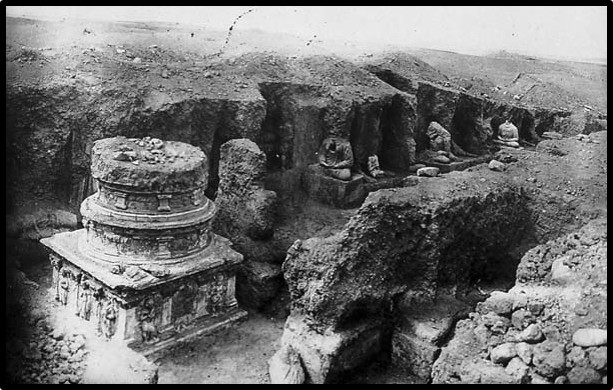
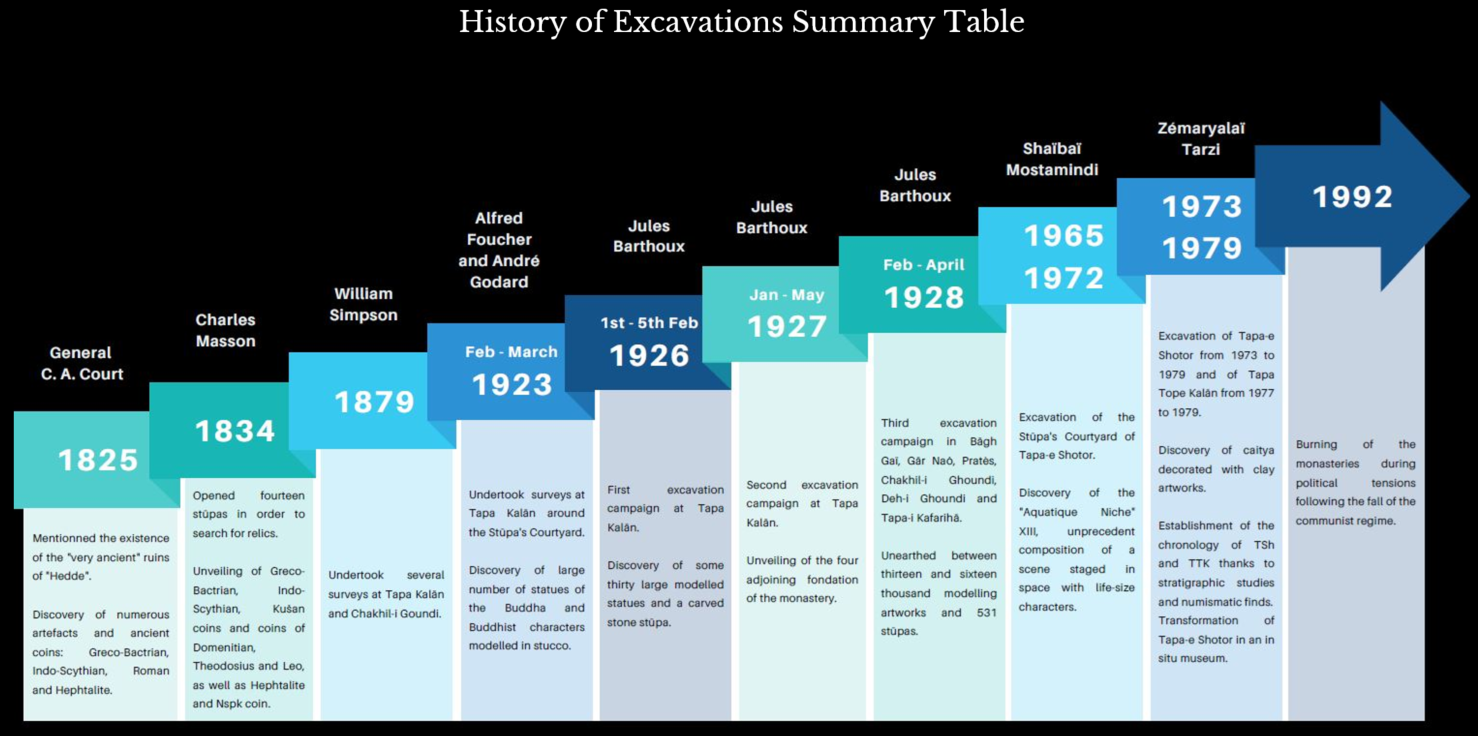
The major excavations at Haḍḍa were conducted in three phases: Jules Barthoux (1926–1928, DAFA) excavated eight monasteries and unearthed approximately 15,000 pieces; the Afghan Institute of Archaeology (1965–1973) opened the site of Tapa-e Shotor, where the famous "Niche with Nagas" was discovered; then Zémaryalaï Tarzi (1974–1976) revealed sculptural decoration in situ of exceptional quality.
The Soviet invasion of 1979 put an end to all archaeological activity. Two decades of wars, systematic looting and destruction followed. In 1992, Niche V2 at Tapa-e Shotor was destroyed and burned. In March 2001, the Taliban regime ordered the destruction of more than 7,600 fragments at the Kabul National Museum, some dating from the 1st to the 5th century CE.
Read the full account in our article on the history of the excavations.
The Urgency of Digital Memory
The surviving works from Haḍḍa are now scattered across numerous institutions (the Musée Guimet in Paris, the British Museum in London, the Metropolitan Museum of Art in New York, the Peshawar Museum) as well as in private collections that are often inaccessible. No comprehensive inventory existed before HADB.
Without systematic digital documentation, a major part of this heritage risks falling into oblivion. Paper publications age, archival photographs deteriorate, and knowledge remains confined to specialists.
Digital technology offers what paper cannot: permanence, the ability to cross-reference data (a single object can be linked to its site, its illustrations, its publications) and accessibility without geographical restriction.
HADB serves this purpose: to reconstruct, document and disseminate, while the sources are still available.
Our Mission
HADB pursues four objectives:
- Catalogue: bring together in a structured database all available data on Haḍḍa's objects (descriptions, measurements, materials, techniques, conservation status, current locations).
- Make accessible: provide free and open access to this heritage, for specialist researchers as well as students and the general public, wherever they are in the world.
- Restore: give the Afghan people direct access to their own cultural heritage, too long confined to specialised publications in Western languages.
- Enable research: facilitate comparative studies, identification of artistic influences and cross-referencing between archaeological, iconographic and textual sources.
The entire site is available in French, English, Persian and Chinese, the four main languages of Gandhāran studies, in order to transcend the linguistic barriers that still limit access to knowledge.
Perspectives and Collaboration
The development of HADB unfolds in three phases:
- Phase 1 (completed): publication of the Barthoux collection, approximately 500 objects from the 1926–1928 excavations, documented from DAFA archives and reference publications.
- Phase 2 (in progress): integration of Tarzi's discoveries at Tapa-e Shotor and the Afghan Institute's excavations at Tapa Tope Kalān, from photographic archives and scientific publications.
- Phase 3 (forthcoming): survey of works dispersed across museums and private collections worldwide, in collaboration with partner institutions.
The artistic influence of Haḍḍa extends from Kapiça to Xinjiang via Bāmiyān. Consolidating its study enriches our understanding of Gandhāran art as a whole and its diffusion across Asia.
HADB is a project open to collaboration. Researchers, museum curators, academic institutions and archive holders: if you have data, photographs or expertise on Haḍḍa's works, get in touch. Every contribution helps reconstruct a puzzle with many pieces still missing.