Bust of Pançika
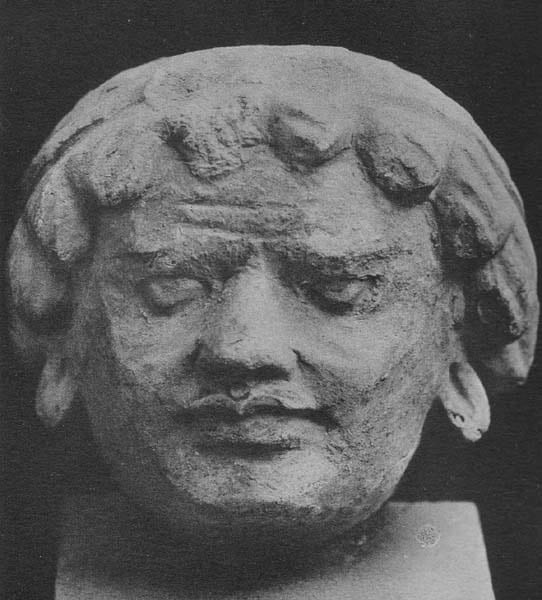
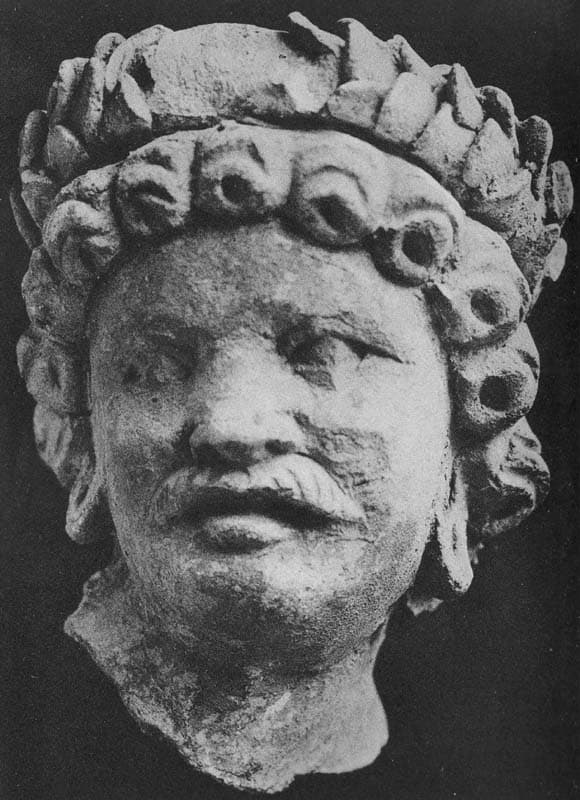
Photo by Jules Barthoux ©GrandPalaisRmn - Guimet Museum
Description
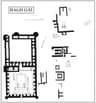
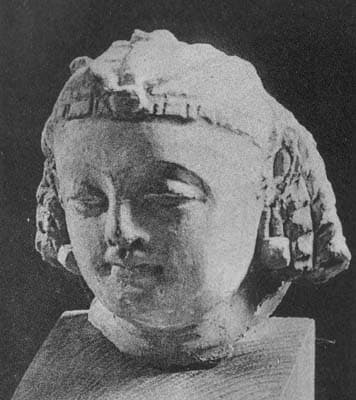
To the east of the main monastery of Bāgh Gaï stood an important vihāra, B56, which housed a stūpa. Part of its decoration was devoted to a molded representation of a mokṣa ceremony. Drawings and photographs made by Barthoux make it possible to reconstruct part of its décor. This figure belonged to the decoration of niche i, located on the eastern side of the inner enclosure.
The face is of the Central Asian style. Wearing a headband with a broken central element, his hair falls in curls in the form of stylised spirals, flattened and framing the face. His traits are individualised: the forehead is marked with wrinkles, the small eyes are sunken under frowning eyebrows, the cheekbones are drooping, the nose is broad and the jaw strong and square. He seems both annoyed and smiling. His earlobes are largely deformed. Traces of polychromy are visible: the lips were painted red, the eyebrows and moustache drawn in black. In the Guimet Museum, the figure is restored on its bust, in an Atlas-like position. He is then revealed with the attributes of Pançika, the god of wealth: seated cross-legged, he holds a two-handled cup in one hand and a wineskin in the other.
1928 / today
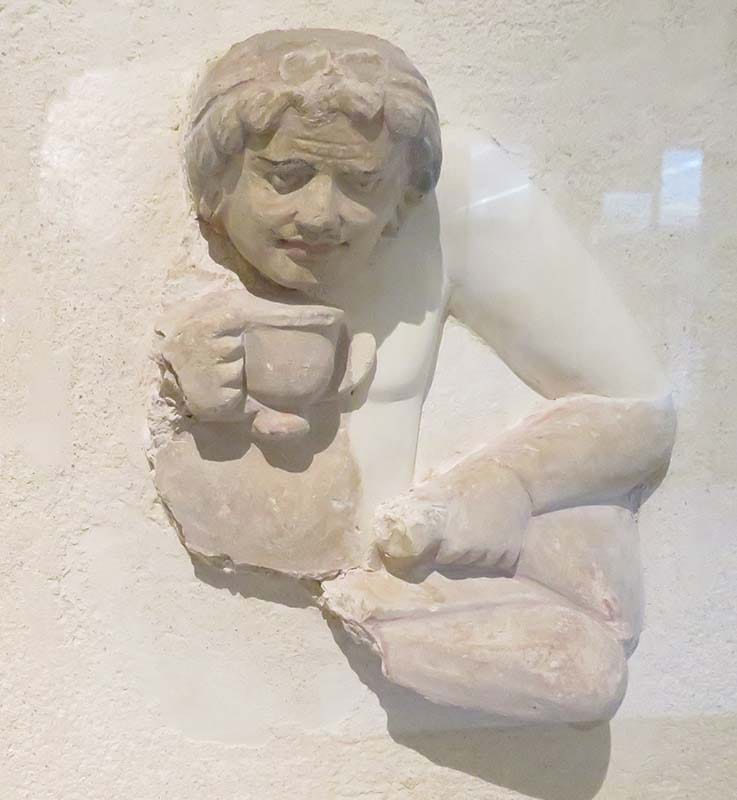
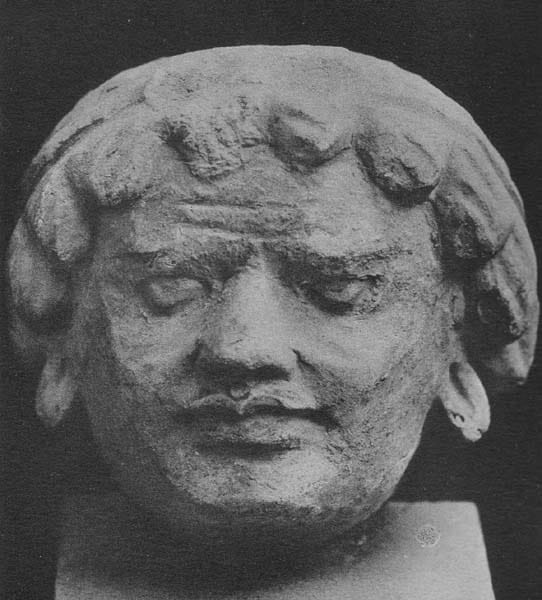
Excavation photograph by Jules Barthoux (1928) juxtaposed with a recent photograph by Alexandra Vanleene.
Characteristics
Dimensions
H: 7.5cm
Technique
Modelling
Material
Stucco
Object type
Figure
Site
Bāgh Gaï - 56
Conservation location
Guimet Museum
Museum inventory No.
MG 17248
Traces of polychromy
Yes
Restoration
In the laboratory
Dimensions
H: 7.5cm
Technique
Modelling
Material
Stucco
Object type
Figure
Site
Bāgh Gaï - 56
Conservation location
Guimet Museum
Museum inventory No.
MG 17248
Traces of polychromy
Yes
Restoration
In the laboratory
Bibliographic Reference
Other objects from Bāgh Gaï
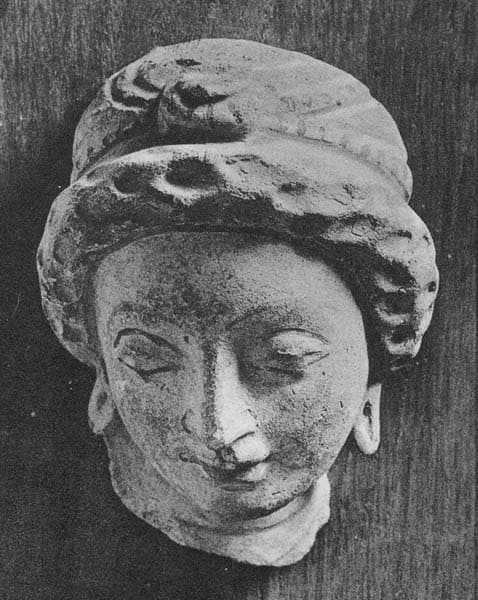
Learn to recognise this figure
Part of the themed routes