The Haḍḍa School of Art: Iconographic Markers
The genius
15 works · + 2 debated
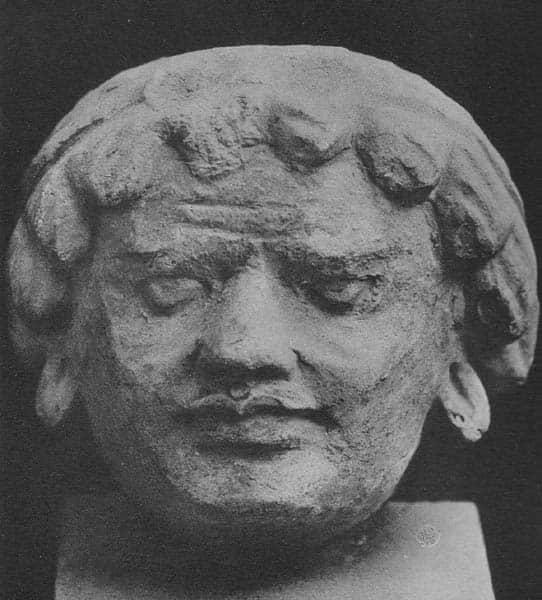
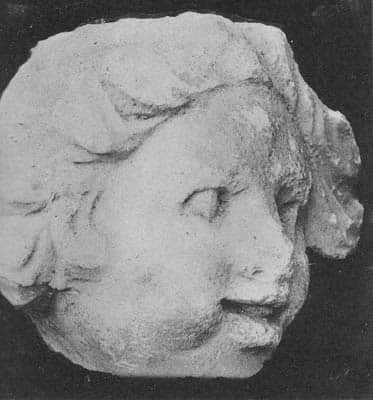
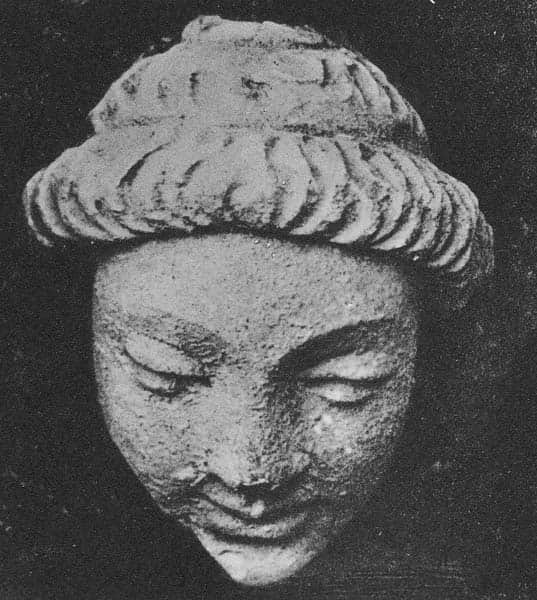
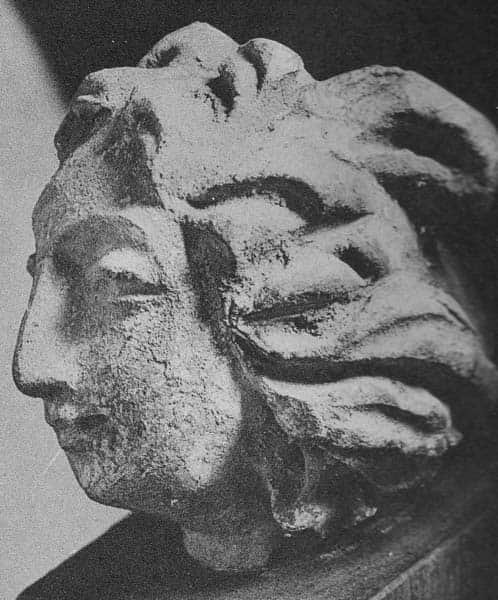
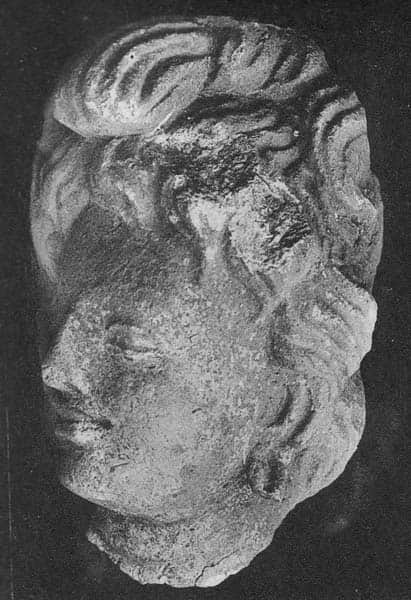
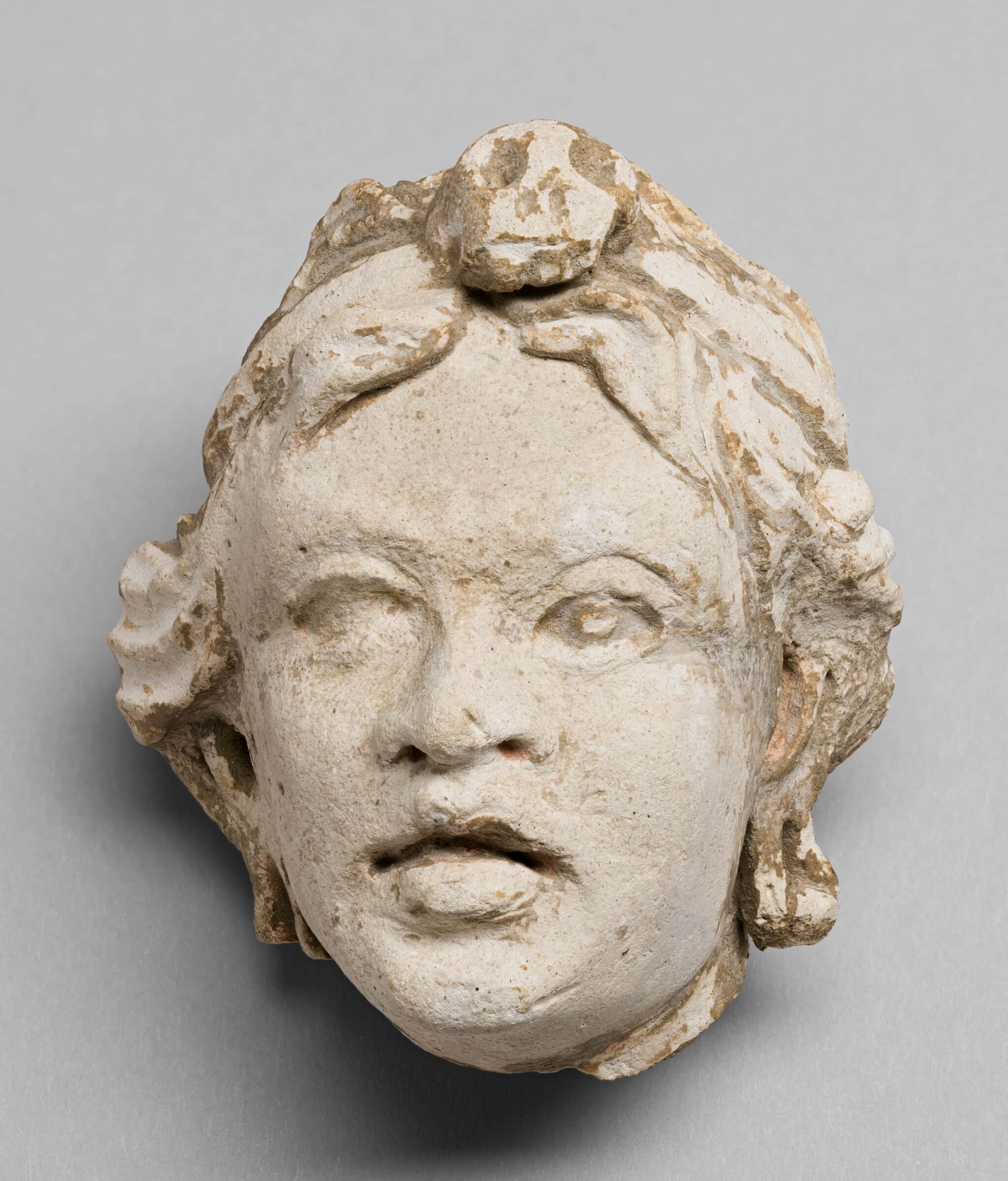
A youthful figure with fine, almost feminine features: twisted curls, “a kind of short ringlets”, framing the face, a simple headband, a knotted turban or a crown inlaid with gems. The most famous, the Genius with Flowers studied by Alfred Foucher as early as 1930, was found in a chapel next to stūpa 140 at Tapa Kalān. Alongside them, the database gives room to the goddess Hāritī, her forehead girt with a headband, wearing a square walled enclosure with four corner towers symbolising the City, and to Pāñcika, the god of riches, restored as an atlas holding a cup and a wineskin.
The distinguishing marks
Each mark points to real records that describe it.
Twisted curls, “a kind of short ringlets”, framing the face
Simple headband, knotted turban or gem-set crown
Youthful, idealised face with almost feminine features
Flowers held in hand, attribute of the Genius with Flowers
See in the database: HADB 151
The attributes of Hāritī and Pāñcika: the City worn as headgear, the cup and the wineskin
Three works to learn to look
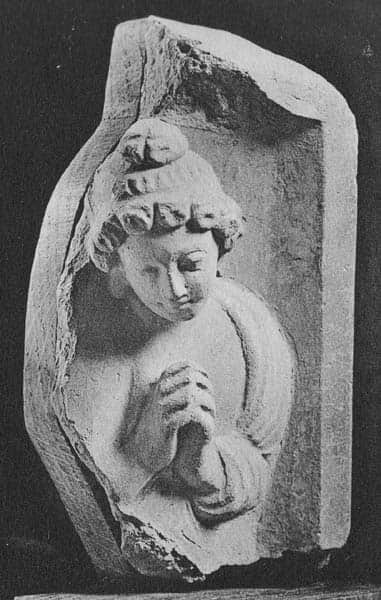
The Genius with Flowers is one of the most famous pieces among those found at Haḍḍa and was the subject of an article by Alfred Foucher (Foucher, 1930). It was discovered in a nearby chapel of stūpa 140. At the back of a caitya, on a platform, stood a walking Buddha (estimated to be about 220 cm high) surrounded by two other statues of 90 cm to 100 cm, placed in each corner. On the wall placed symmetrically to the flower genie was another bust, an orant in añjalimudrā which collapsed when it was being cast.
Ancient texts report that some gods only manifested themselves halfway up the body, which the artists probably wished to illustrate here. The genius drew with his right hand (now lost) a whole supply of flowers contained in the sinus of his uttarīya, held by his other hand, in order to rain petals on the Buddha. Shirtless, he wears a necklace made of a large chain with an oval medallion set in it. Although this work is of exceptional quality, it does not appear to be the work of a particular, identifiable genius. In this setting, he belongs to the cohort of devout "helpers" whose backgrounds Buddhist artists cover with paintings or bas-reliefs. He is a genius among many others, a devaputra(son of god), a divine being of some kind. He has no lakṣana, sign or attribute that could classify him among the great gods. His role as a flower-throwing orant is always lent to ordinary geniuses.
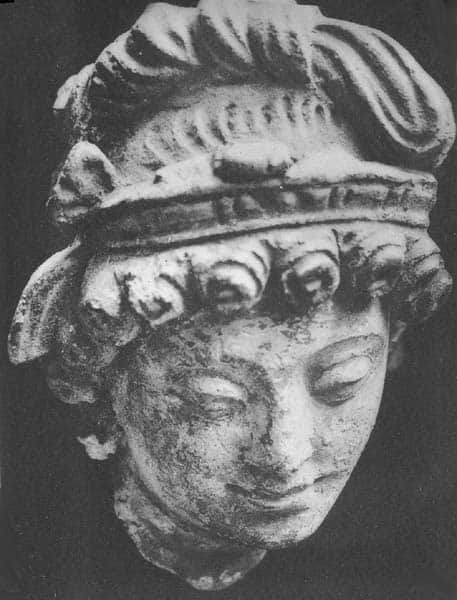
The fine and delicate features of this head add to its feminine character. The face, of Indian inspiration, is surrounded by twisted curls, a kind of short English curls. The genius wears a crown, which seems to be encrusted with stones and supports a central pearl. The upper part of the hair is wrapped in a turban arranged in several knots and falling in a wider part on the left, in the manner of a "novice's braid". The earlobes are deformed. In the Guimet Museum, this head is rendered on a bust. A wide, torque-like necklace adorns the naked torso, clad in a beautiful uttarāsaṅga. With his left hand, he holds a flap of it to create a kind of pouch with flowers. The drapery is very finely executed.
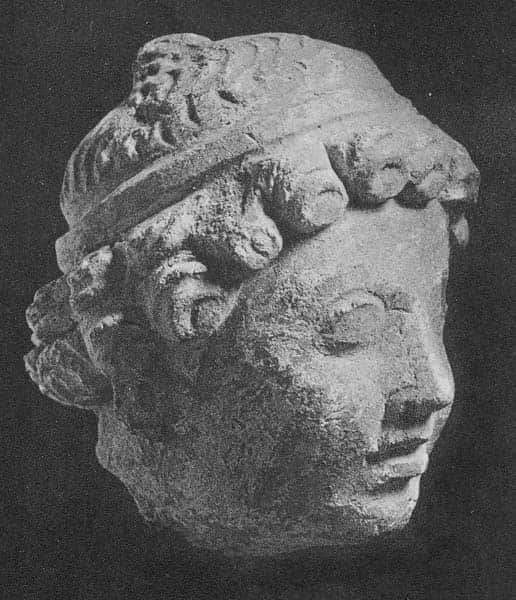
The face of this genius is idealised, the open eyes and round cheeks give the figure a childlike appearance. The hair is held in place by a simple headband. The hair is treated in twisted curls, a kind of short English curls, which fall down and frame the face.
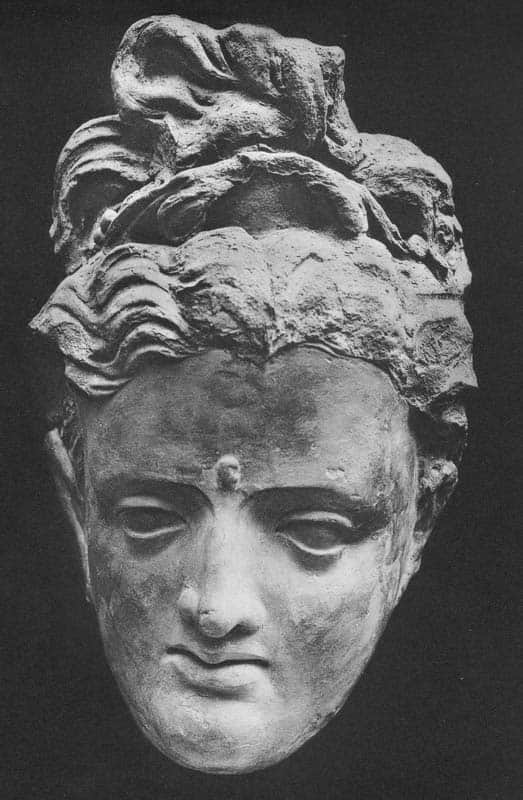
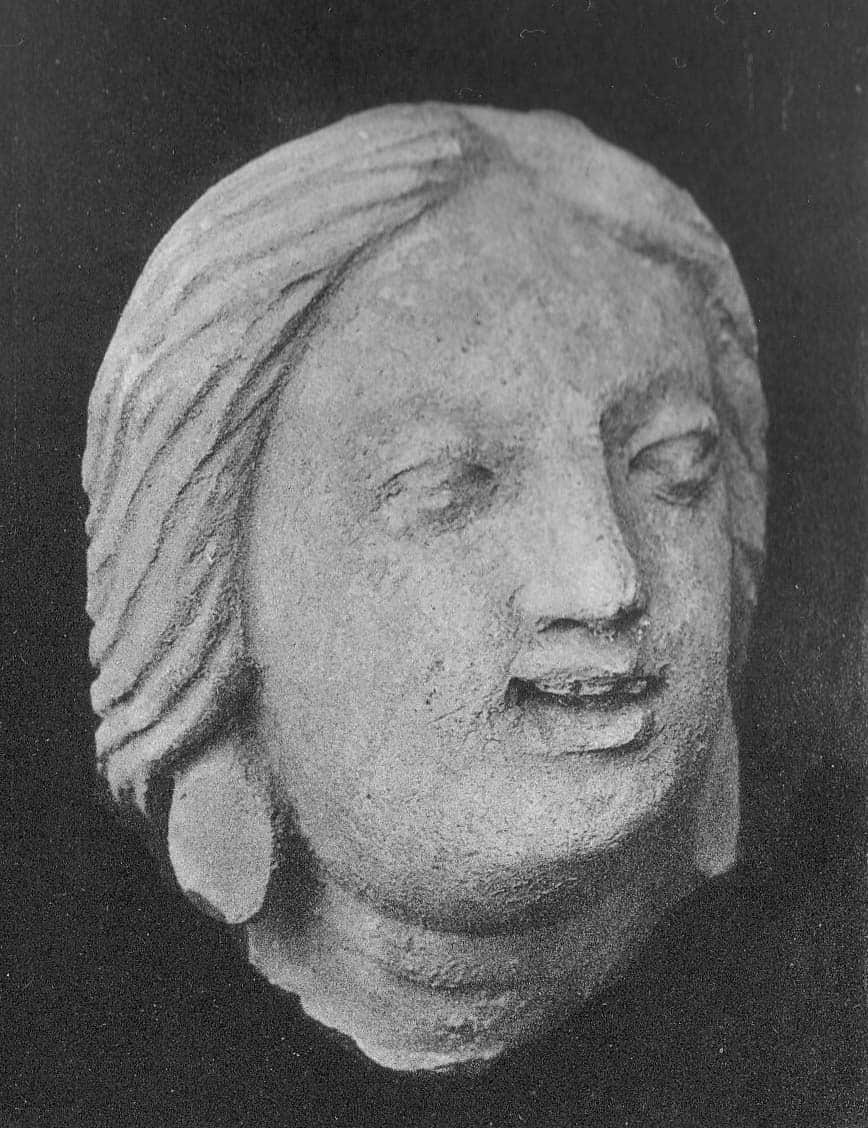
Not to be confused with
All identified works
Tapa Kalān8 works
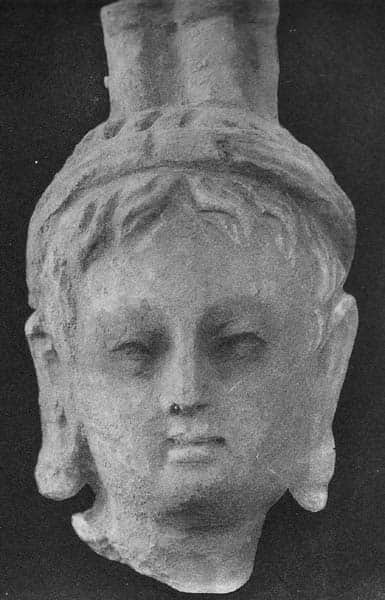
HADB 135
Head of goddess Hāritī topped by the City
Stucco · Tapa Kalān
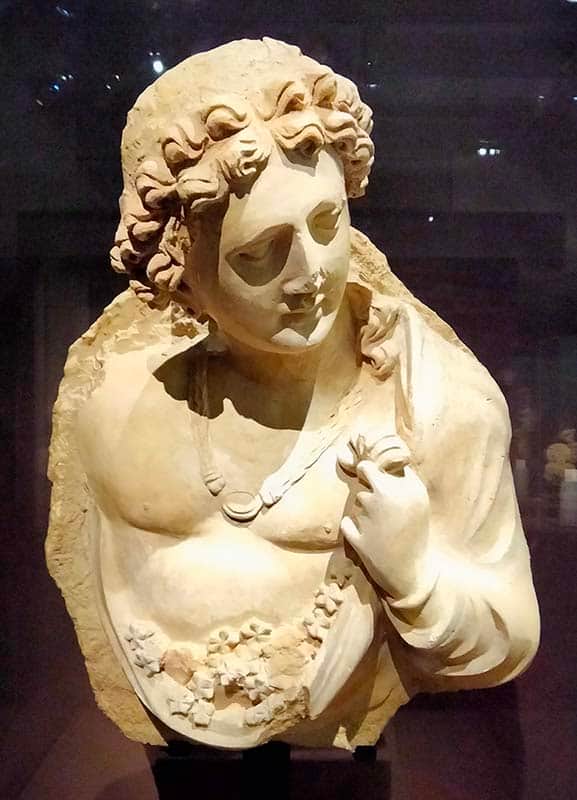
HADB 151
Bust of Genius with Flowers
Stucco · Tapa Kalān
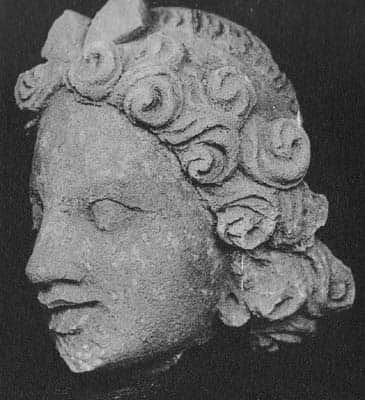
HADB 158
Head of Genius
Stucco · Tapa Kalān
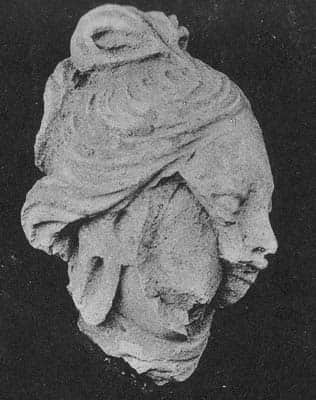
HADB 159
Head of Genius
Stucco · Tapa Kalān
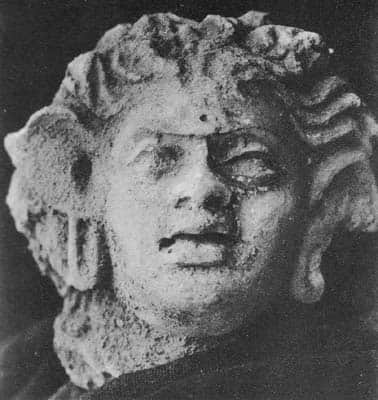
HADB 166
Head of Genius
Stucco · Tapa Kalān
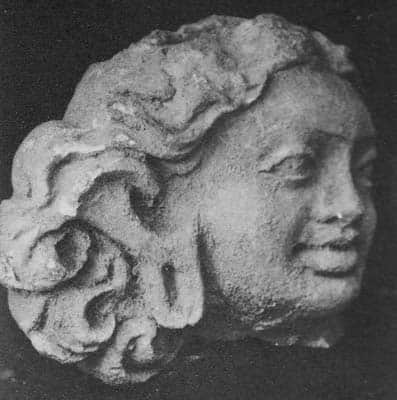
HADB 167
Head of Genius
Stucco · Tapa Kalān
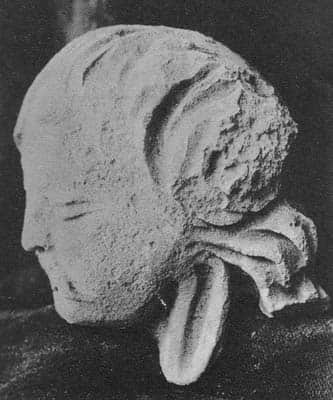
HADB 168
Head of Genius
Stucco · Tapa Kalān
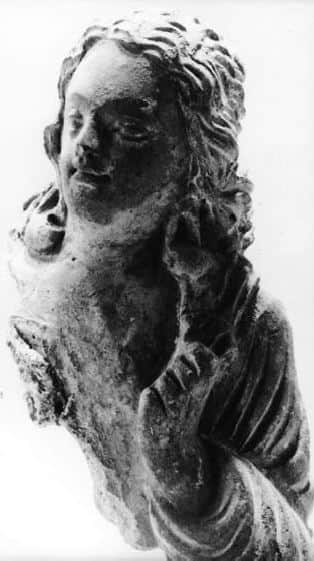
HADB 472
Genius with flowers
Stucco · Tapa Kalān
Bāgh Gaï3 works
Tapa-i Kafarihā3 works
Debated identifications
The database itself leaves these records open: their titles hesitate between several figures. They are part of the lesson: identifying means weighing clues.
Related figures in the database
- Gandharva, Garuḍa, Nāga and other celestial beings of the database Search “Gandharva” in the database
This figure in the tours
Guided tours of the database include several works of this figure.
In the identification key
The observation paths that lead to this figure in the questionnaire. Each path can be replayed.