Tapa-i Kafarihā
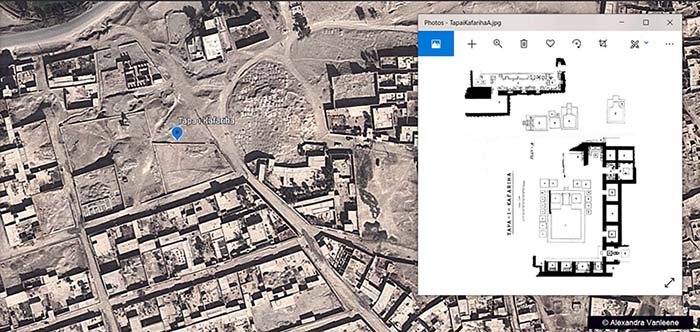
Plan of Tapa-i Kafarihā drawn by J. Barthoux (Barthoux, 1927)
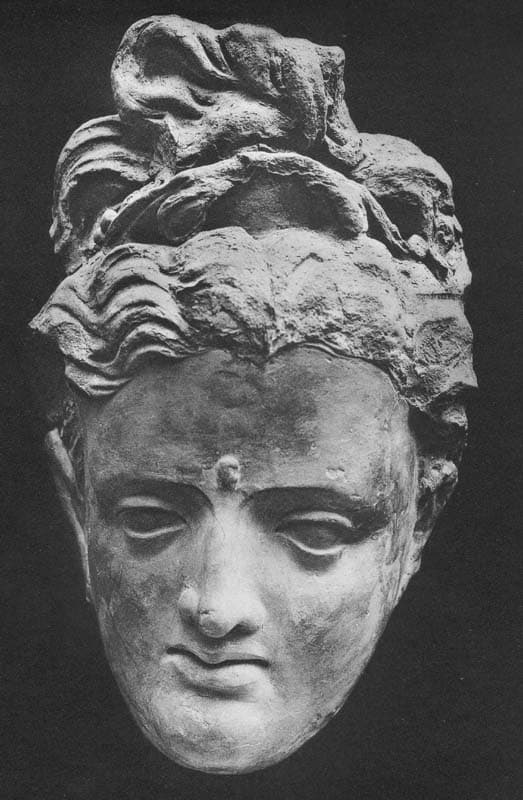
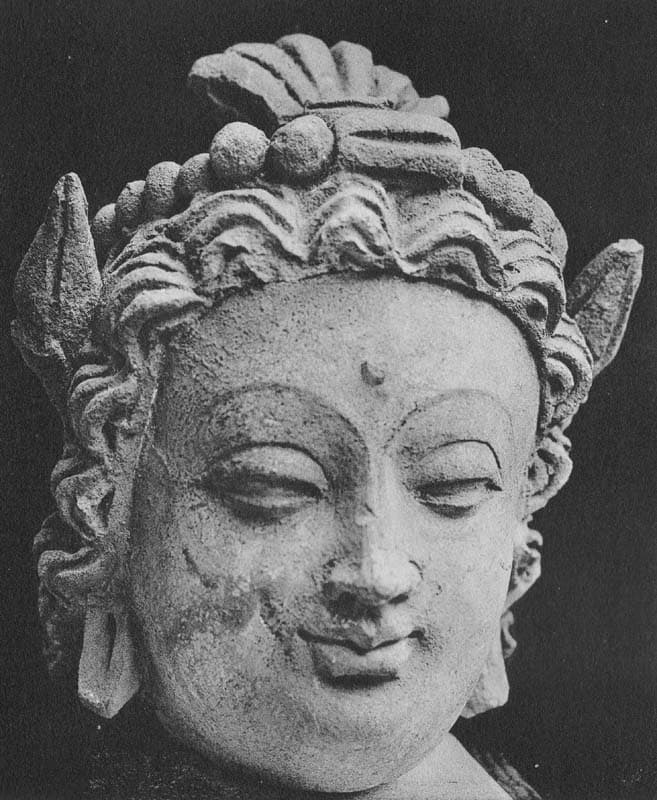
To the south, a first foundation contained a medium-sized stūpa, TK140, in the lap of which several schist reliefs were discovered, representing for example the Return of Queen Māyā to Kapilavastu, the Offering of the Four Bowls and the Relic Bearers. TK140 was surrounded by chambers and chapels decorated with modelled works. It was here notably that the famous Genius with flowers, now preserved at the Musée Guimet, was discovered. The second complex housed solely the Great Stūpa TK 141. The floor, covered with stucco, was compacted with clay. Barthoux reports having found two glass-paste tiles that were probably intended to cover it.
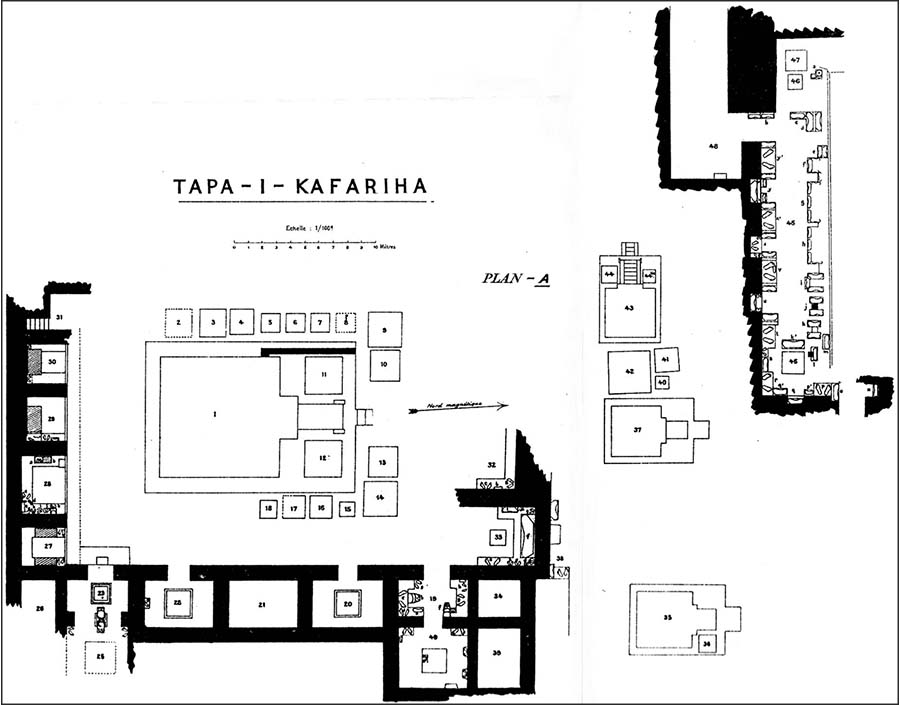
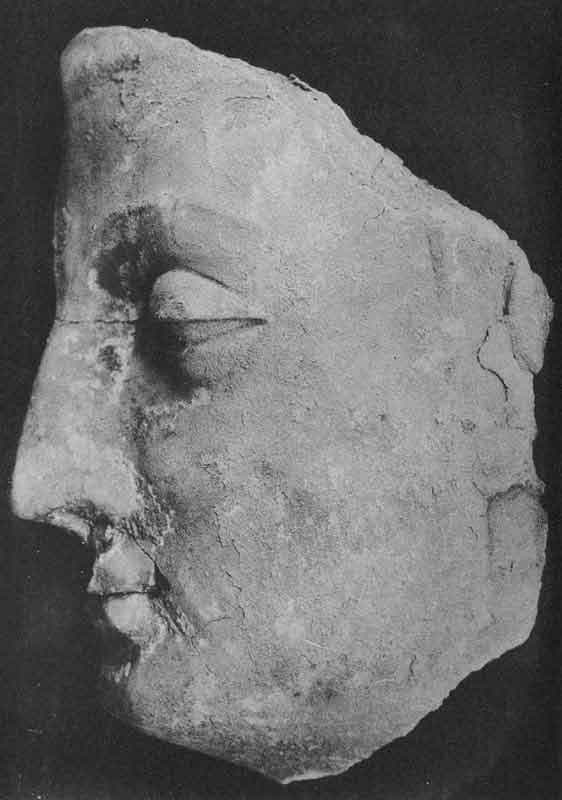
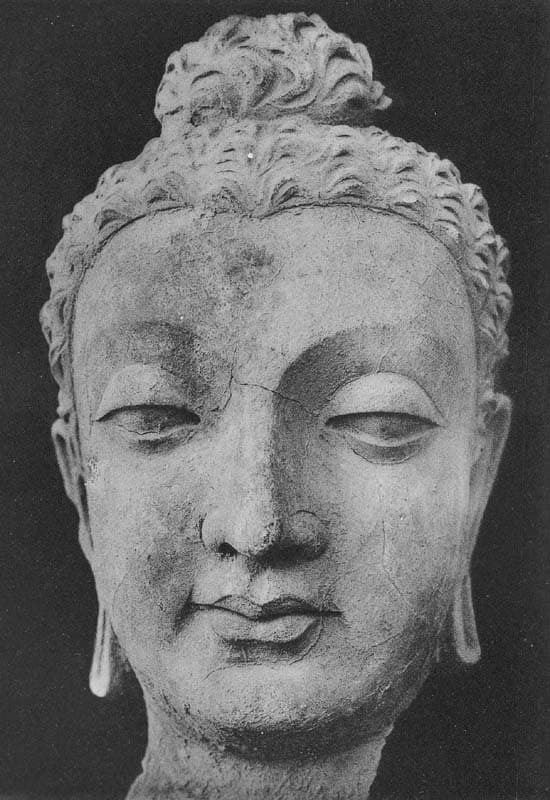
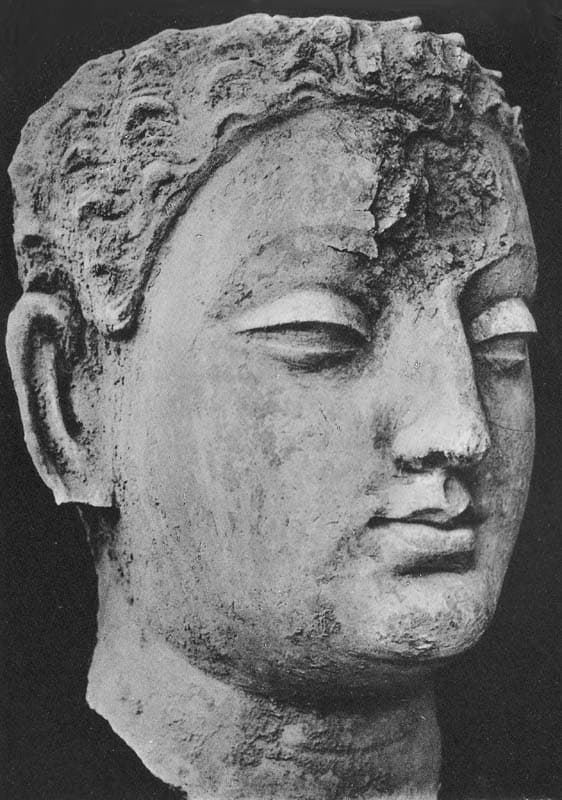
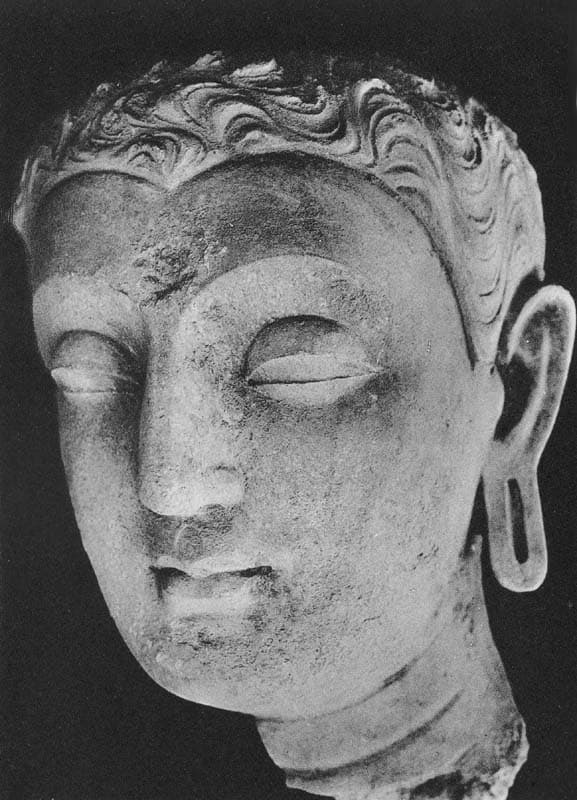
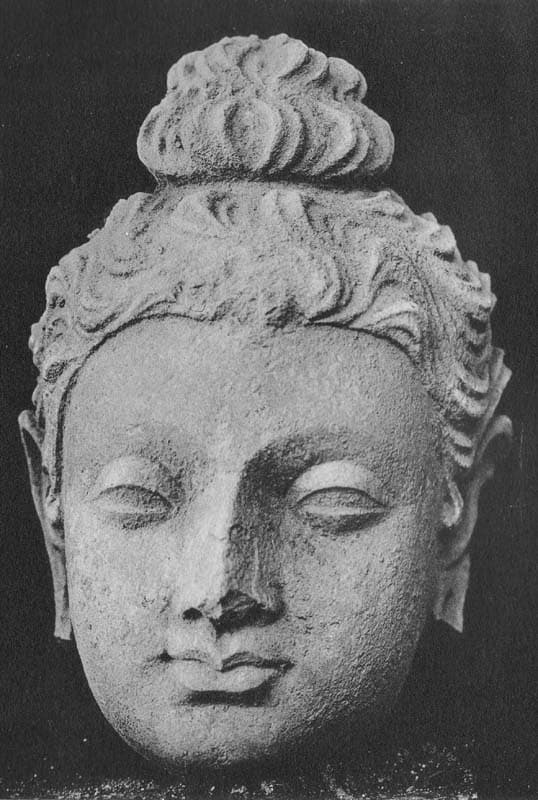
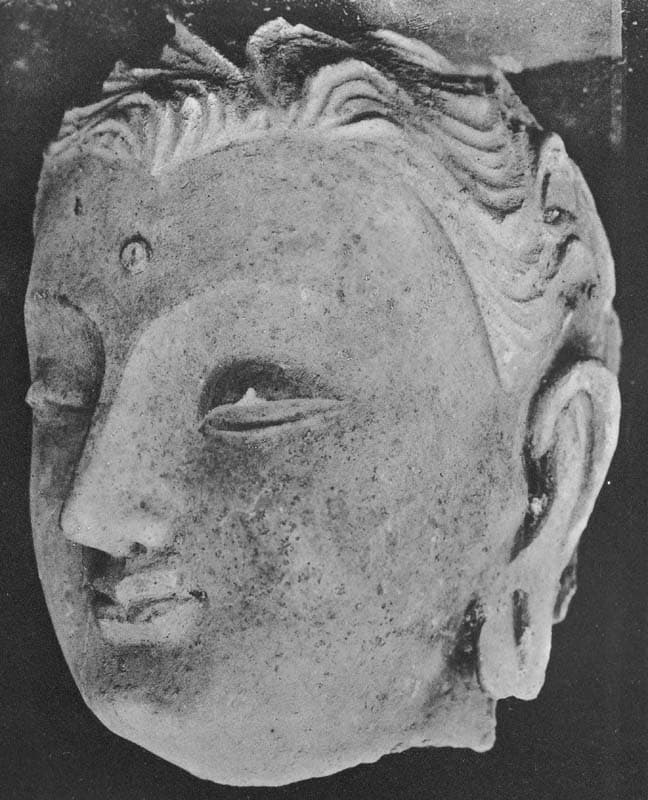
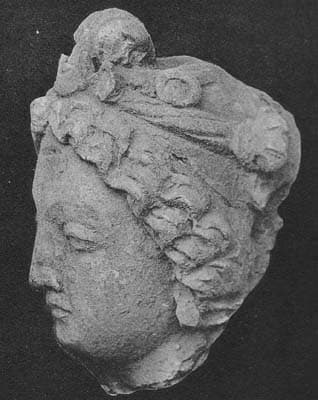
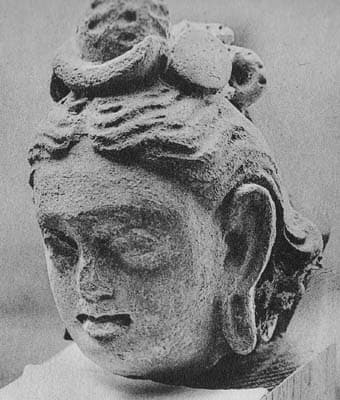
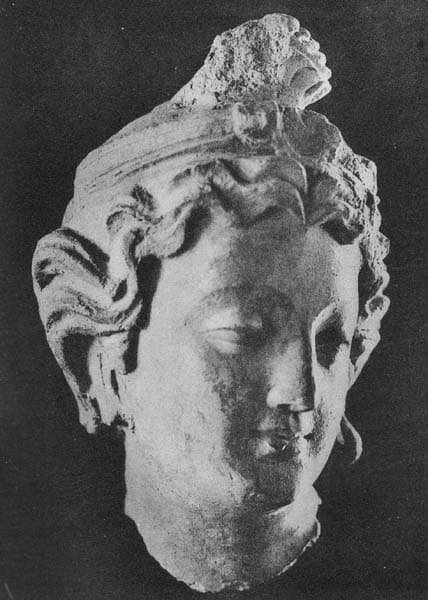
At the centre of the most important enclosure stood the Great Stūpa K1, whose base and body were decorated with series of modelled Buddha figures. It was erected on a terrace that bore, on either side of the staircase, secondary stūpa. Around the main Stūpa, on three sides, stood other aligned stūpa, except on the south side. To the east and south, spacious chapels and chambers bordered the courtyard. To the west and north-west, the enclosure had disappeared. In the south-west corner, a staircase led to the top of the enclosure. The row of chapels had revealed heads that Barthoux considered more carefully executed than those found in the Stūpa Court. Half of these chambers contained stūpa and benches supporting modelled statues. The same arrangement seemed to continue along the northern wall, but it was demolished down to ground level from the second chamber onward. It is possible that the entrance was located at this level, facing the staircases of the Great Stūpa.
Beyond this wall lay a narrow strip covered with medium-sized stūpa of the same type as the Great Stūpa, apparently juxtaposed without coordination. Of note are chapel K28, probably representing a scene of Mahāparinirvāṇa, stūpa K29, probably decorated with a scene of the Descent from Heaven by the Triple Ladder, stūpa K35 bearing a homage from King Nāga Kālikā, and stūpa 43 representing on its base the Seven Buddha of the Past.
To the north lay an enclosed gallery that yielded a large number of modelled works. The entrance was probably situated to the west. A wide L-shaped corridor, K48, opened to the north, at ground level, into gallery K45, onto a platform that supported large Buddha flanking chapels and accompanied by Buddha in meditation. The iconography of this gallery was most likely devoted to the Buddhist Heavens. This arrangement continued along the eastern wall, where a door allowed communication with the zone to the south occupied by the stūpa. At the ends of this platform, which was as high as a step and stuccoed (like the floor), stood small stūpa. At the far end, to the north, stood a thick wall. The difficulty of excavating in this sector compelled Barthoux to abandon the work, which by his own admission was greatly regrettable, since buried more deeply one might have found complete modelled works.
A wide door to the north-east gave access to the second group of stūpa K’. At the centre of the enclosure stood a large stūpa oriented to the south, toward the Great Stūpa of enclosure K. It was likewise surrounded by smaller stūpa arranged on elongated platforms aligned with it. To the east and north, the enclosure was demolished. The monastery occupying the other corner opened onto the courtyard of this enclosure. It was not excavated. According to Barthoux, the eastern wing of the main enclosure had been destroyed by fire; baked by the heat, the walls, statues and stūpa had taken on a brick-red colour.
Perspective view of the plan of Tapa-i Kafarihā drawn by J. Barthoux (Barthoux, 1927) and the current state of the site according to Google Earth satellite imagery.
Explore the objects from this site in the database or on the interactive map.
Objects from this site
108 objects catalogued