Path 13 of 17 · 18 works
Indian Influences in the Art of Haḍḍa
Round smiling faces, almond-shaped eyes, earlobes stretched by heavy jewellery: the Indian component of the art of Haḍḍa can be read on many of the works. This trail brings together eighteen sculptures whose entries point it out explicitly, from Buddhas and Bodhisattvas 'of Indian type' to the famous Genius with Flowers, whose face alone is Greek. It closes with reliefs whose motifs refer directly to ancient India, from the chariot depicted at Sāñcī to the makaras of the toraṇas. A mirror to the 'Hellenistic Echo' trail, it reveals the other side of the synthesis achieved at Haḍḍa.
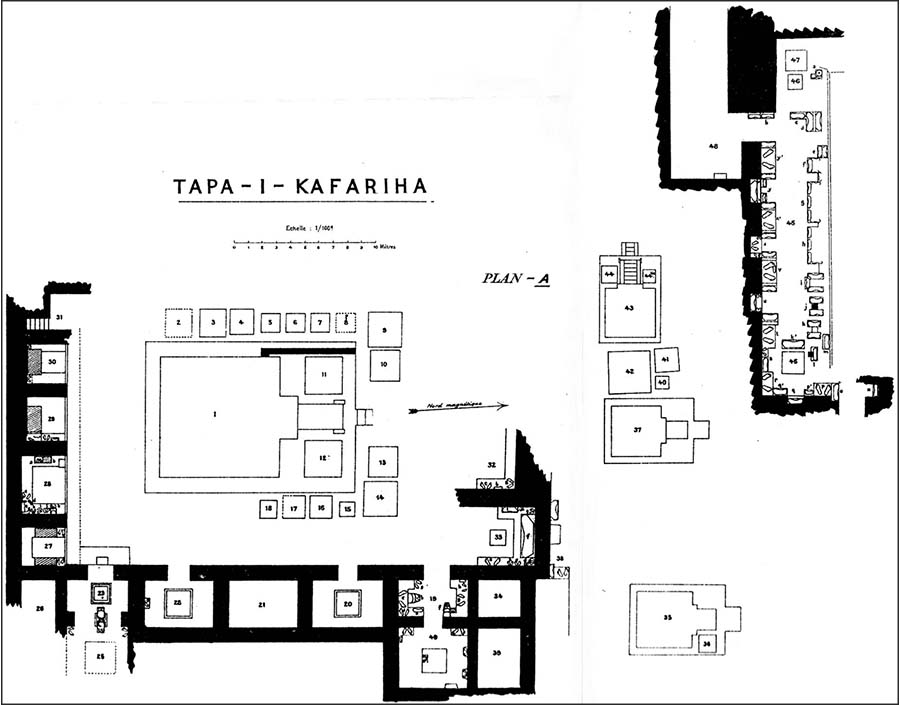
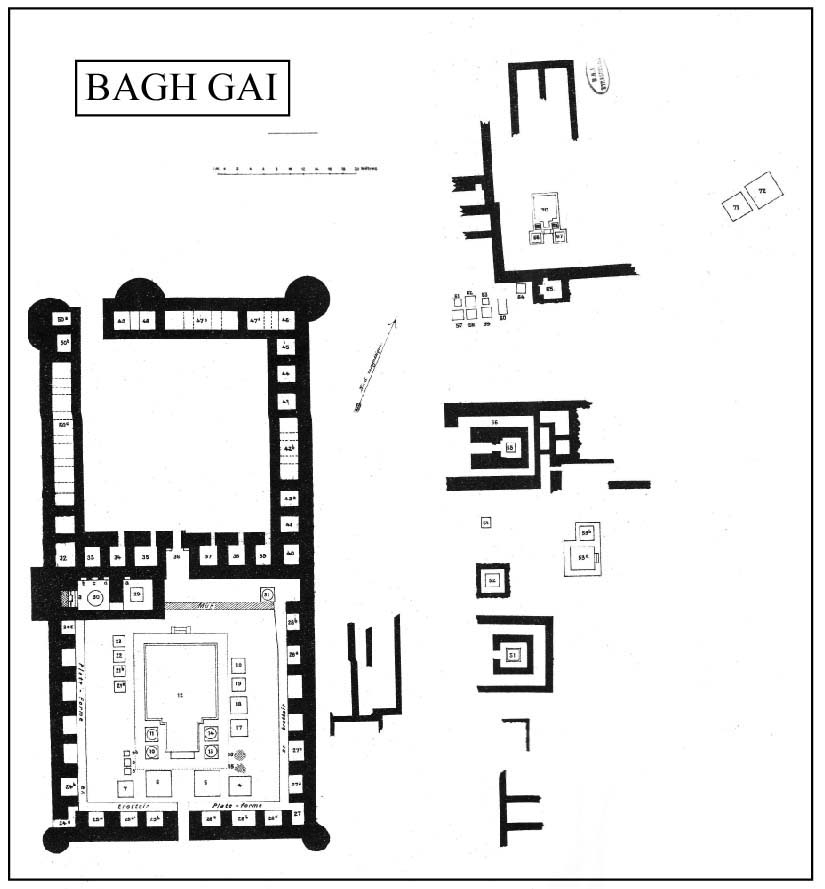
Locate these works on the excavation plan(3/18)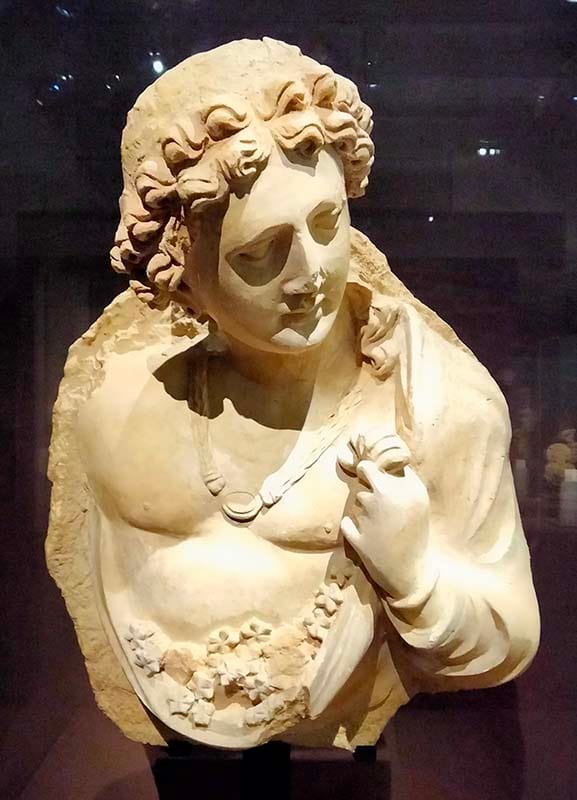
1 / 18
Bust of Genius with Flowers
Tapa Kalān · Stucco
Only the face is Greek: the shawl, the jasmine flowers, the jewellery and the deformed earlobes are Indian.
2 / 18
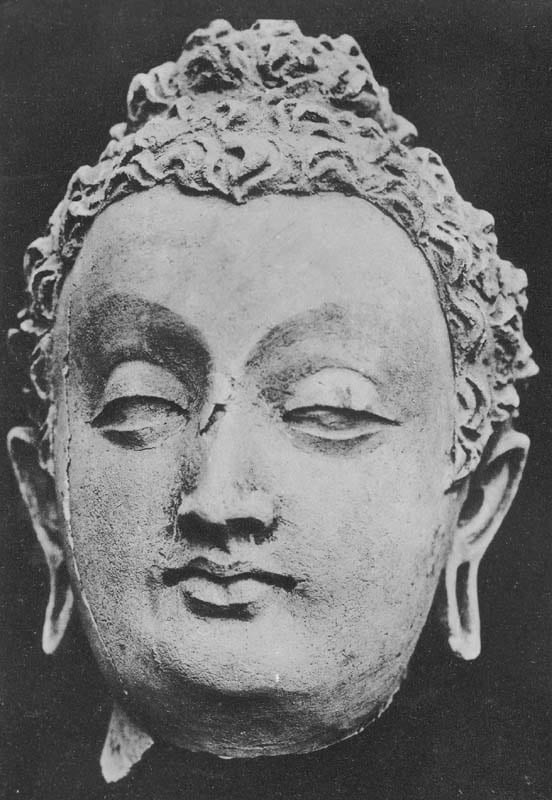
Head of Buddha
Tapa Kalān · Stucco
The features of this Buddha illustrate the synthesis of Classical and Indian influences.
3 / 18
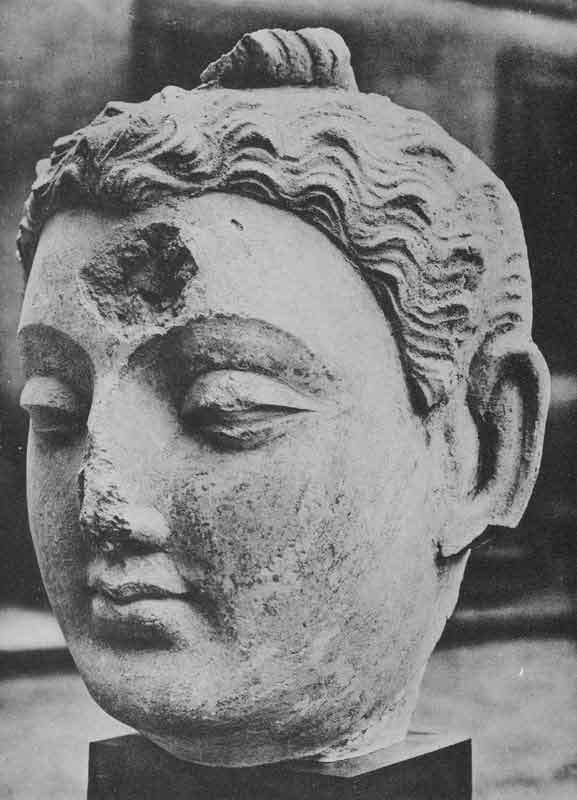
Head of Buddha
Tapa Kalān · Stucco
A profile of Hellenistic inspiration, while the roundness of the face belongs to the Indian tradition.
4 / 18
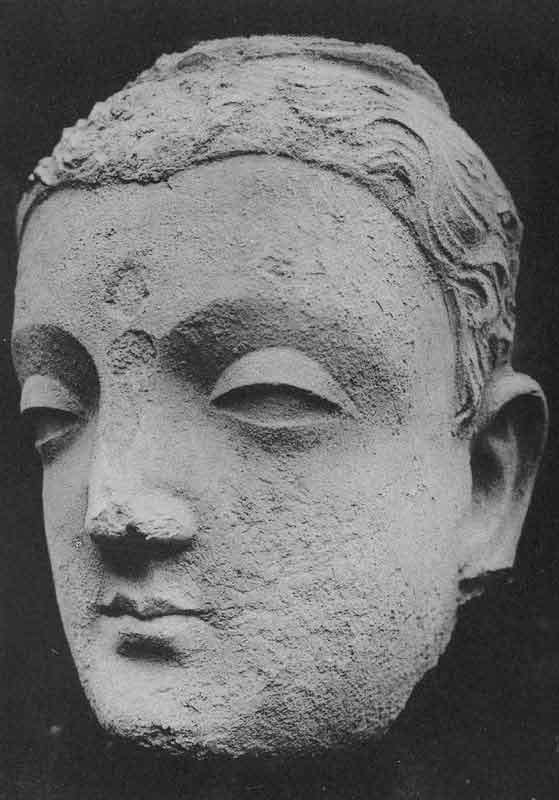
Head of Buddha
Tapa Kalān · Stucco
Hellenising eye and mouth, but the softly marked brow ridges and broad nose recall Indian artistic canons.
5 / 18
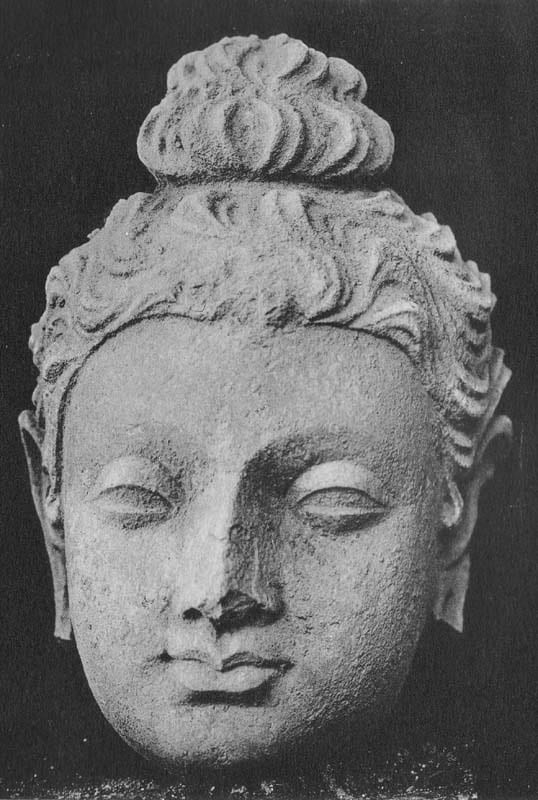
Head of Buddha
Tapa-i Kafarihā · Stucco
A Buddha with a smiling face, full of serenity, in the Indian style.
FindspotTapa-i Kafarihā 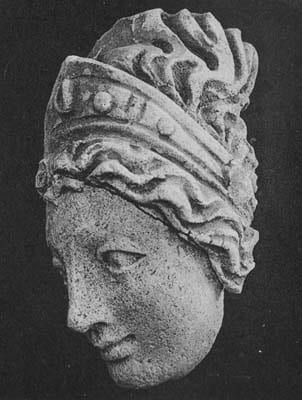
6 / 18
Head of Bodhisattva
Tapa Kalān · Stucco
The face of this diademed Bodhisattva is of Indian type: soft, idealised and smiling.
7 / 18
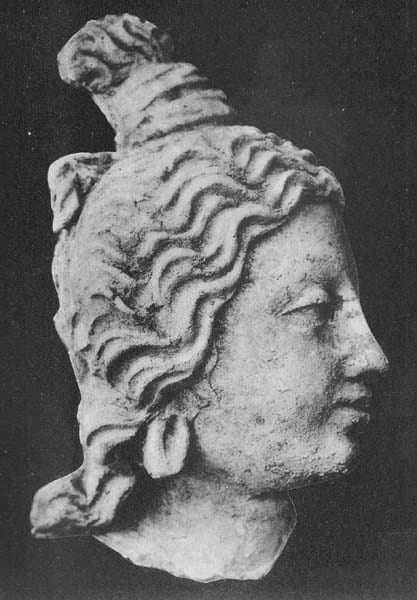
Head of Bodhisattva
Tapa Kalān · Stucco
A Bodhisattva in the Indianising style, his bun bound by a knotted fabric band.
8 / 18
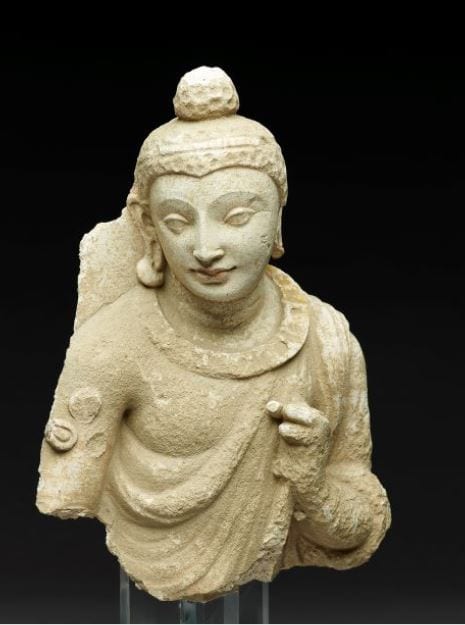
Bodhisattva
Haḍḍa, lost location · Stucco
The idealised face of this adorned Bodhisattva bears the mark of Indian influence.
9 / 18
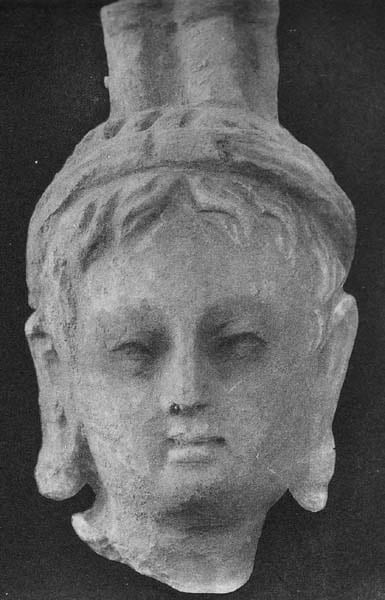
Head of goddess Hāritī topped by the City
Tapa Kalān · Stucco
A figure inspired by a Hellenistic model, yet with the deformed earlobes typical of Indian iconography.
10 / 18
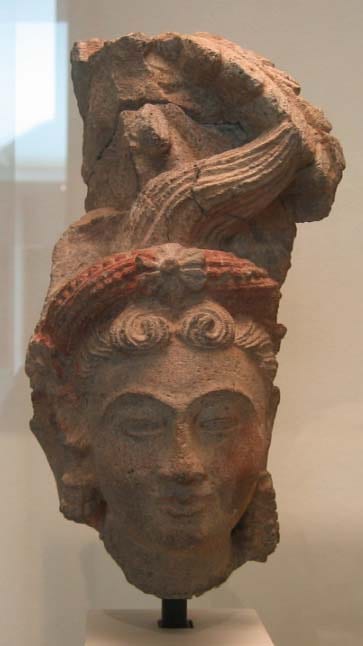
Yakṣi at the tree
Tapa-i Kafarihā · Stone
The features of this tree yakṣi are of Indian inspiration: almond eyes, small nose, smiling mouth.
FindspotTapa-i Kafarihā 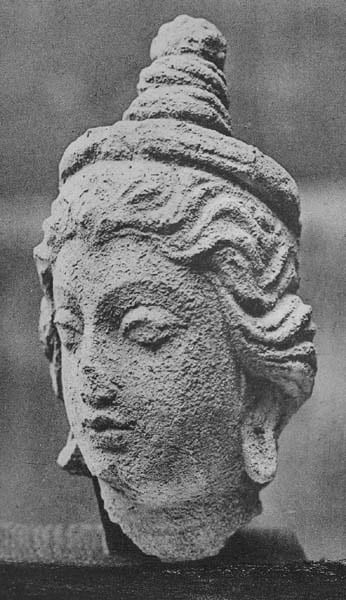
11 / 18
Head of Secondary Deity
Tapa-i Kafarihā · Stucco
A secondary deity of feminine appearance and Indian inspiration, wearing a high rolled headdress.
FindspotTapa-i Kafarihā 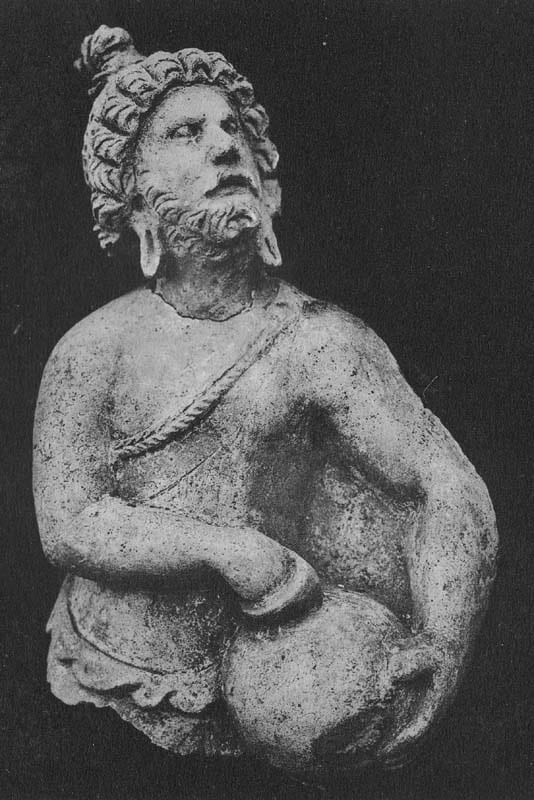
12 / 18
Bust of Brahman
Tapa Kalān · Stucco
A remarkable example of fusion: the eyes recall Scopas, but the stretched lobes and brahmin's hair are of Indian influence.
13 / 18
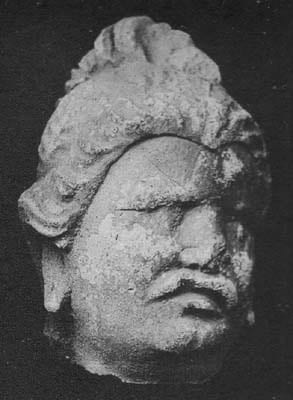
Head of Brahman
Bāgh Gaï · Stucco
Facial features of Indian inspiration, style borrowed from Western art: a remarkable combination.
FindspotBāgh Gaï 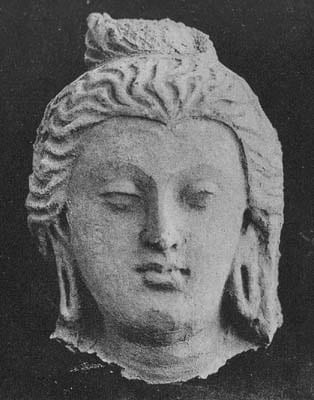
14 / 18
Brahma or young brahman
Tapa Kalān · Stucco
This idealised face, with its uṣnīṣa bun, blends Indian and Western characteristics.
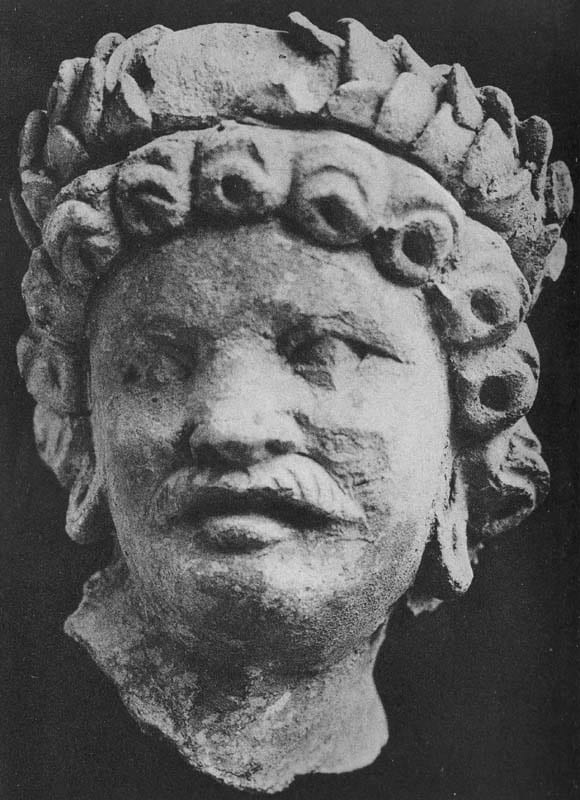
15 / 18
Head of a donor, or god Indra
Bāgh Gaï · Stucco
Over features of Hellenising inspiration is superimposed the typically Indian element: the enlarged earlobes.
FindspotBāgh Gaï 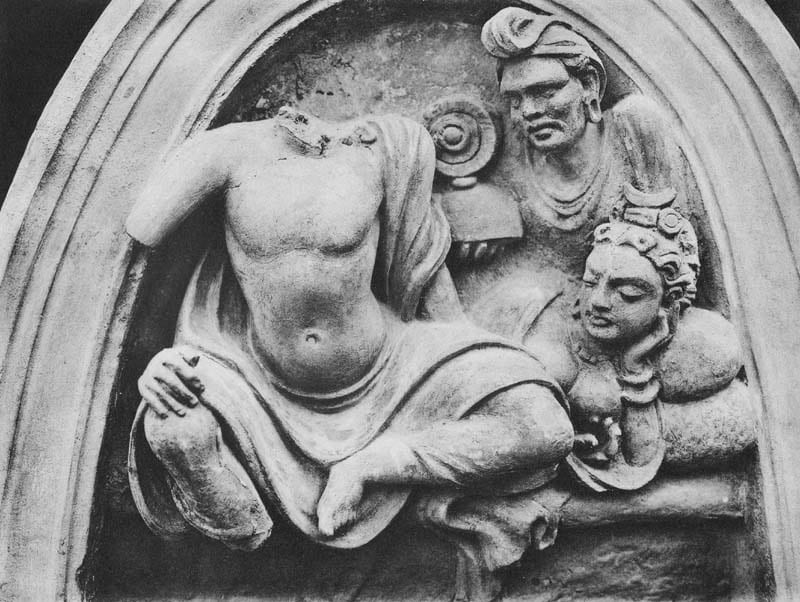
16 / 18
The Great Renunciation
Tapa Kalān · Stucco
The sleeping Yaśodharā recalls certain Indian deities; the prince's helmet is of a type often met at Mathūra.
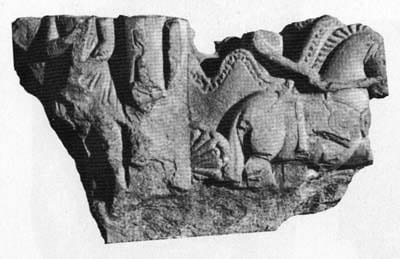
17 / 18
Great Departure (?)
Haḍḍa, lost location · Schist
The form of the chariot is of Indian inspiration, represented for example at Sāñcī.
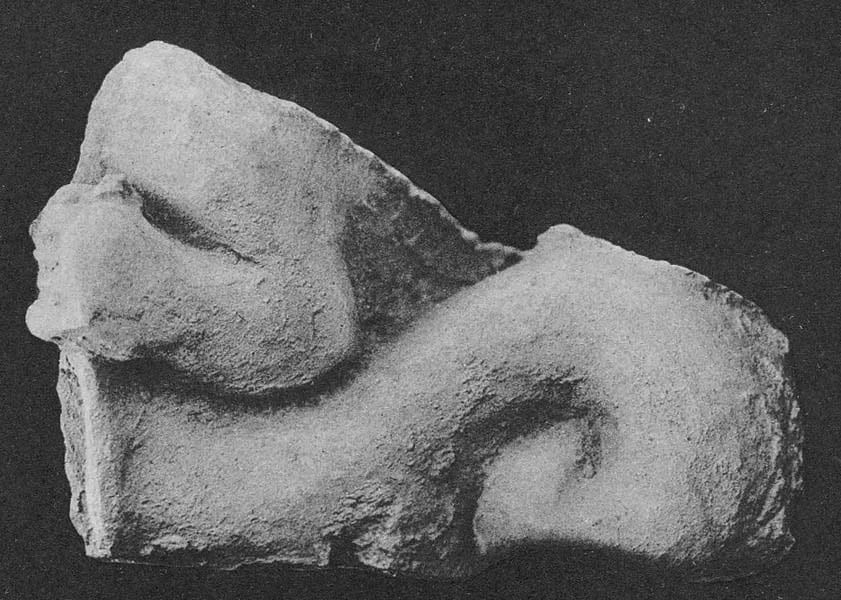
18 / 18
Bust of Nāga
Tapa Kalān · Stucco
A motif to be compared with the makaras of ancient Indian art as well as with the tritons of Hellenistic art.