The Haḍḍa School of Art: Iconographic Markers
The musicians
7 works
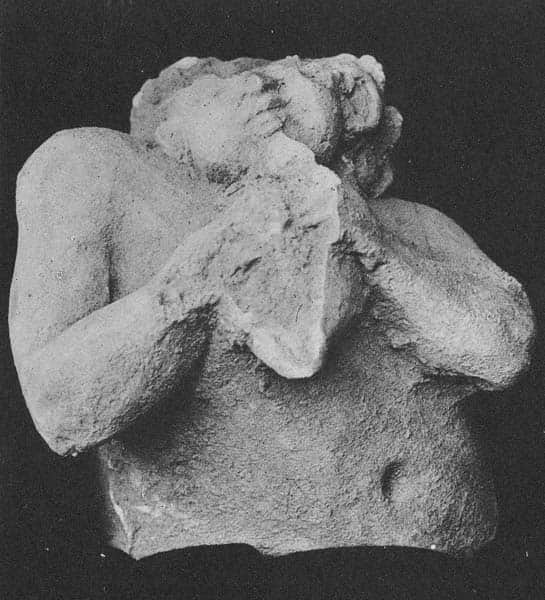
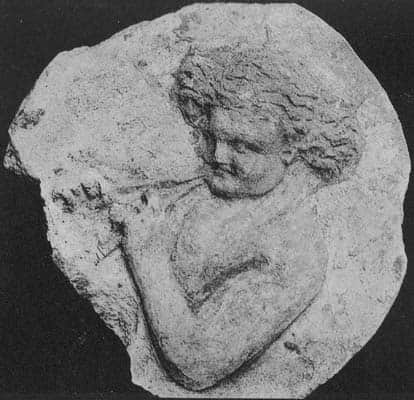
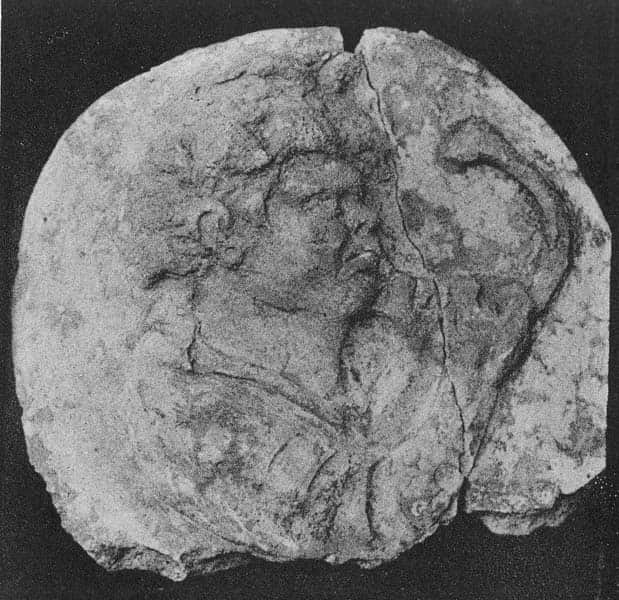
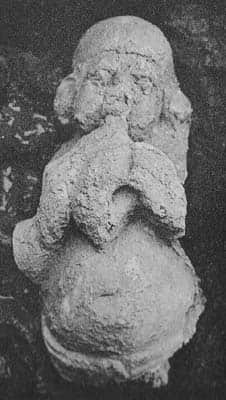
The musicians of the decors: youthful busts, often bare-chested, sometimes set into massive atlas shoulders, beating a drum shaped like a double chalice or an hourglass, plucking a four-stringed guitar with a plectrum, blowing into a conch, a horn with a flared bell or a double flute. The faces range from smiling idealisation to round, childlike features, and several records underline the influence of Western art.
The distinguishing marks
Each mark points to real records that describe it.
The instrument played: drum, guitar, conch, horn or double flute
Youthful or childlike round face, often smiling
Bare-chested, sometimes in atlas position within the decor
Three works to learn to look
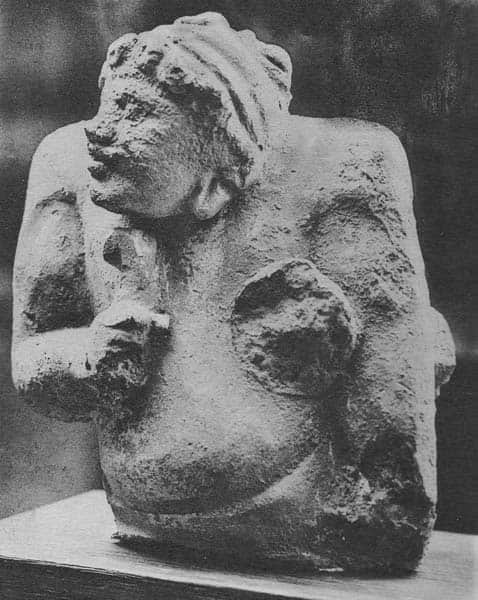
This musician is wearing a turban formed by two superimposed scrolls forming a knot on the top of the head and letting out a row of round curls framing the face. The features are idealised. He is depicted smiling, with his eyes wide open. Mustache, shaved chin, the earlobes are elongated. The head of this character in a Atlas-like position is encased in massive, square shoulders. He plays a percussion instrument, a sort of tambourine in the shape of a double chalice, held under his left arm, while with his right hand he brandishes a curved stick, ready to beat the rhythm. He is bare-chested, with a bulging stomach, and only the top of the loincloth is visible.
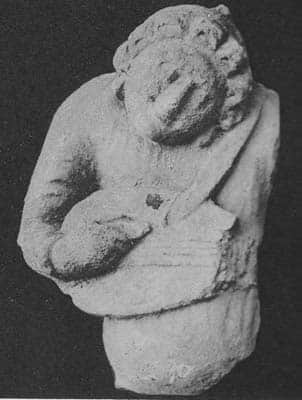
This musician was in a Atlas-like position. The face, framed by a row of stylised curls, is idealised, soft and smiling, tilted to the side. The figure plays a guitar, held by a strap around his neck. Four strings can be seen, unfortunately the neck of the instrument has disappeared. The musician seems to be holding a pointed object in his right hand, the one that strums the strings, probably a kind of pick.
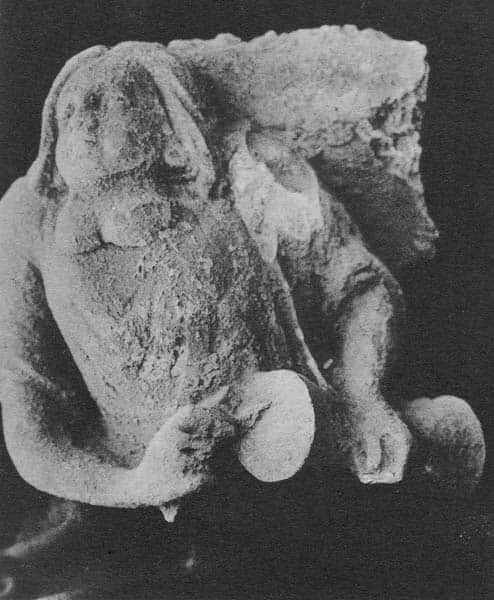
This musician has a soft, idealized face and straight, medium-length hair. He seems to have a double goitre, unless it is a decoration or an object worn around his neck. He wears a garment with the sleeves rolled up at the elbows, leaving his forearms bare, and plays an hourglass-shaped tambourine.
Not to be confused with
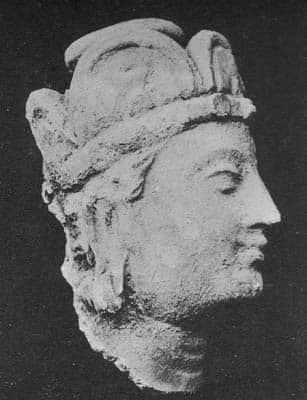
All identified works
Tapa Kalān4 works
Tapa-i Kafarihā2 works
Related figures in the database
- The sleeping musician of the women’s quarters (HADB 452) Search “Musicienne” in the database