Return to Kapilavastu
©GrandPalaisRmn - Guimet Museum

Description
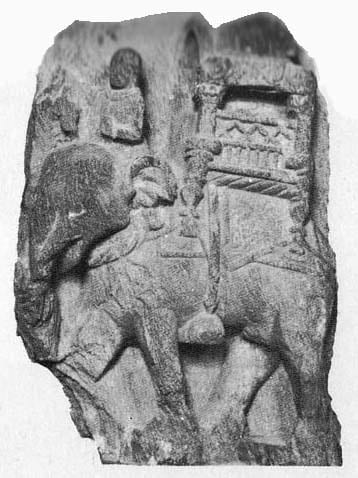
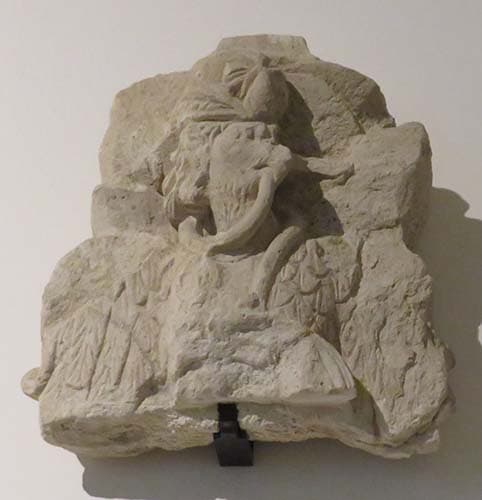
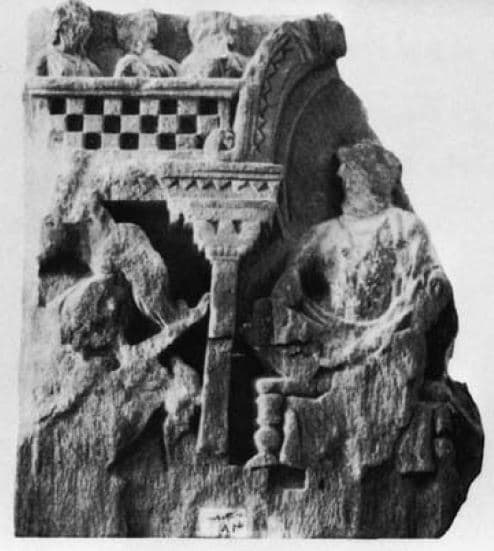
This is a fragment of relief broken on all sides representing an elephant richly harnessed and led by a mahout. The elephant is moving to the left, with the mahout sitting at the neck. The animal is covered with a saddle cloth, decorated with rosettes and surrounded by foliage, on which stands a palanquin attached by ropes. Empty, it looks like a small balcony covered with a dome, resting on columns and turned wooden legs. A small bell hangs down from the saddle. This scene is probably a representation of the return of Māyā and the young Siddhārtha from Lumbini Park, the place of his birth, to Kapilavastu. The absence of figures in the palanquin does not invalidate this identification; the presence of the elephant harnessed and driving the palanquin is characteristic of this episode.
Observations
The schist reliefs discovered by Barthoux between 1926 and 1928 are mostly from the vicinity of the Great Stūpa K1 of Tapa-i Kafarihā, the south-western part of the main stūpa B12 of Bāgh Gaï (around B13) and the Great Stūpa TK140 of Tapa Kalān.
Comparative study
HADB no. 442
Characteristics
Dimensions
H: 22cm × L: 15cm × P: 6.5cm
Technique
Sculpture
Material
Schist
Object type
Historiated bas-relief
Site
Haḍḍa, lost location
Conservation location
Guimet Museum
Museum inventory No.
MG 17202
Traces of polychromy
No
Restoration
No restoration
Dimensions
H: 22cm × L: 15cm × P: 6.5cm
Technique
Sculpture
Material
Schist
Object type
Historiated bas-relief
Site
Haḍḍa, lost location
Conservation location
Guimet Museum
Museum inventory No.
MG 17202
Traces of polychromy
No
Restoration
No restoration
Bibliographic Reference
Other objects from Haḍḍa, lost location
Part of the themed routes