Path 15 of 17 · 17 works
Local Types in the Art of Haḍḍa
On many of the faces modelled at Haḍḍa, the descriptions identify a "local type". This trail brings together seventeen stucco sculptures: young and elderly donors, warriors in turbans or helmets, and even a Bodhisattva whose face is inspired by a local ethnic type. As a counterpoint, a head of Indra or of a Bodhisattva that is not of the local type and the warrior nicknamed the "Gaulish barbarian" recall that at Haḍḍa local influences mingle with Western, Indian, Iranian and Central Asian ones.
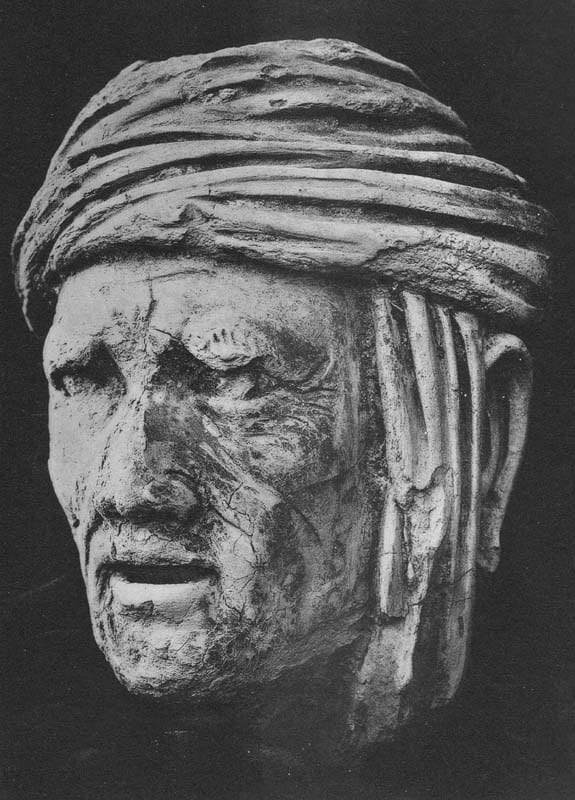
1 / 17
Head of an elderly donor
Tapa Kalān · Lime-based Stucco
An elderly donor with a realistic, wrinkled face, whose turban is of the same type as that of the Afghans today.
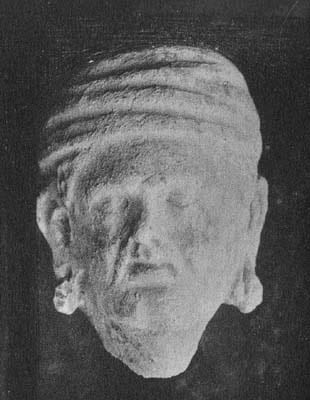
2 / 17
Head of an elderly donor
Tapa Kalān · Stucco
Another elderly donor of local type, with a wrapped turban and wrinkled yet idealised features.
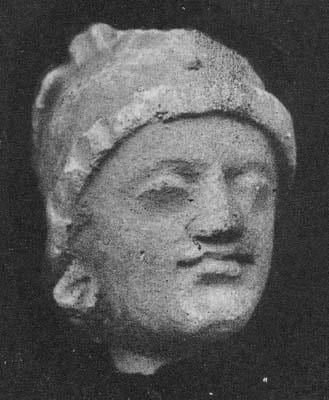
3 / 17
Head of a young donor
Tapa-i Kafarihā · Stucco
A young donor with personalised features of local type: broad nose, strong jaw, smiling with half-closed eyes.
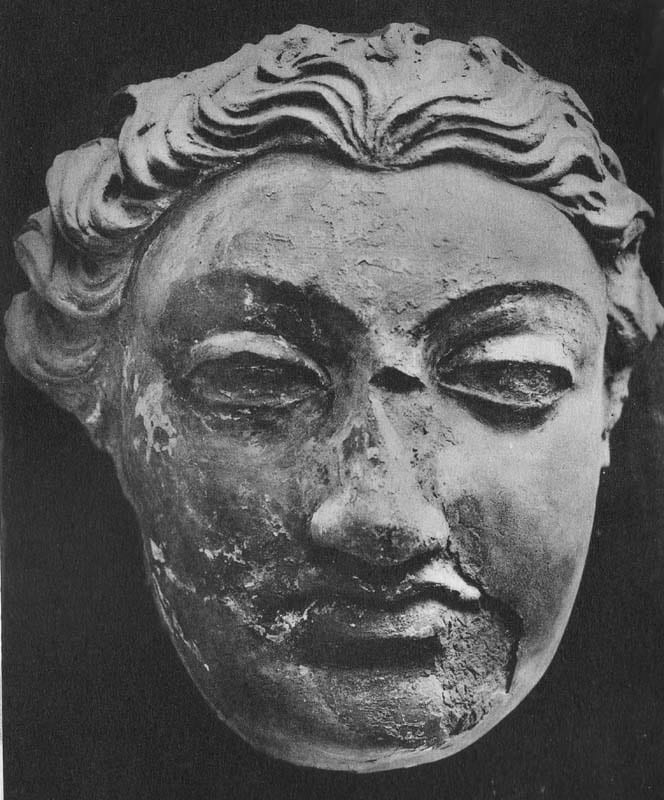
4 / 17
Head of Donor
Tapa Kalān · Stucco
The features of this donor have a local character: short, wide forehead, large almond-shaped eyes, strong aquiline nose.
5 / 17
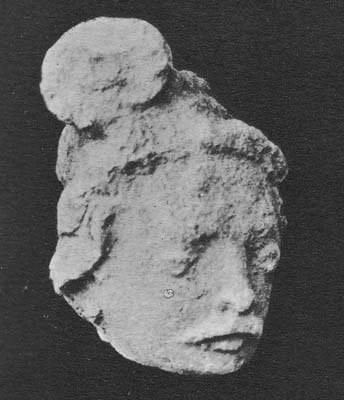
Head of a donor
Tapa-i Kafarihā · Stucco
A moustachioed donor of local type, wearing a wide-brimmed turban adorned with a very large medallion.
6 / 17
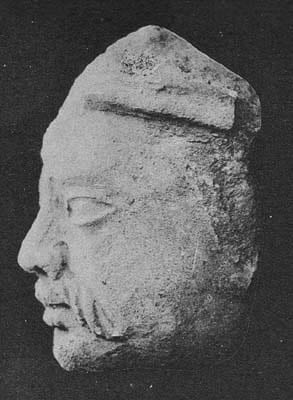
Head of Donor
Tapa Kalān · Stucco
A donor of local type with almond-shaped eyes and a drooping, bacchante-style moustache.
7 / 17
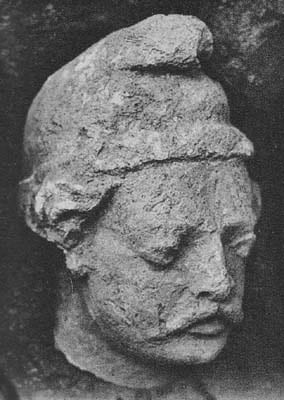
Head of a donor
Tapa-i Kafarihā · Stucco
Beneath a Phrygian cap, the usual headgear of warriors, a face of local type with a pointed chin.
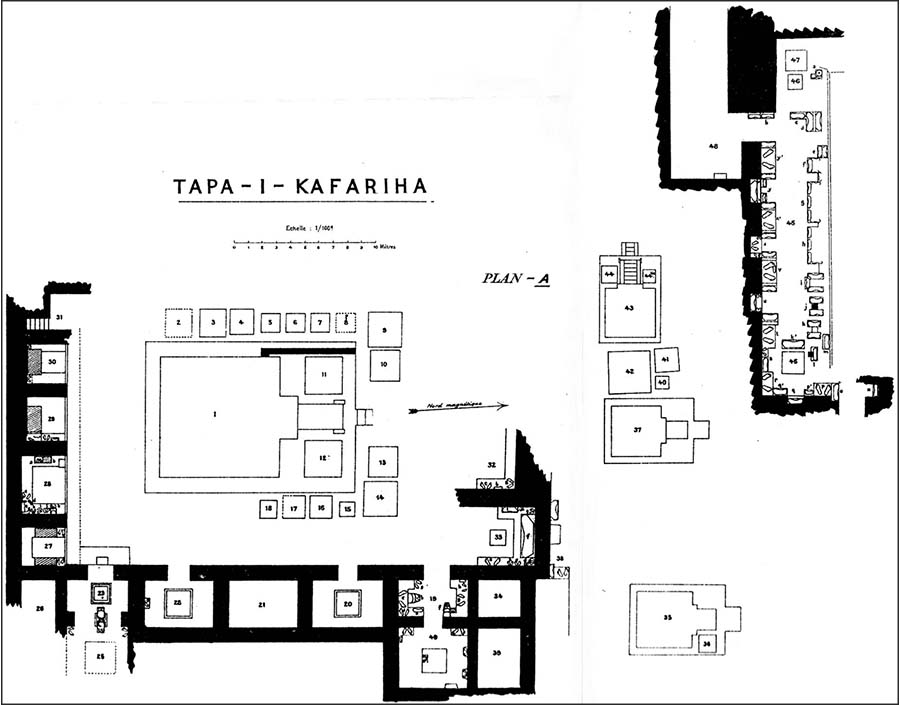
FindspotTapa-i Kafarihā 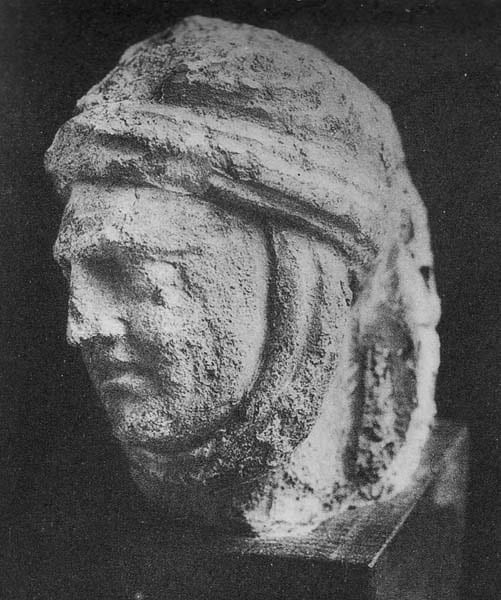
8 / 17
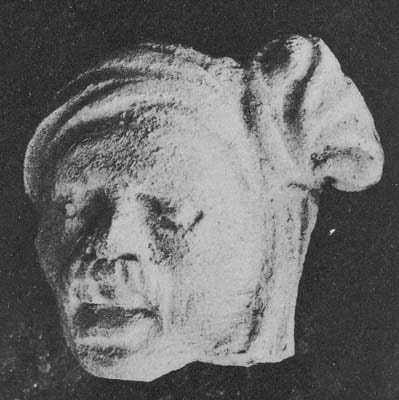
Head of Warrior
Tapa-i Kafarihā · Stucco
The aged, beardless features of this turbaned soldier depict a local type, with a tormented expression.
9 / 17
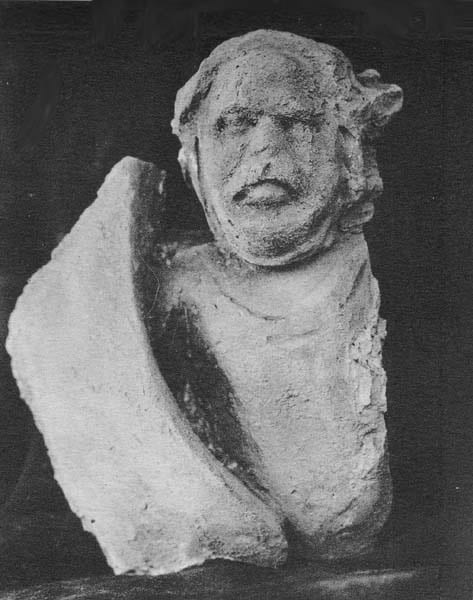
Head of Warrior
Tapa Kalān · Stucco
A soldier with a turban tied at the side; his local-type face is aged and moustachioed, with a tormented expression.
10 / 17
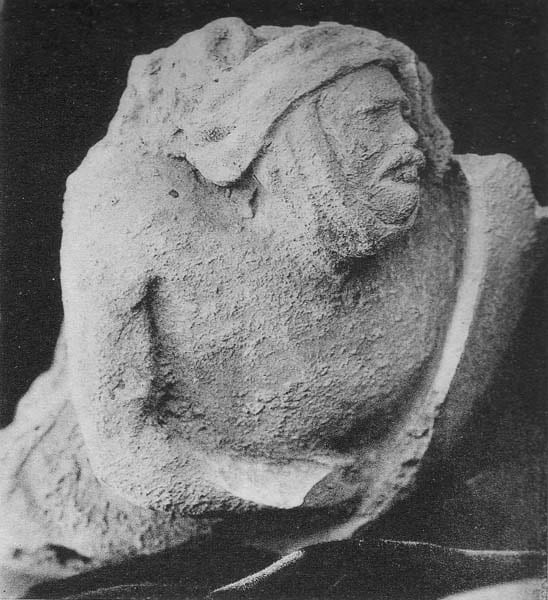
Bust of Warrior
Tapa Kalān · Stucco
The face of this shield-bearing soldier belongs to a local type: aged, moustachioed, brows furrowed.
11 / 17
Bust of Warrior
Tapa-i Kafarihā · Stucco
A warrior in an Atlas-like pose, his aged face of local type, moustachioed with a shaven chin.
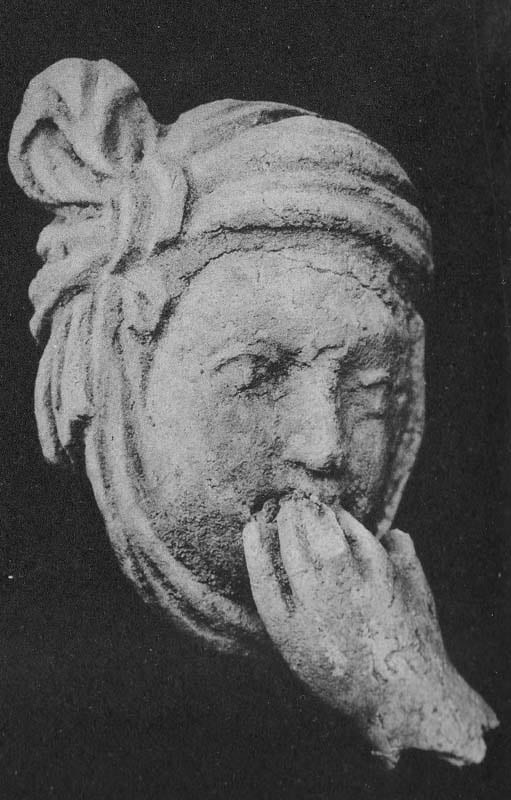
12 / 17
Head of Warrior
Bāgh Gaï · Stucco
A young warrior of local type with an idealised face, his hand raised to his mouth in a pensive gesture.
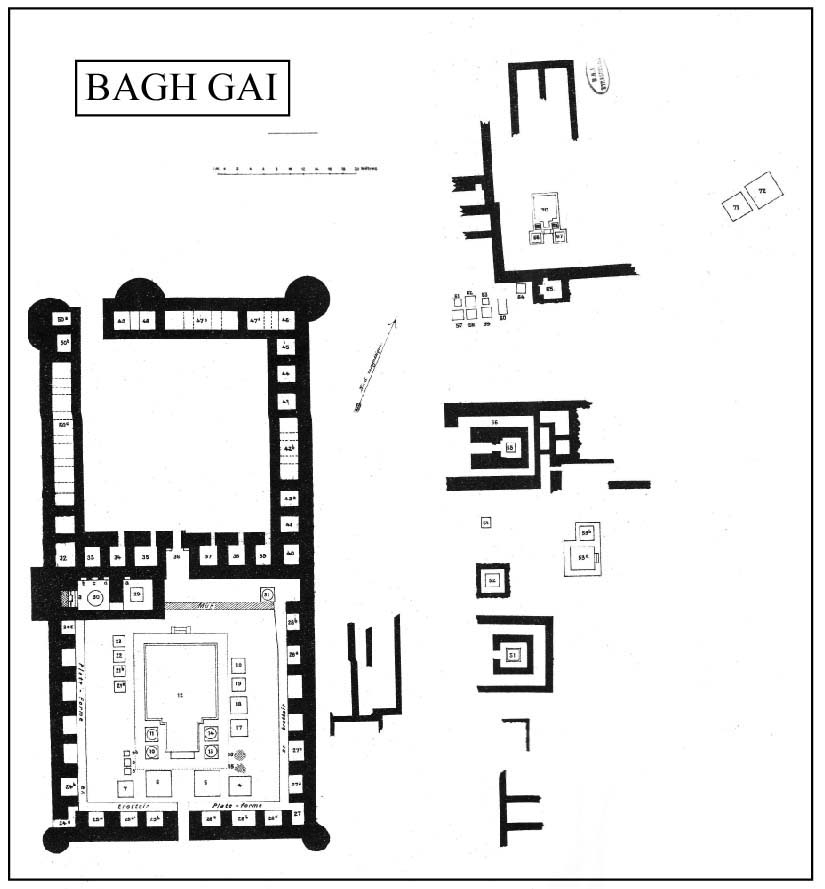
FindspotBāgh Gaï 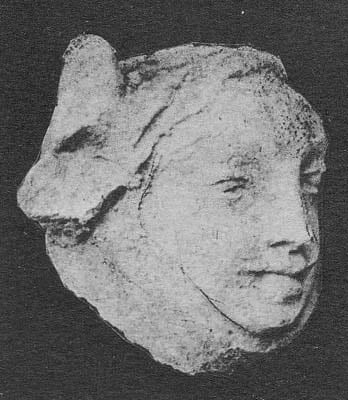
13 / 17
Head of Warrior
Tapa Kalān · Stucco
A figure of local type with a thin moustache, idealised features and a gentle, smiling expression.
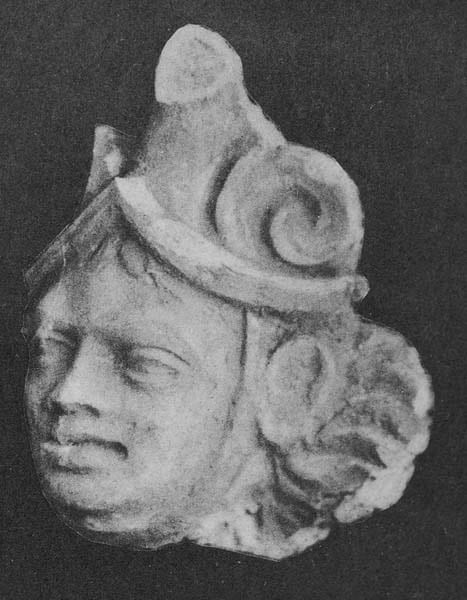
14 / 17
Head of Warrior
Tapa Kalān · Stucco
Beneath a helmet with scrolls, a figure of local type, smiling despite his furrowed brows.
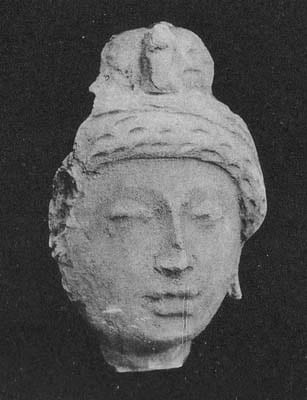
15 / 17
Head of Bodhisattva
Tapa Kalān · Stucco
Even the divine: the face of this Bodhisattva is inspired by a local ethnic type.
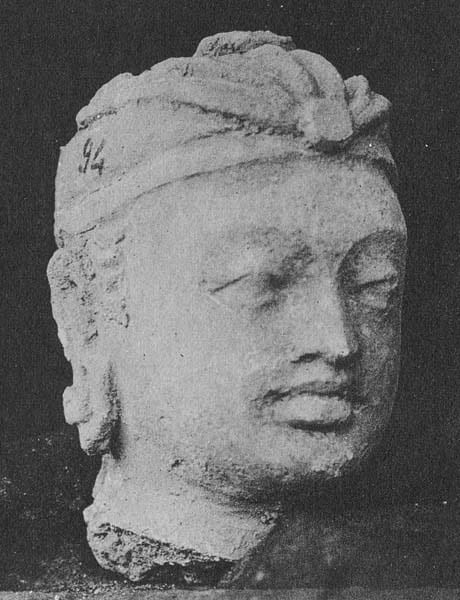
16 / 17
Head of god Indra or a Bodhisattva
Tapa Kalān · Stucco
As a counterpoint, this square face with broad features is not of the local type.
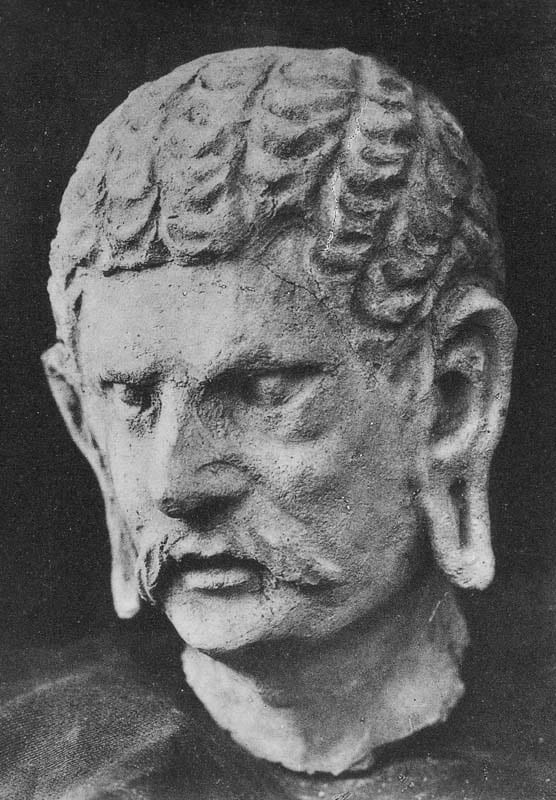
17 / 17
Head of Warrior
Tapa Kalān · Stucco
This warrior, nicknamed the "Gaulish barbarian" by Barthoux, recalls that at Haḍḍa local influences mingle with Western, Indian, Iranian and Central Asian ones.