The Haḍḍa School of Art: Iconographic Markers
The Buddha
54 works
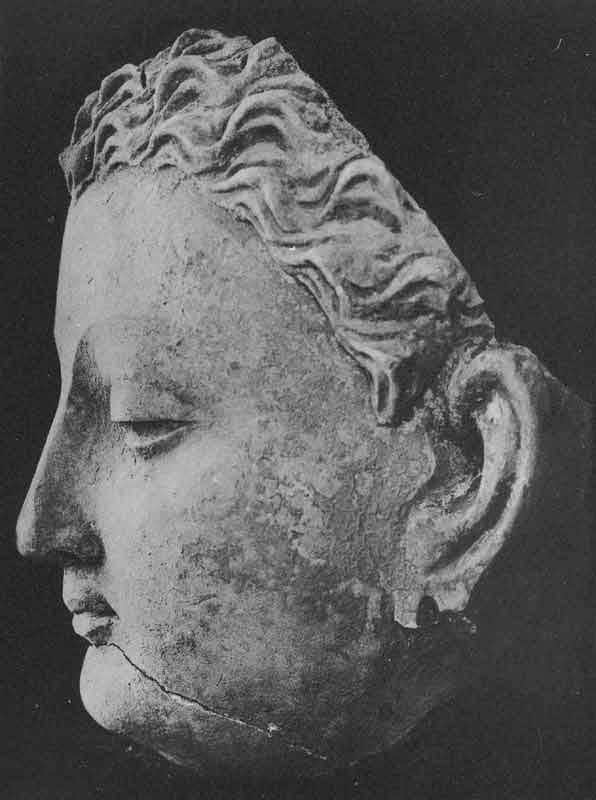
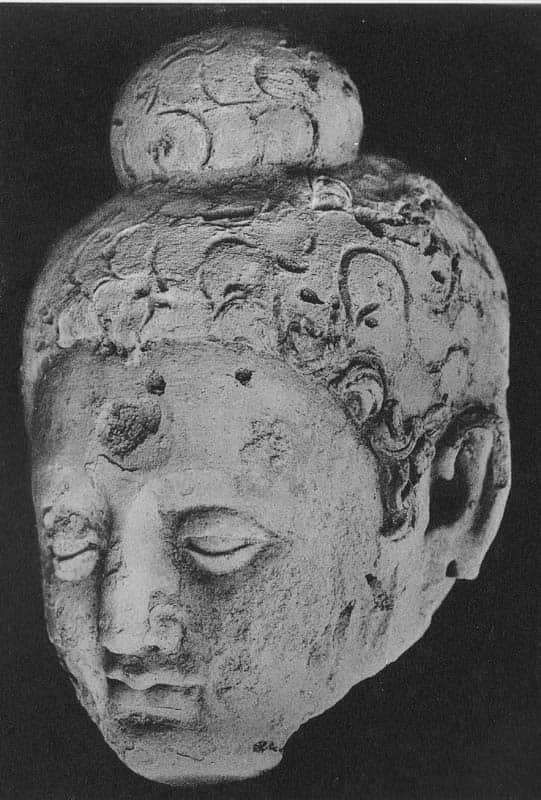
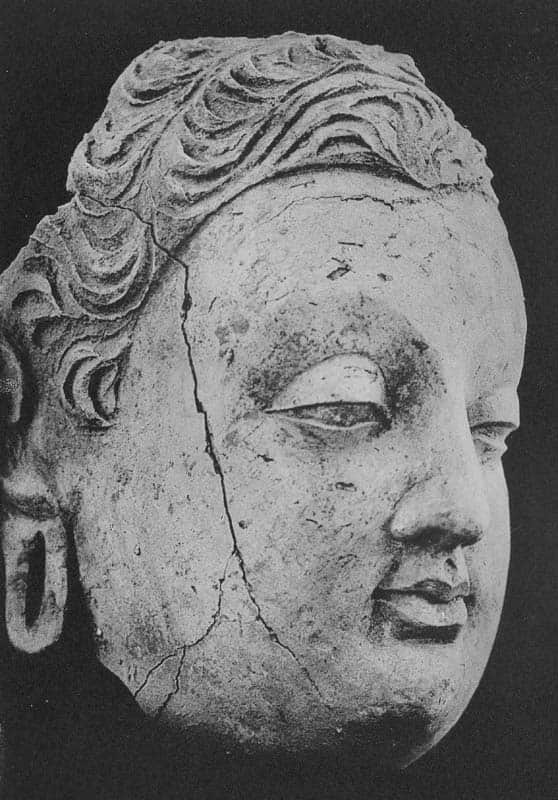
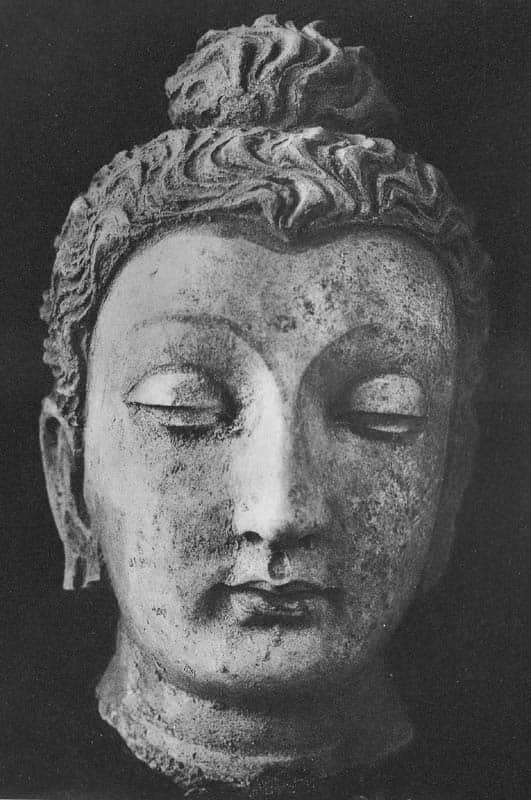
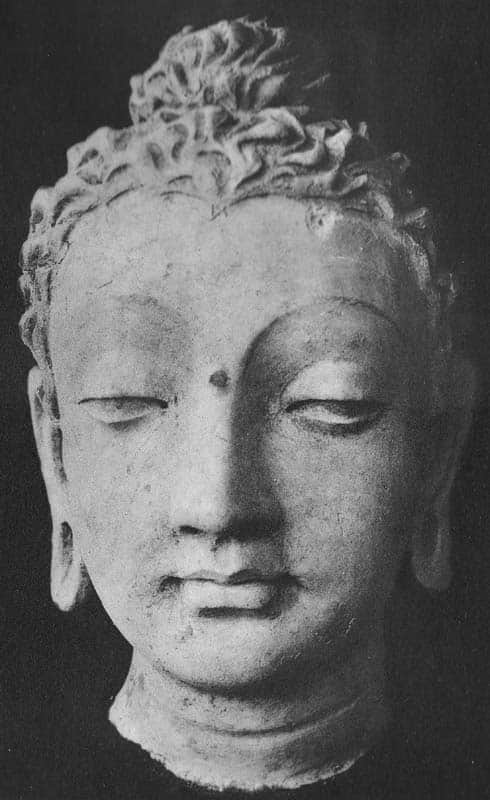
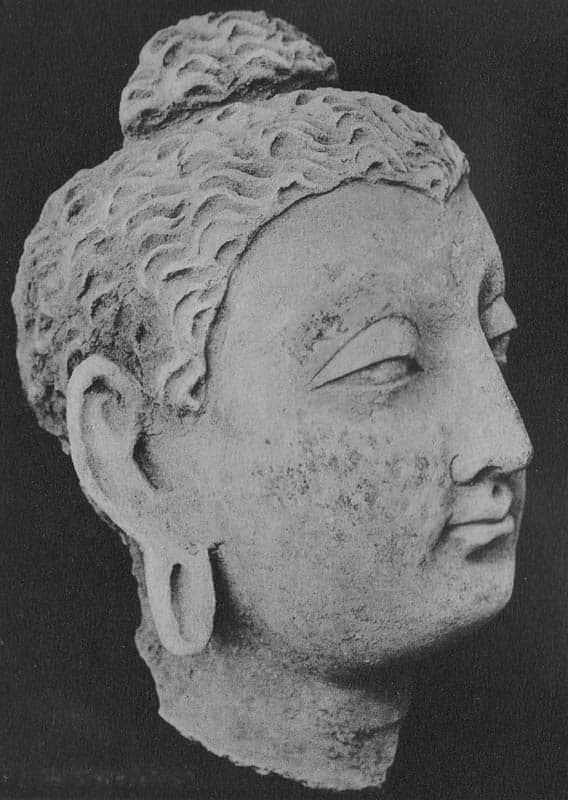
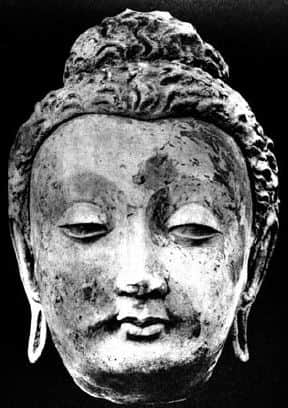
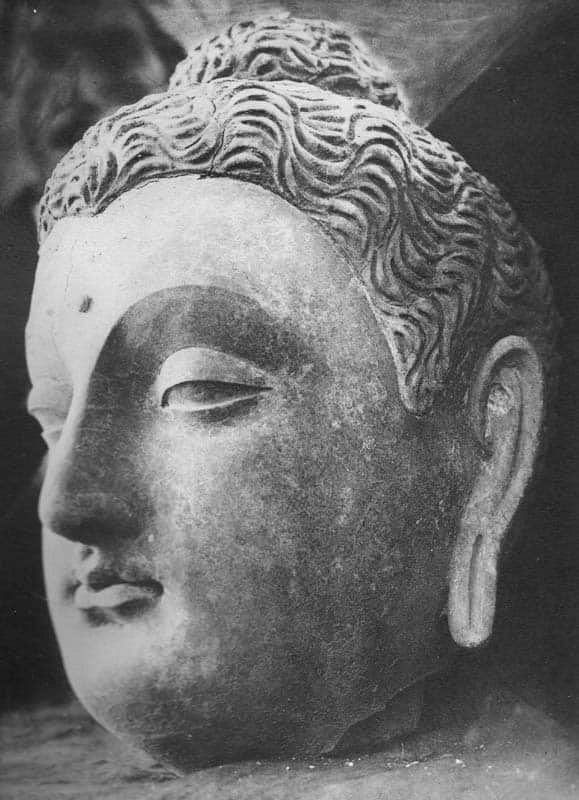
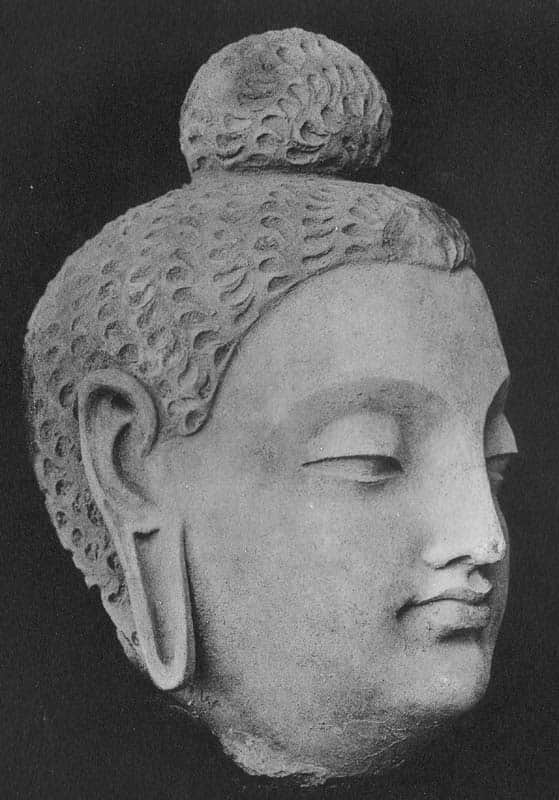
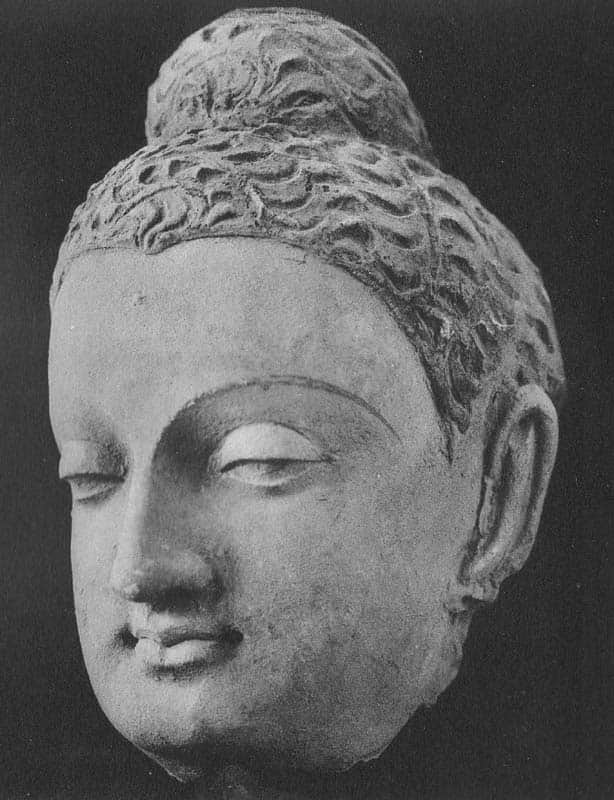
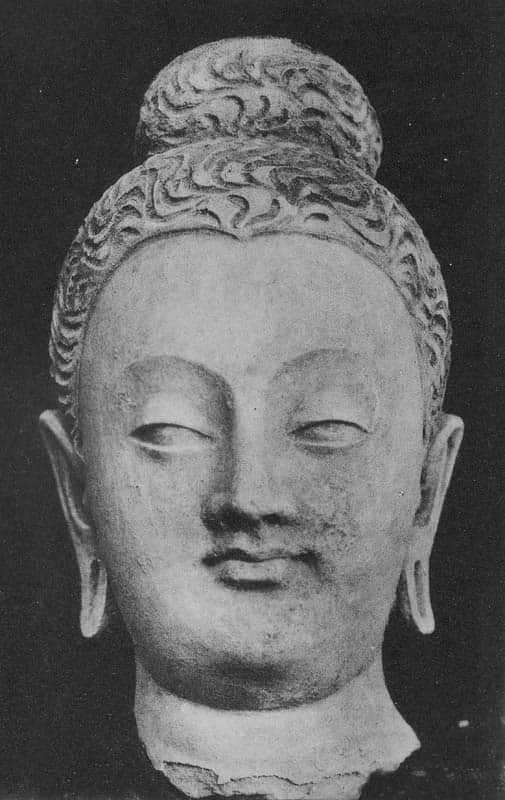
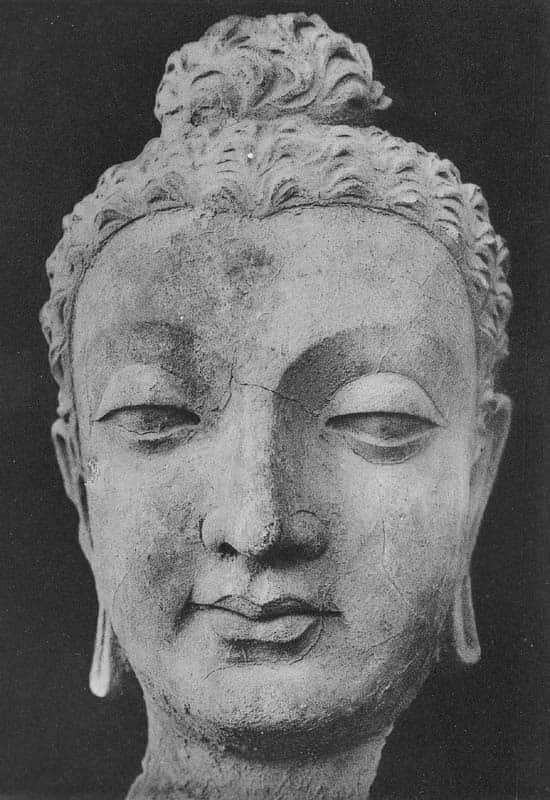
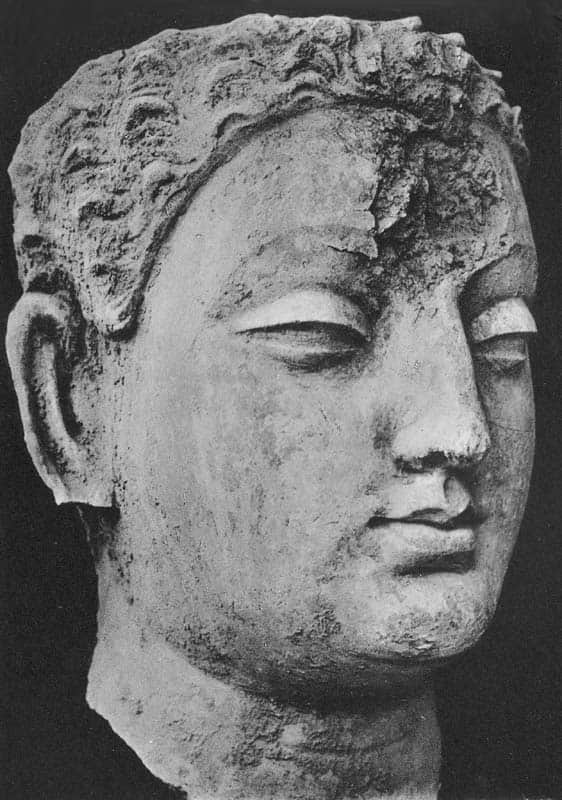
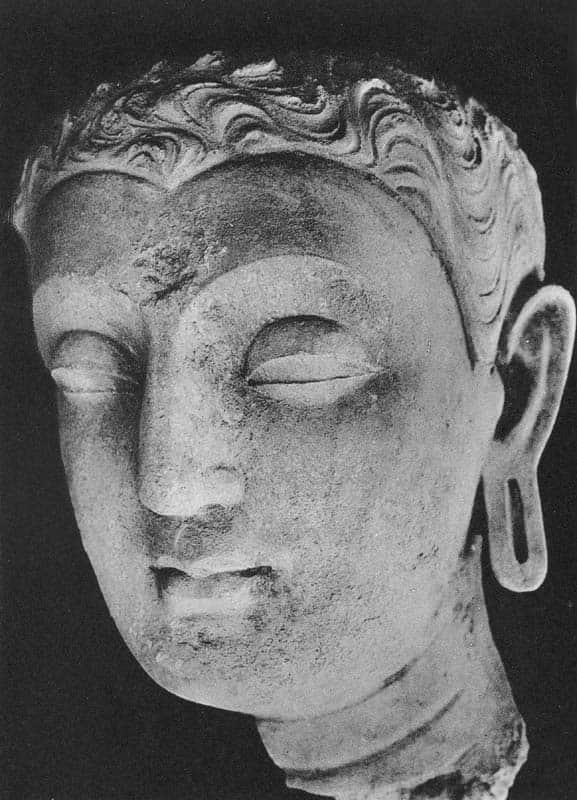
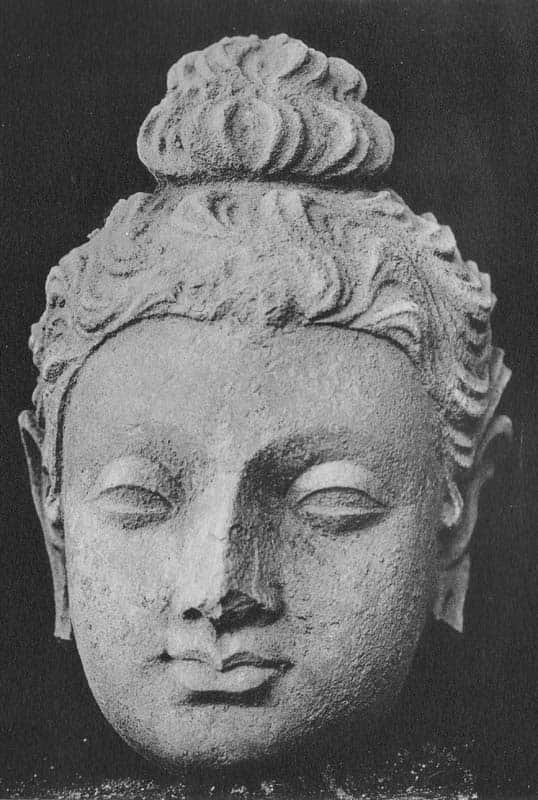
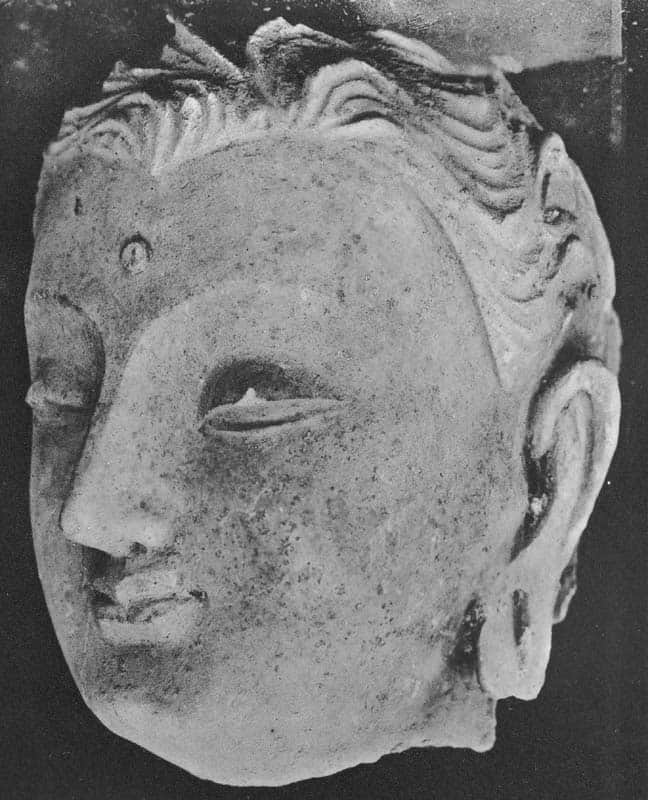
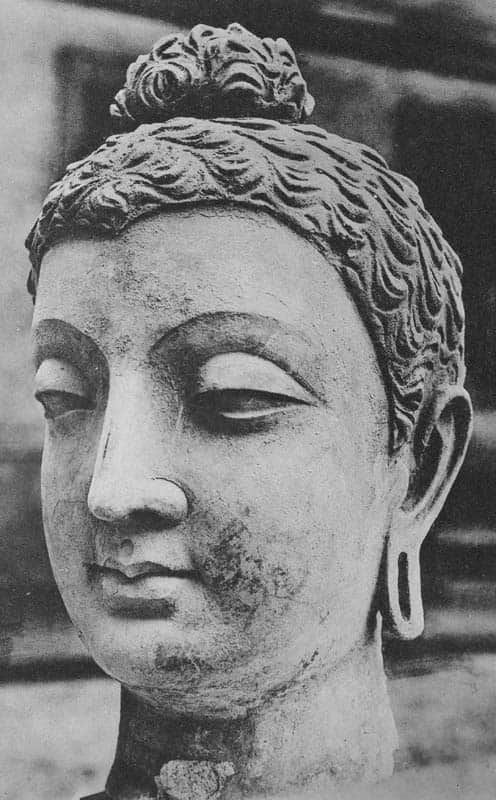
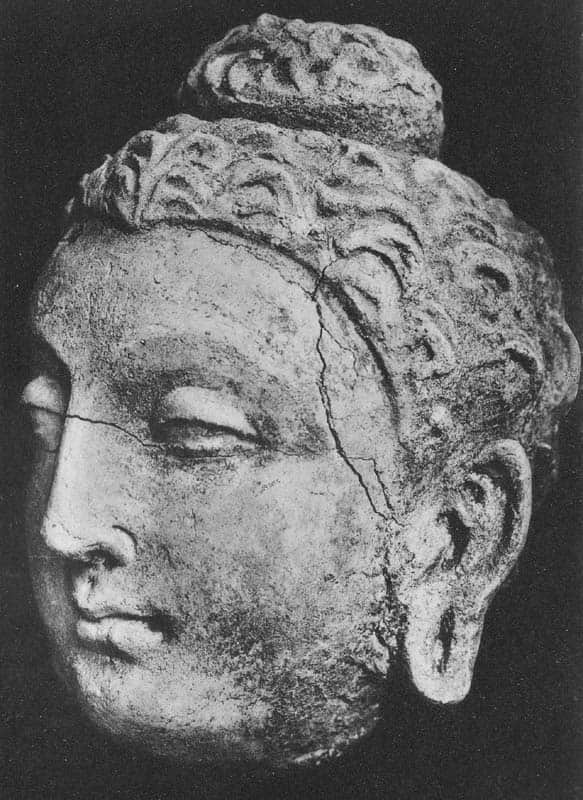
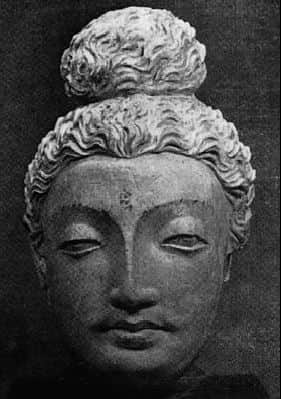
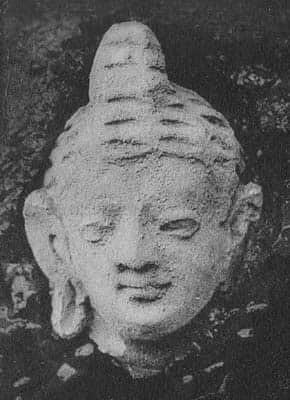
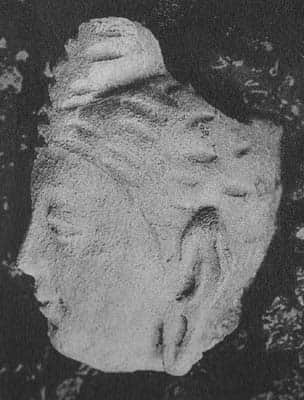
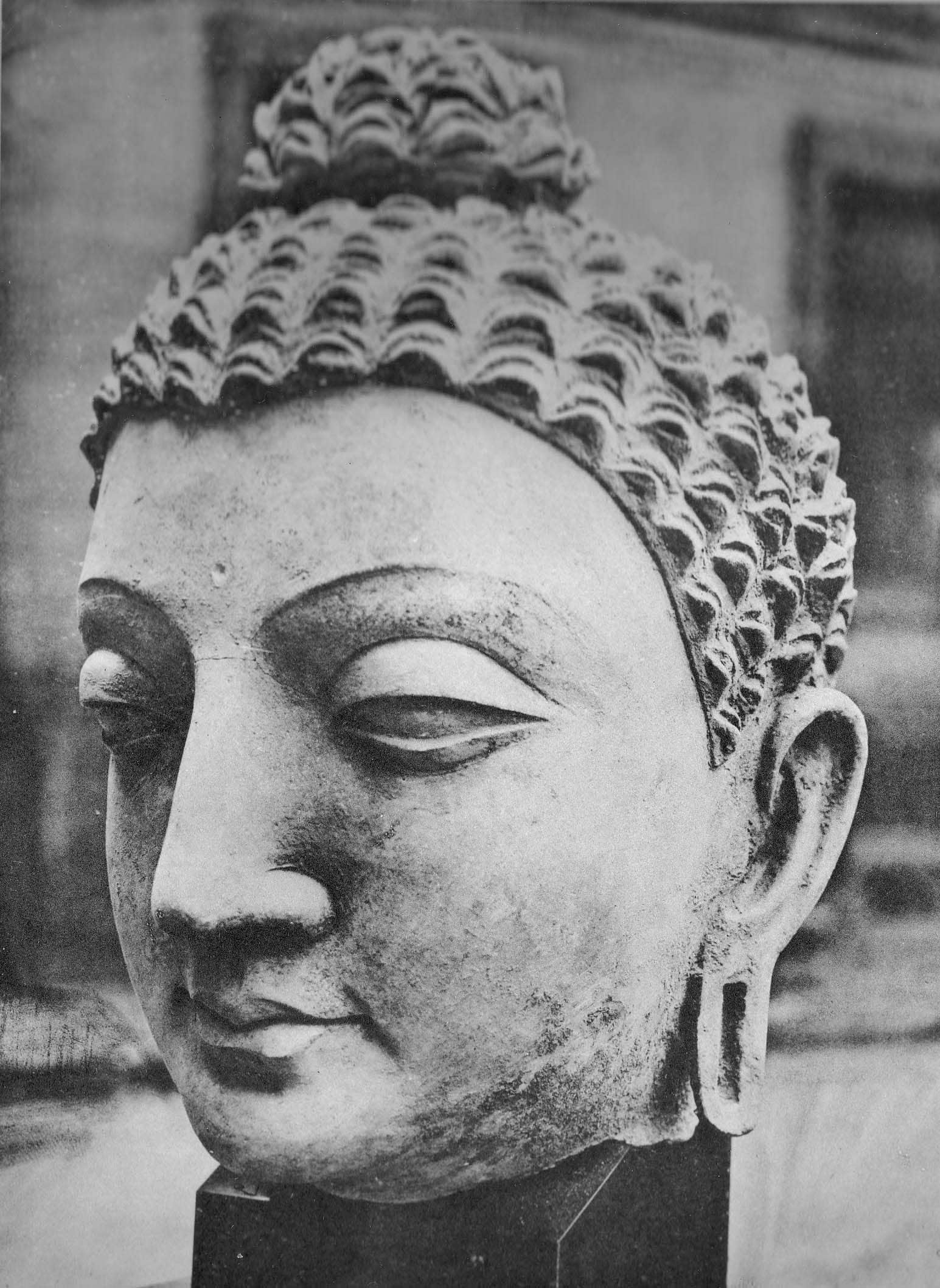
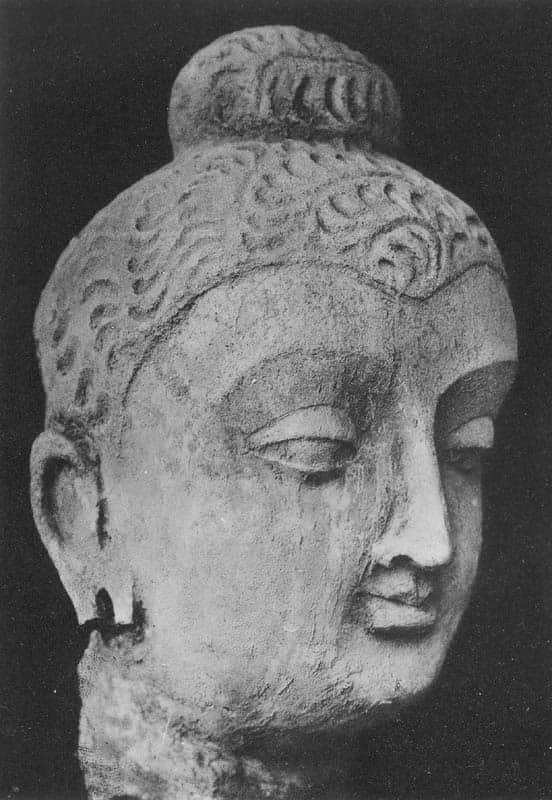
The database records describe the Buddha through his bodily marks: the cranial topknot (uṣṇīṣa) rising from wave-patterned hair, the distended earlobes (a trace of the heavy jewellery of his princely youth) and, where it survives, the ūrṇā between the eyebrows, sometimes merely painted. The face is idealised, often Hellenistic in inspiration; the body, where preserved, is wrapped in the monastic cloak (saṃghāṭi).
The distinguishing marks
Each mark points to real records that describe it.
Cranial topknot (uṣṇīṣa) within wave-patterned hair
Distended earlobes
ūrṇā between the eyebrows, often lost, perhaps painted
Monastic cloak (saṃghāṭi) on full-length figures
See in the database: HADB 470
Three works to learn to look
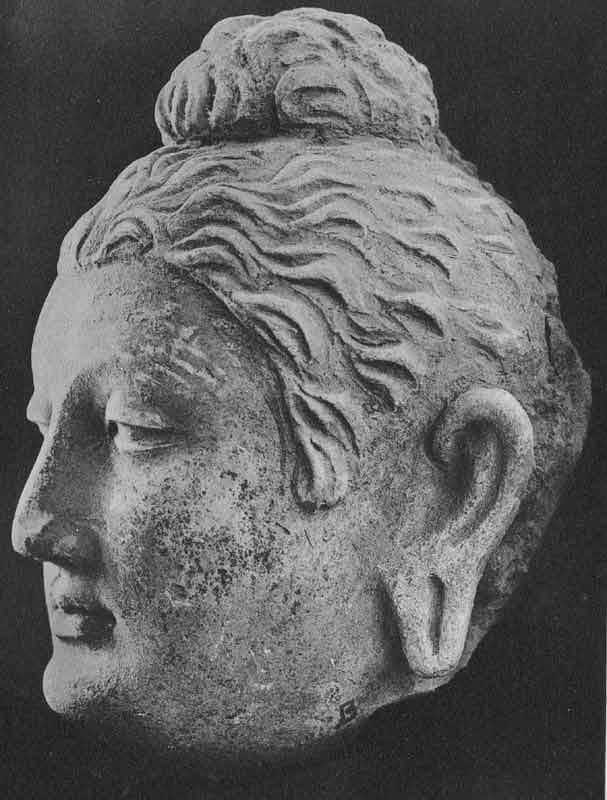
这尊佛像具有希腊化风格的侧面轮廓,头顶有肉髻(uṣnīṣa),卷发与前额平行排列。未见白毫(ūrṇā)的痕迹。双眼半闭,鼻子略呈鹰钩状;下巴圆润而前突,可见轻微的双下巴,耳垂拉长变形。
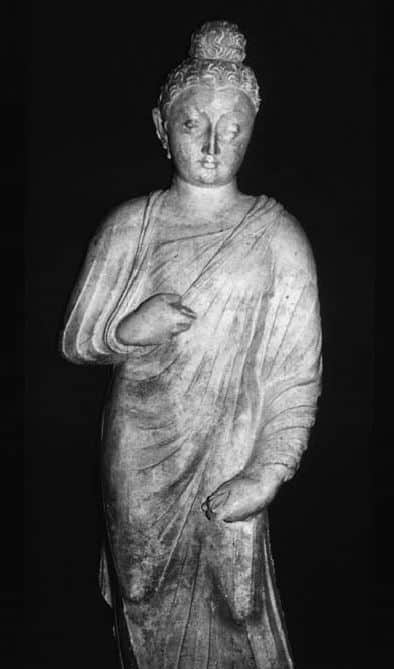
这尊行走的佛陀身披僧伽梨,做出一个在哈达常见的手势。右肘裹在披风中,右手从胸前伸出,钩住衣服的翻边,用拇指握住,而左手在膝盖处托住衣褶。面部特征带有西方影响:平直的眉弓、狭窄略突的眼睛、半闭的眼睑、鹰钩鼻和轮廓分明的嘴唇。头发,无论是在头颅还是肉髻上,都以细密平行的沟纹呈现。人物的制作精细:扭曲的姿态、身体重心放在右腿上而左腿弯曲的姿势、握住衣服的双手、精细表现的流畅贴身的衣褶,都经过精心处理。
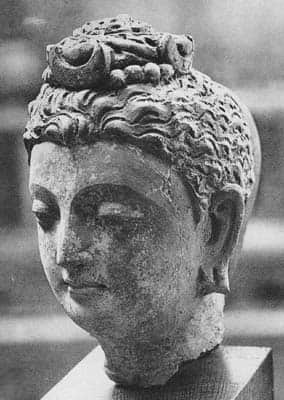
这尊"庄严佛陀"头戴珍珠冠,冠上饰有三个新月形装饰,每个新月内含一颗椭圆形珍珠,环绕着肉髻(uṣnīṣa)。头发以从前向后延伸的波浪状发丝处理。面容融合了西方和印度特征。面部特征非常规整:眉弓笔直,眼睛半闭,鼻子和嘴巴精致。嘴角几乎看不出微笑。变形的耳垂已经断裂。
Not to be confused with
The Bodhisattva
Same idealised face and heavy topknot; only ornament (diadem, jewellery) points to the Bodhisattva. The database even holds a crowned “adorned Buddha” (HADB 21).
The brahman
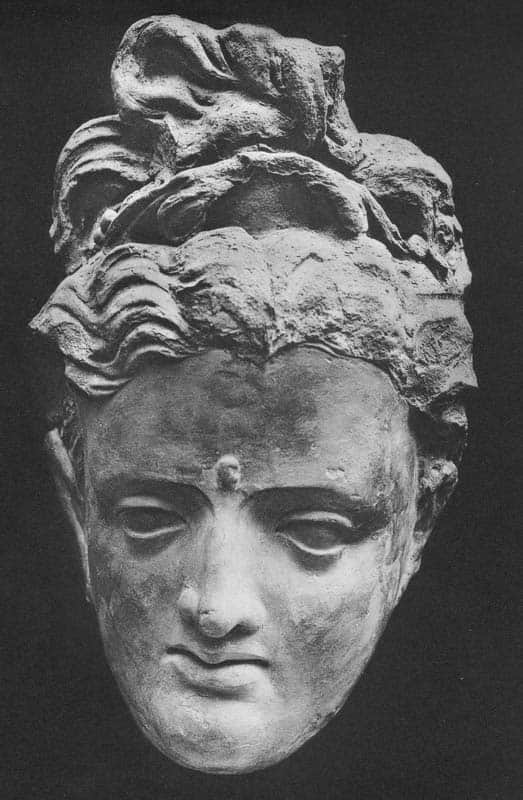
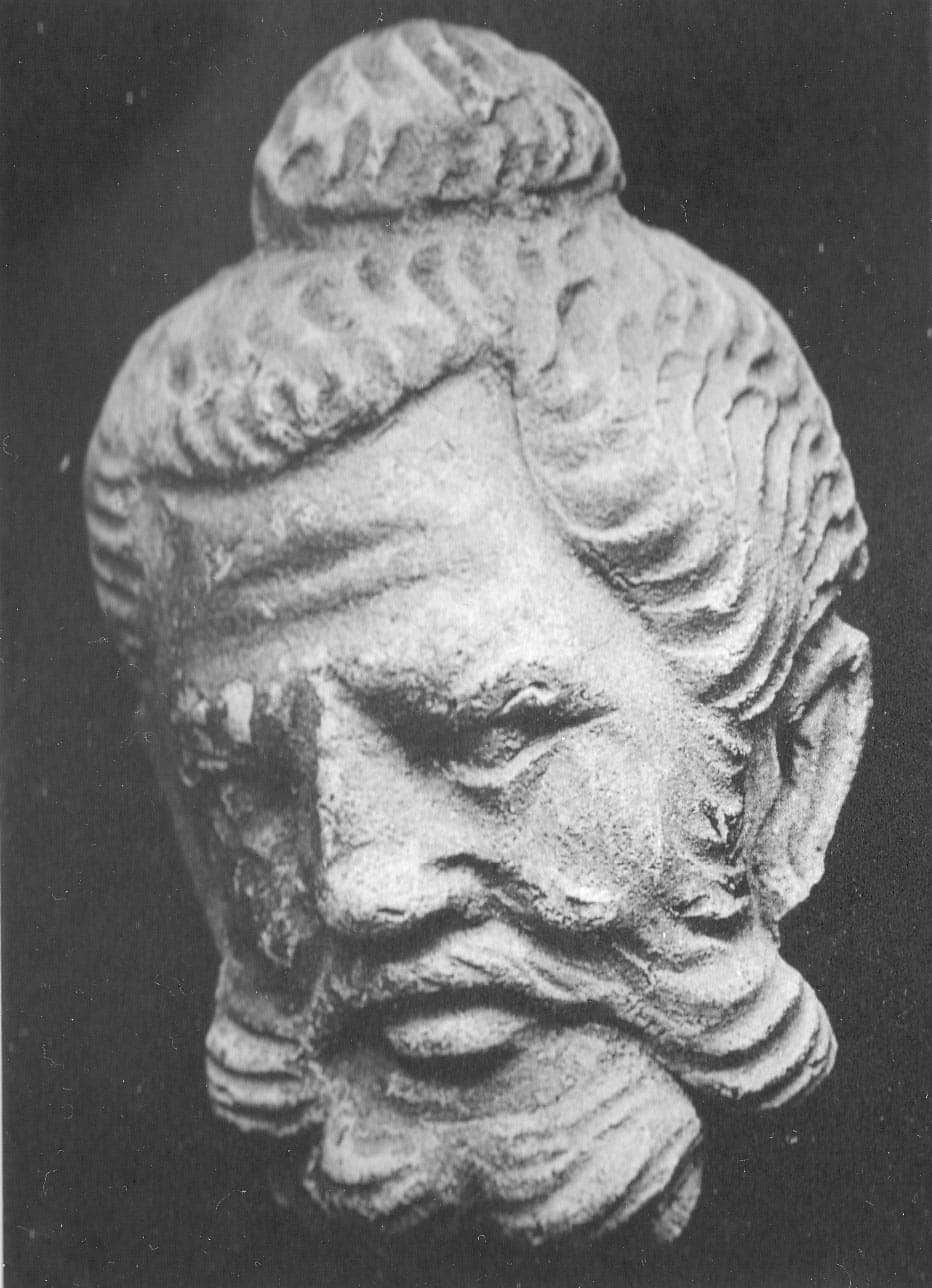
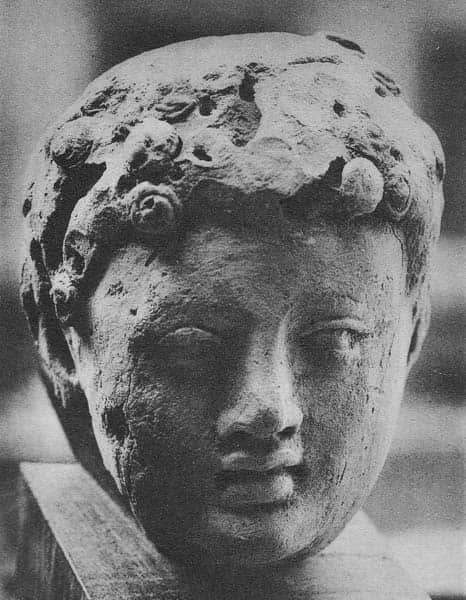
Idealised young brahmans also wear a topknot: the database itself hesitates between “Brahma or young brahman” on 20 records.
All identified works
塔帕·卡兰38 works
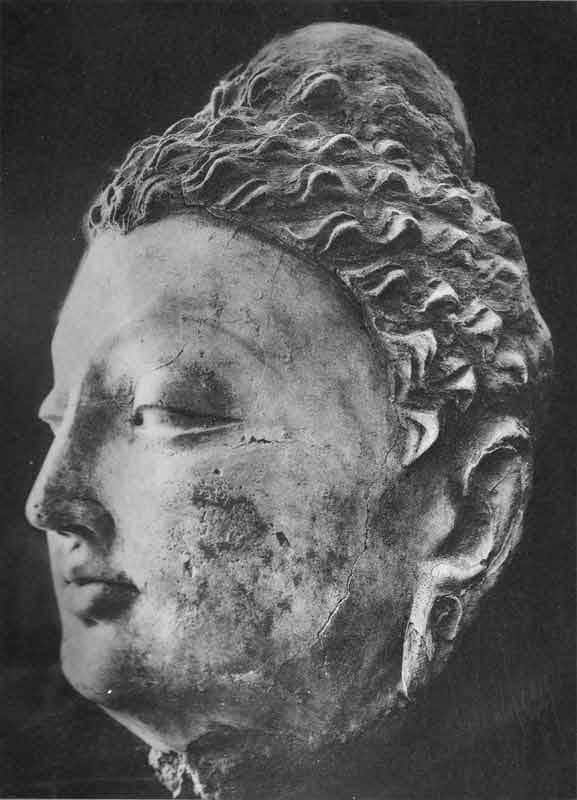
HADB 1
佛头像
灰泥 · 塔帕·卡兰
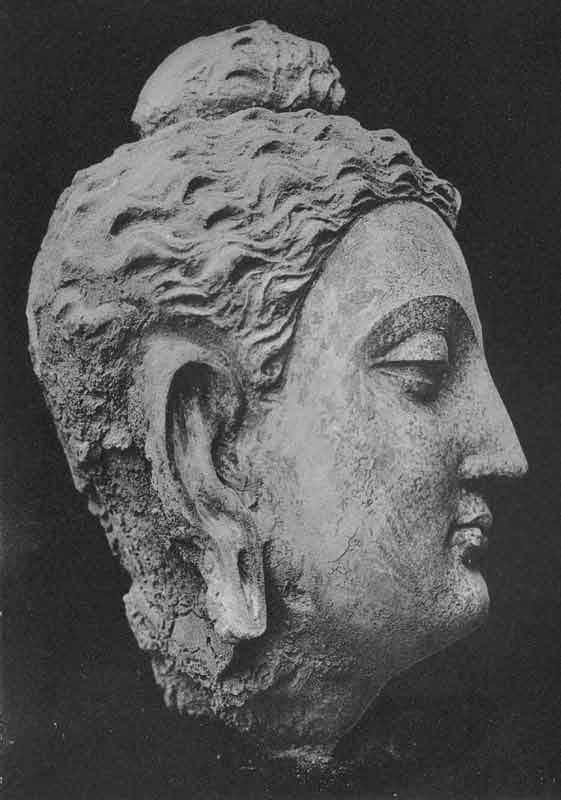
HADB 3
佛头像
灰泥 · 塔帕·卡兰
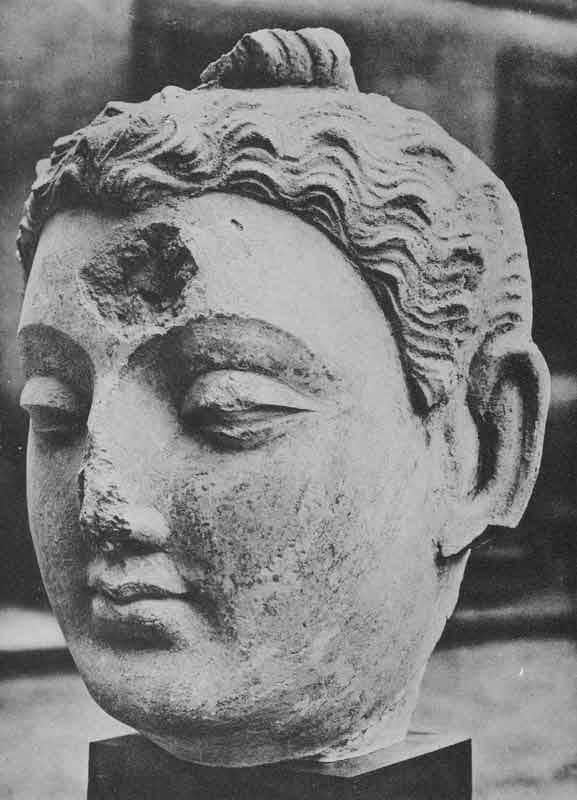
HADB 4
佛头像
灰泥 · 塔帕·卡兰
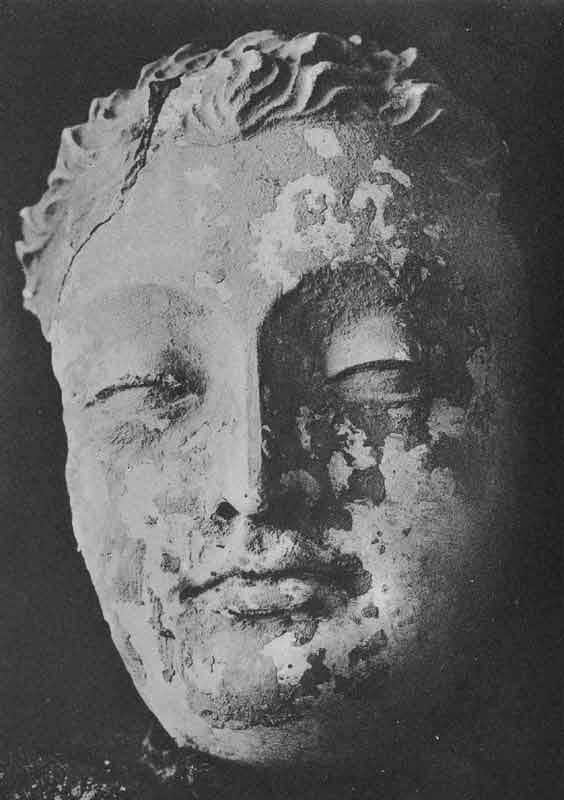
HADB 5
佛头像
石灰基灰泥 · 塔帕·卡兰
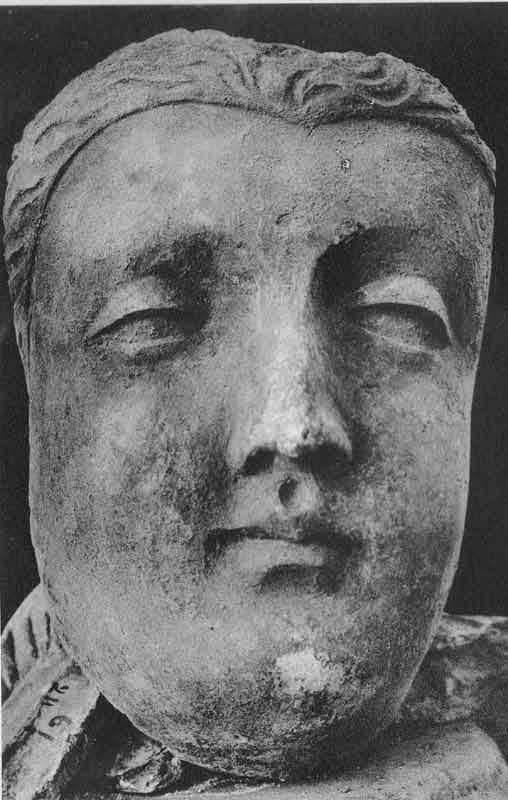
HADB 6
佛头像
灰泥 · 塔帕·卡兰
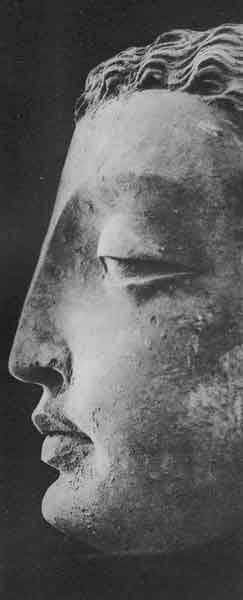
HADB 7
佛头像
灰泥 · 塔帕·卡兰
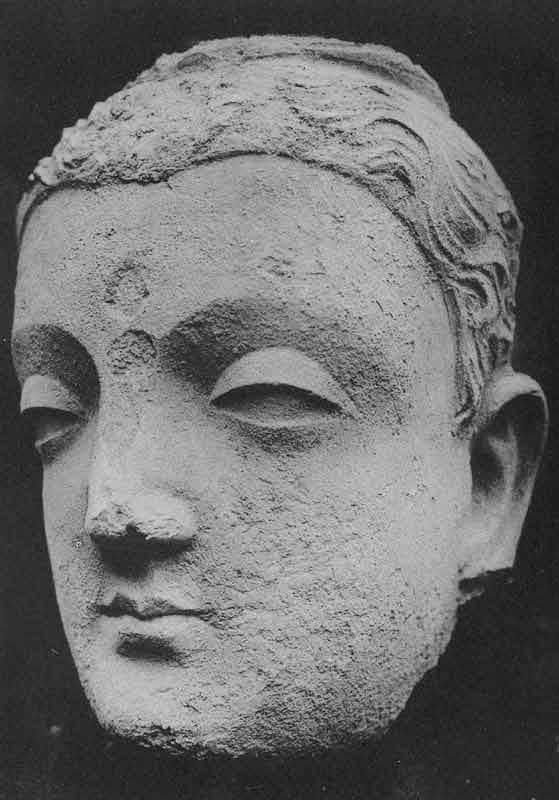
HADB 8
佛头像
灰泥 · 塔帕·卡兰
HADB 9
佛头像
灰泥 · 塔帕·卡兰
HADB 11
佛头像
灰泥 · 塔帕·卡兰
HADB 12
佛头像
灰泥 · 塔帕·卡兰
HADB 13
佛头像
灰泥 · 塔帕·卡兰
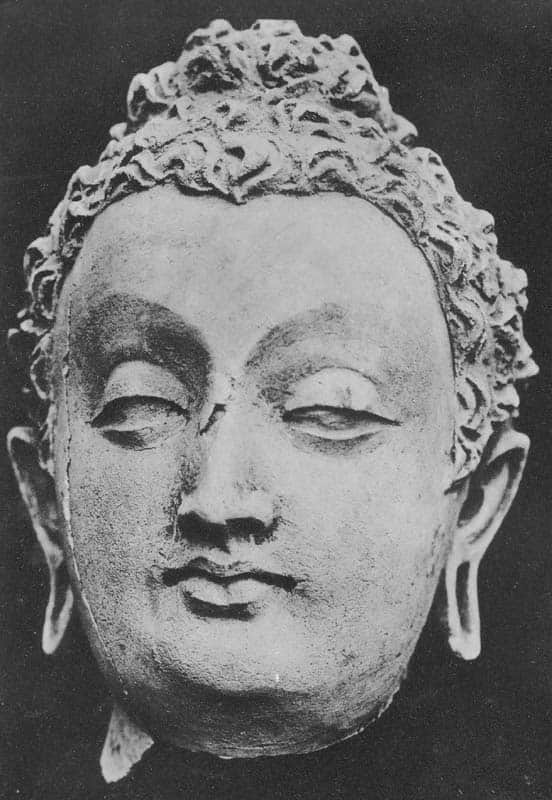
HADB 14
佛头像
灰泥 · 塔帕·卡兰
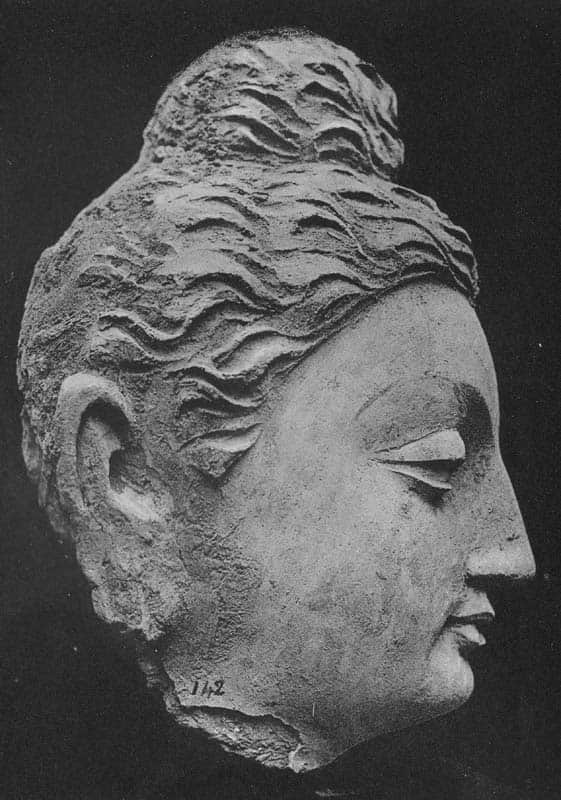
HADB 15
佛头像
灰泥 · 塔帕·卡兰
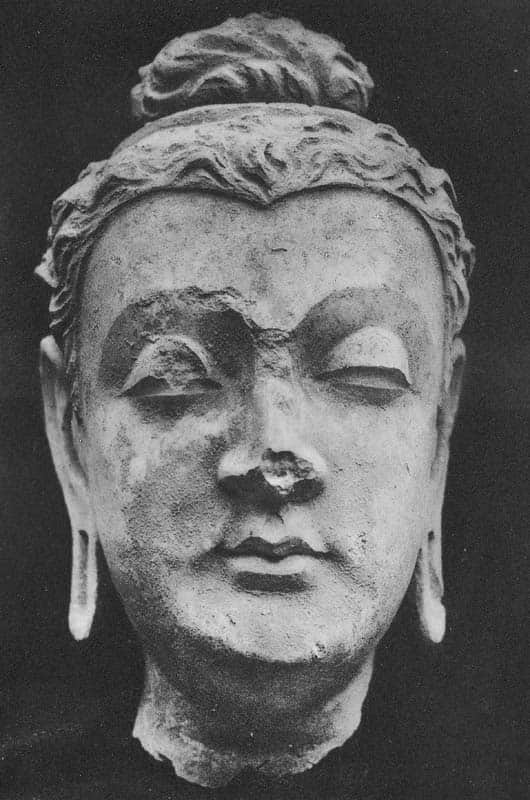
HADB 19
佛头像
灰泥 · 塔帕·卡兰
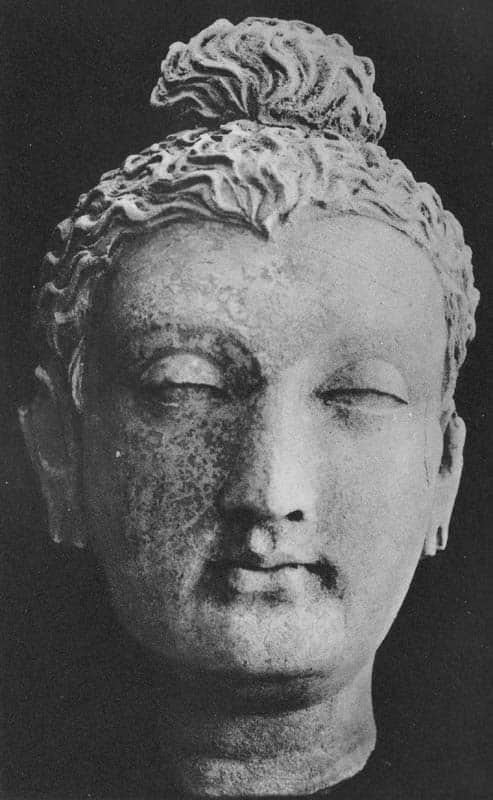
HADB 20
佛头像
灰泥 · 塔帕·卡兰
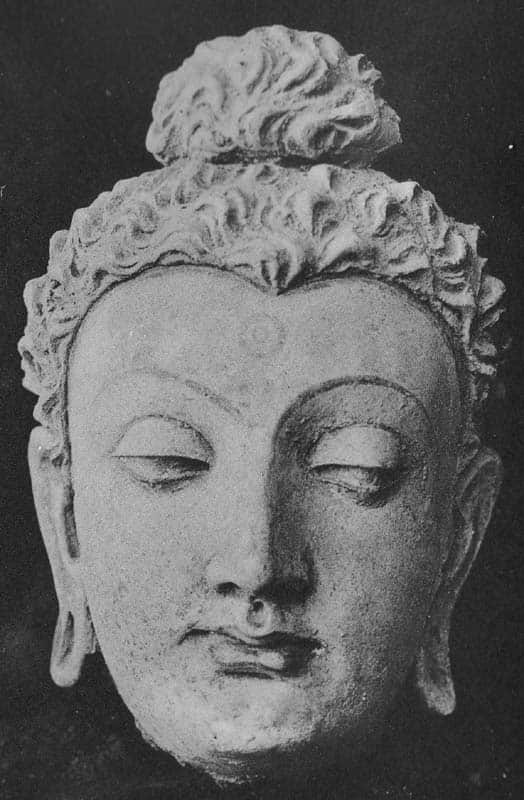
HADB 22
佛头像
灰泥 · 塔帕·卡兰
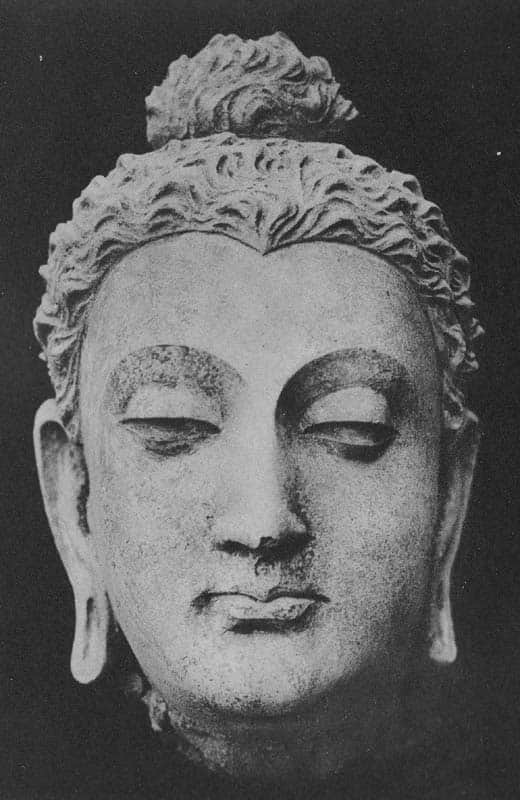
HADB 23
佛头像
灰泥 · 塔帕·卡兰
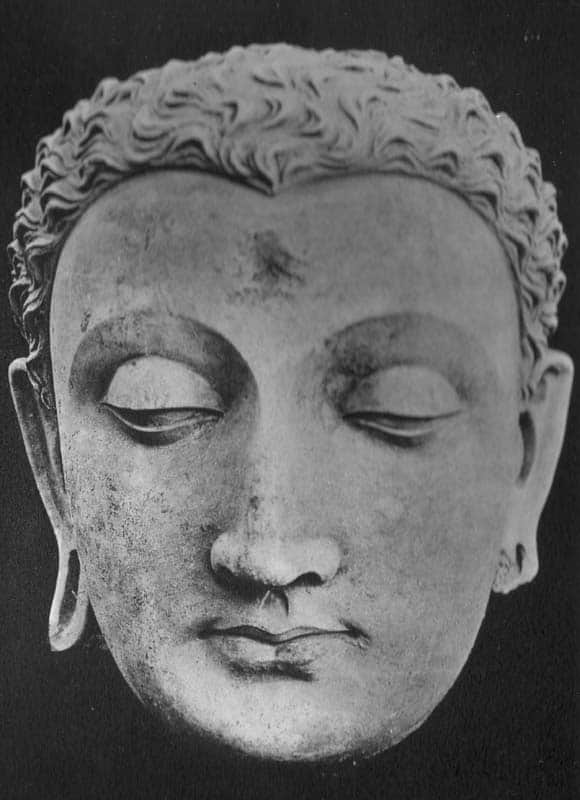
HADB 24
佛头像
灰泥 · 塔帕·卡兰
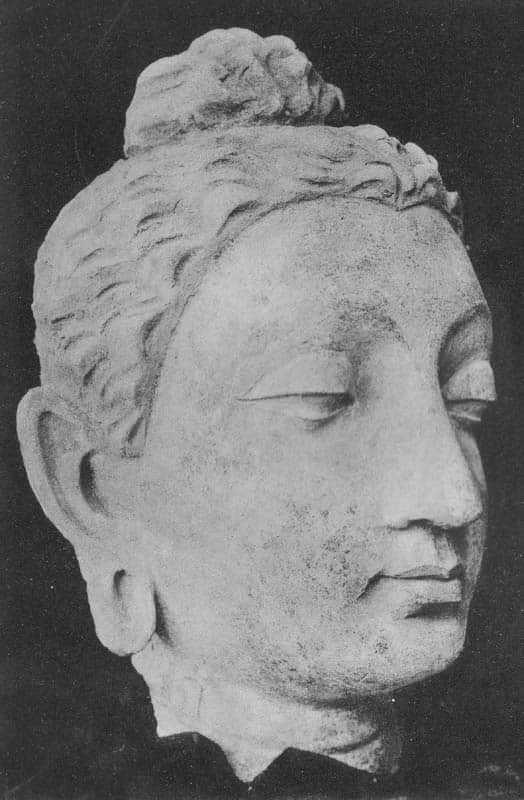
HADB 25
佛头像
灰泥 · 塔帕·卡兰
HADB 26
佛头像
灰泥 · 塔帕·卡兰
HADB 27
佛头像
灰泥 · 塔帕·卡兰
HADB 28
佛头像
灰泥 · 塔帕·卡兰
HADB 32
佛头像
灰泥 · 塔帕·卡兰
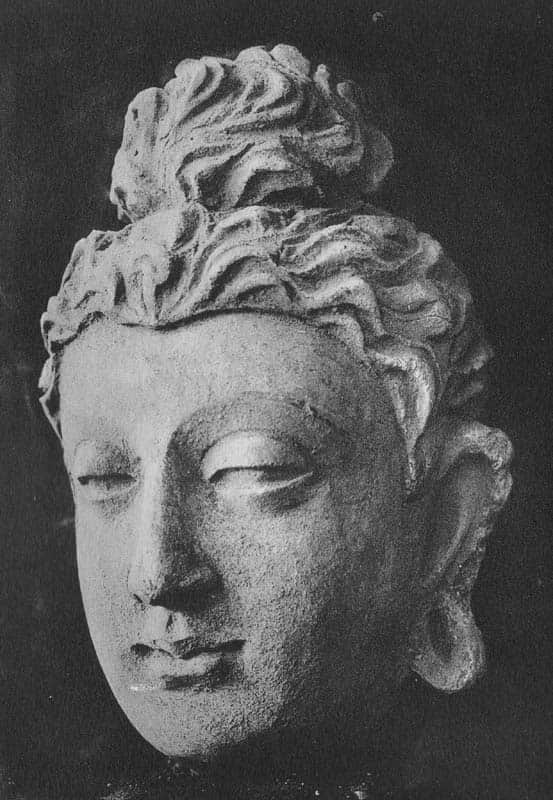
HADB 34
佛头像
灰泥 · 塔帕·卡兰
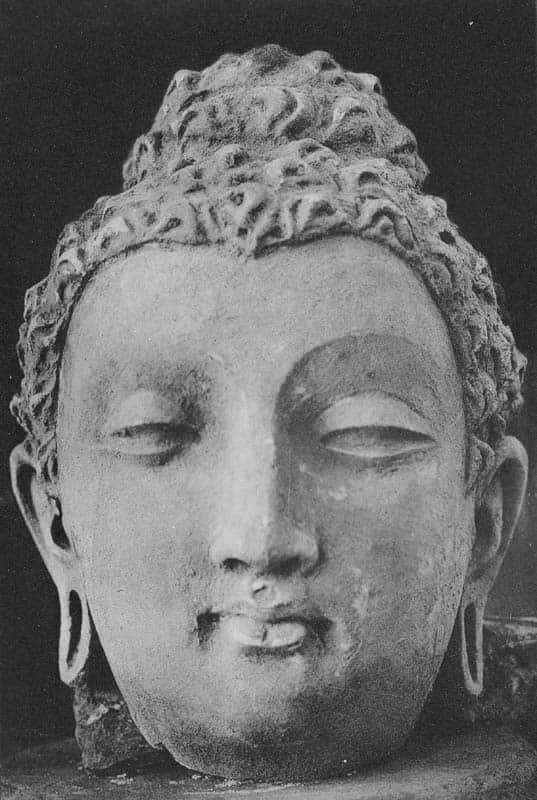
HADB 35
佛头像
灰泥 · 塔帕·卡兰
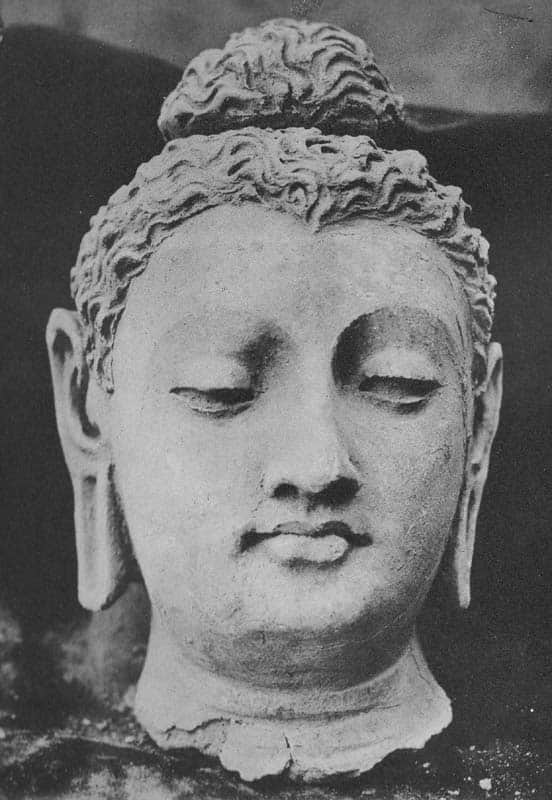
HADB 36
佛头像
灰泥 · 塔帕·卡兰
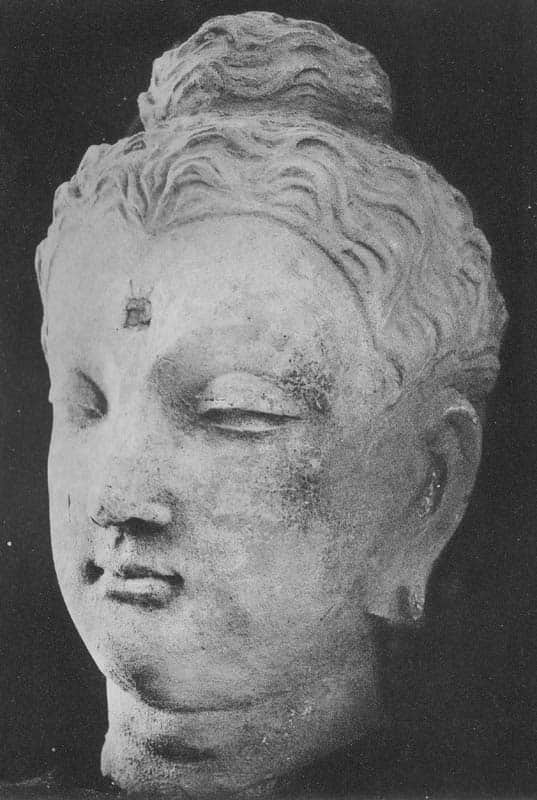
HADB 37
佛头像
灰泥 · 塔帕·卡兰
HADB 38
佛头像
灰泥 · 塔帕·卡兰
HADB 39
佛头像
灰泥 · 塔帕·卡兰
HADB 40
佛头像
灰泥 · 塔帕·卡兰
HADB 41
佛头像
灰泥 · 塔帕·卡兰
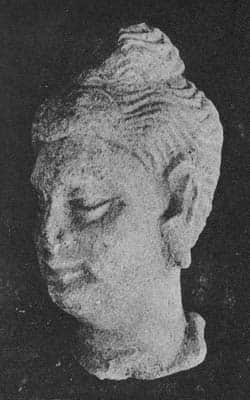
HADB 46
佛头像
石灰岩 · 塔帕·卡兰
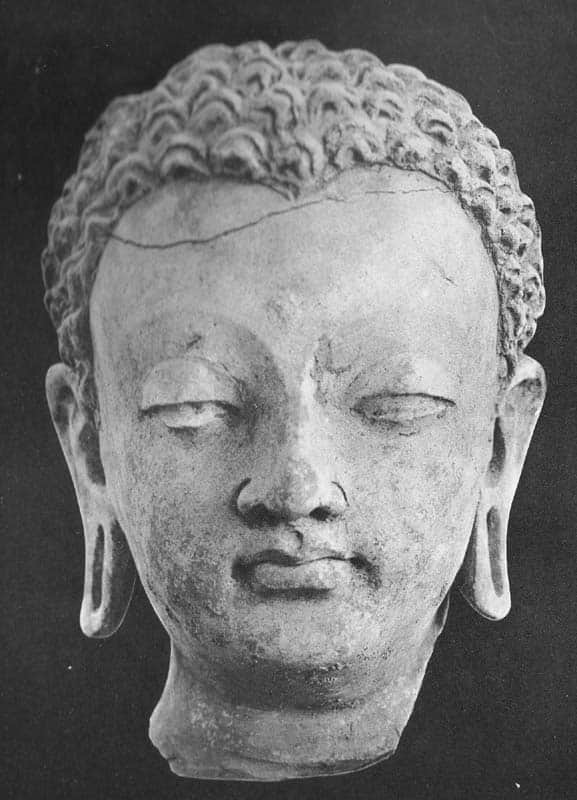
HADB 48
佛头像
灰泥 · 塔帕·卡兰
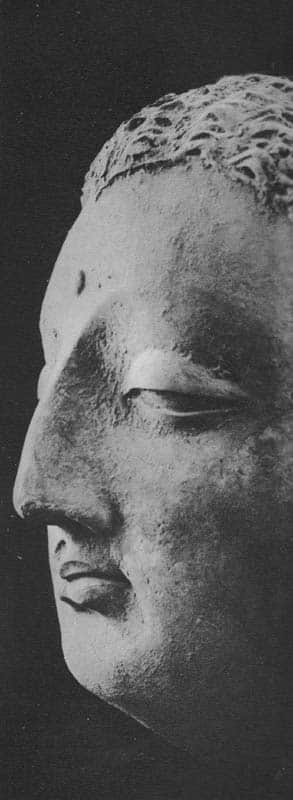
HADB 49
佛头像
灰泥 · 塔帕·卡兰
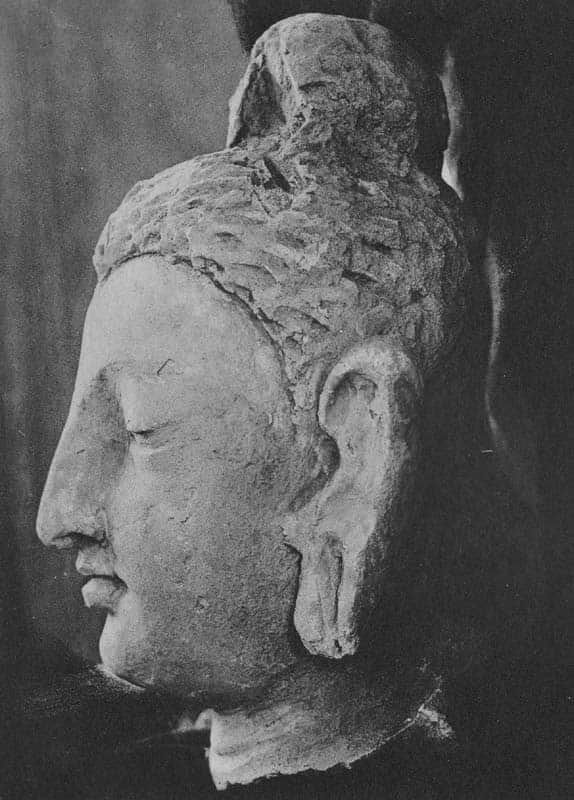
HADB 50
佛头像
灰泥 · 塔帕·卡兰
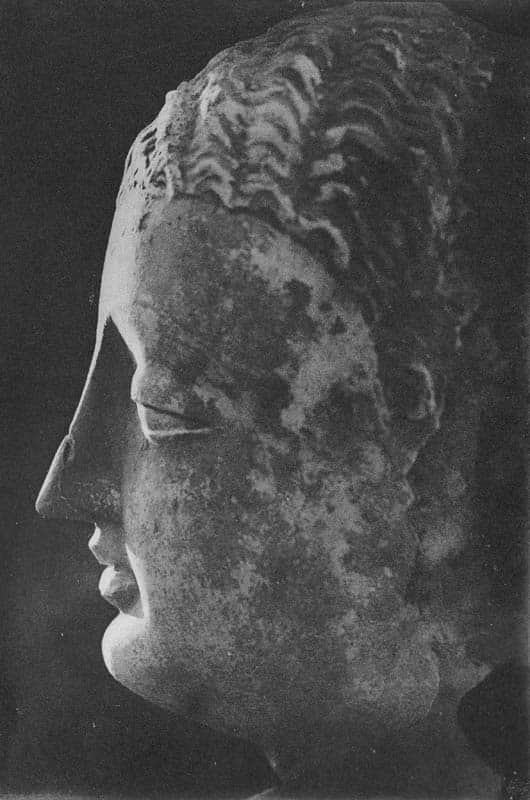
HADB 51
佛头像
灰泥 · 塔帕·卡兰
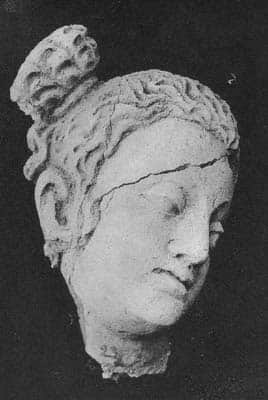
HADB 52
佛头像
灰泥 · 塔帕·卡兰
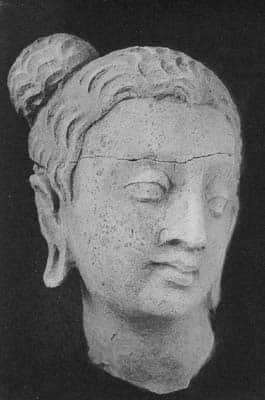
HADB 53
佛头像
灰泥 · 塔帕·卡兰
塔帕-伊-卡法里哈7 works
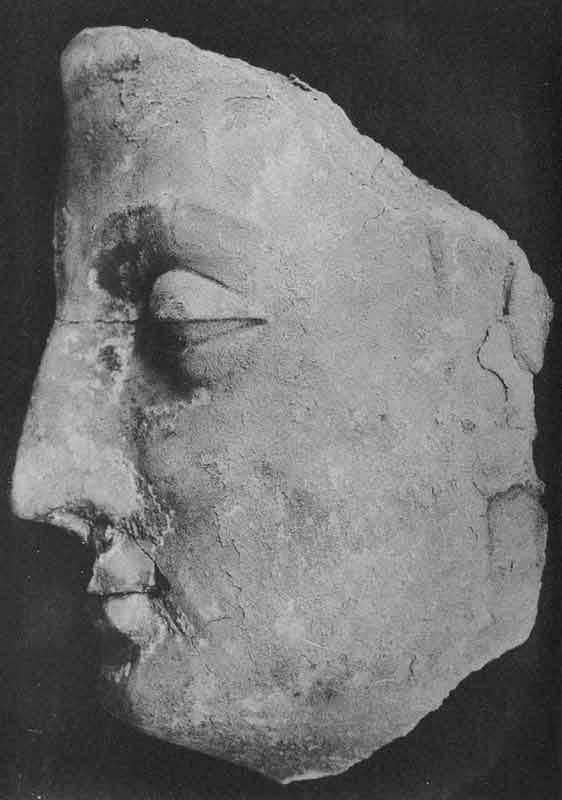
位置不详5 works
This figure in the tours
Guided tours of the database include several works of this figure.
In the identification key
The observation paths that lead to this figure in the questionnaire. Each path can be replayed.
- Idealised and sereneTopknot on the crown, wave-patterned hair, no jewelleryCompact topknot (uṣṇīṣa) and distended earlobes
- The face is missing, I mainly see the bodyEnveloping monastic robe (saṃghāṭi)A cranial topknot (uṣṇīṣa)
- The face is missing, I mainly see the bodyEnveloping monastic robe (saṃghāṭi)The head is missing