The Last Afghan Archaeologist in France: All the Buddha Statues I Unearthed Were Destroyed
Link to the original WeChat article: https://mp.weixin.qq.com/s/M_rgf2B4Vn8dbtpfwApBwg
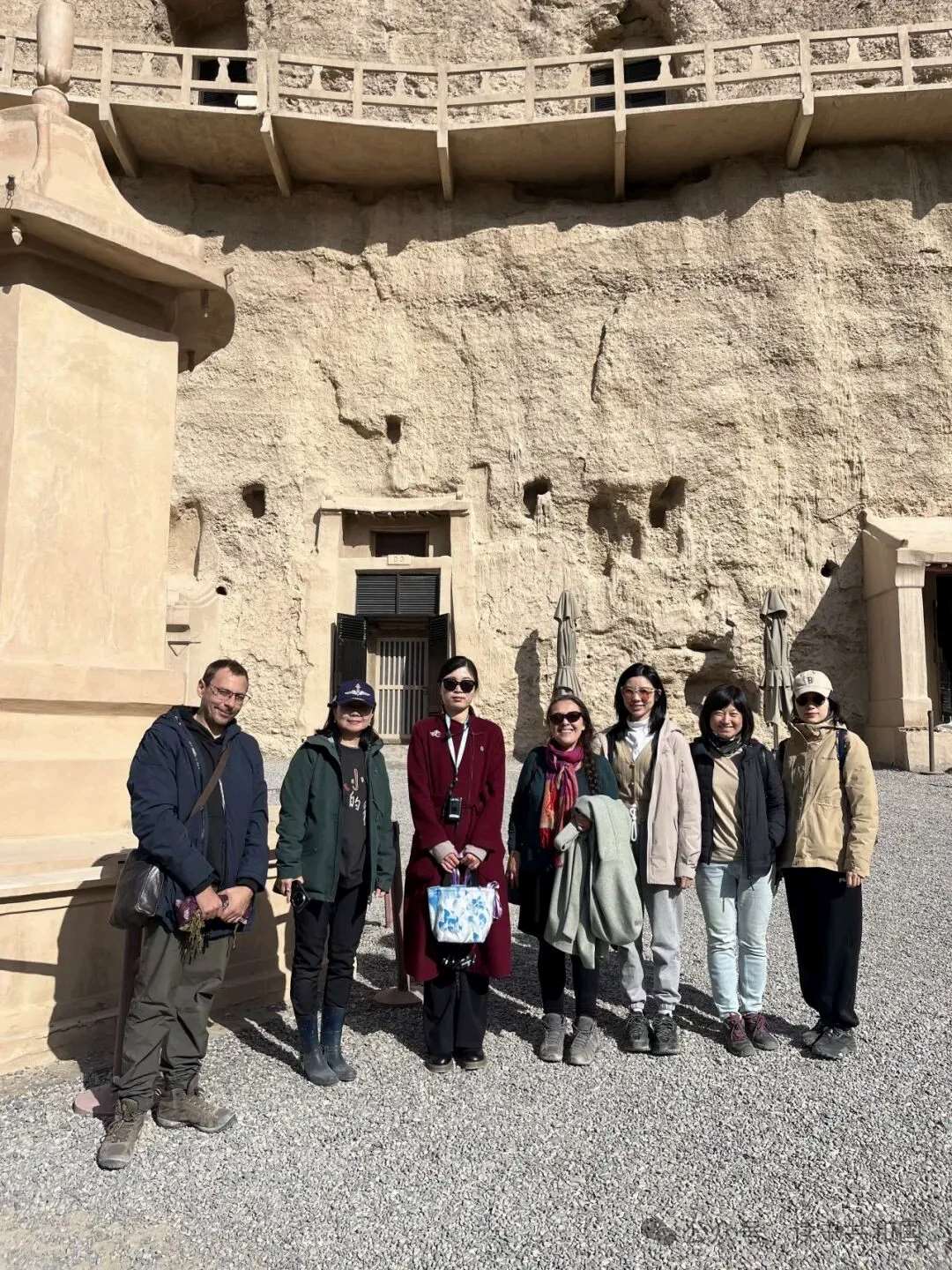
In the beautiful autumn of October, at the invitation of the Guardians of Bamiyan team and with the precious support of researcher Sun Zhijun from the Dunhuang Research Institute, French archaeologist Professor Valiane traveled to Dunhuang. There, at the Shishi Shuxuan, she delivered a public lecture for the many citizens passionate about the Silk Road and Afghan civilization.
Zhao Di, a volunteer from the Guardians team, provided on-site interpretation. Here is the detailed content of the lecture.
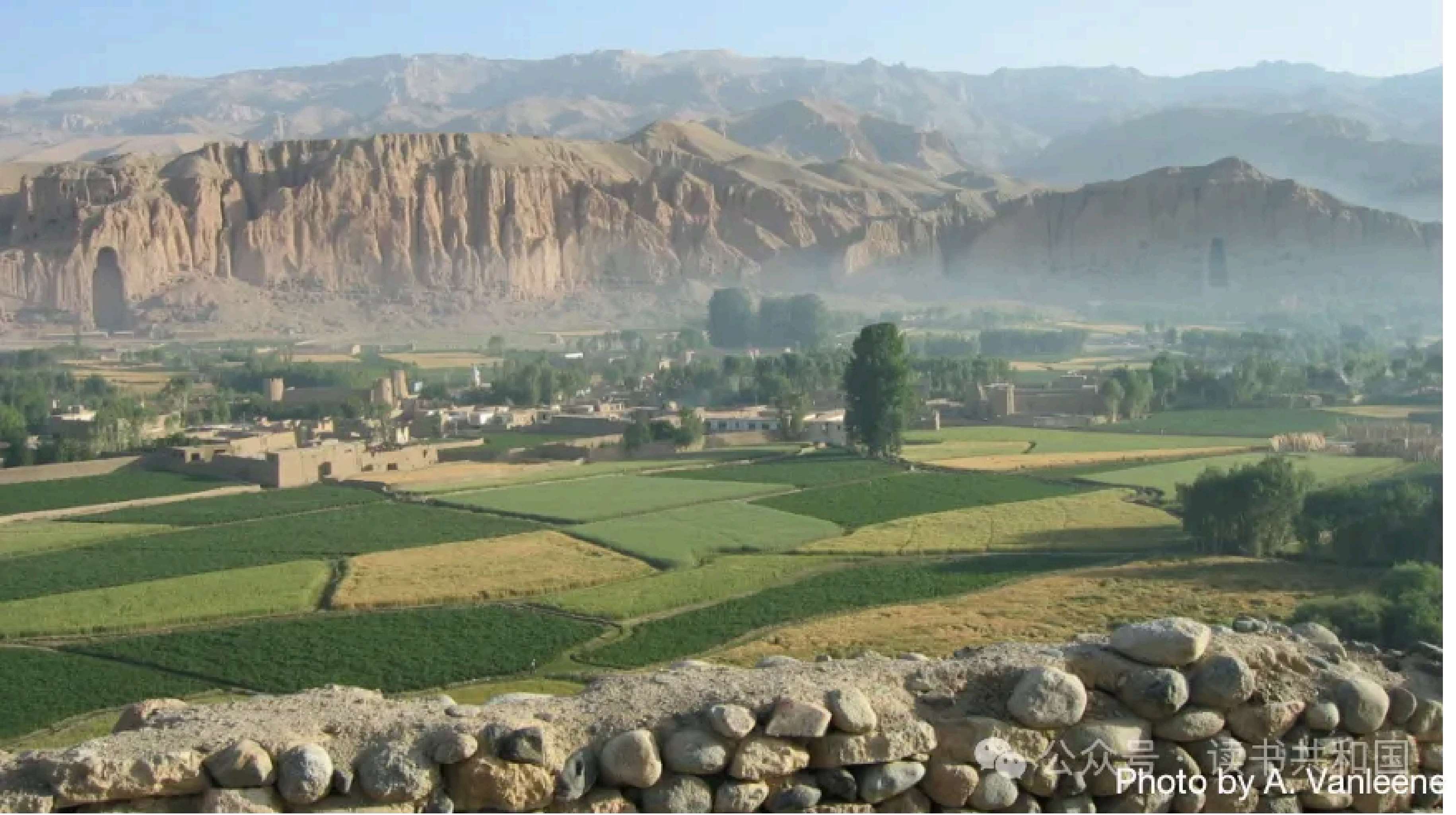
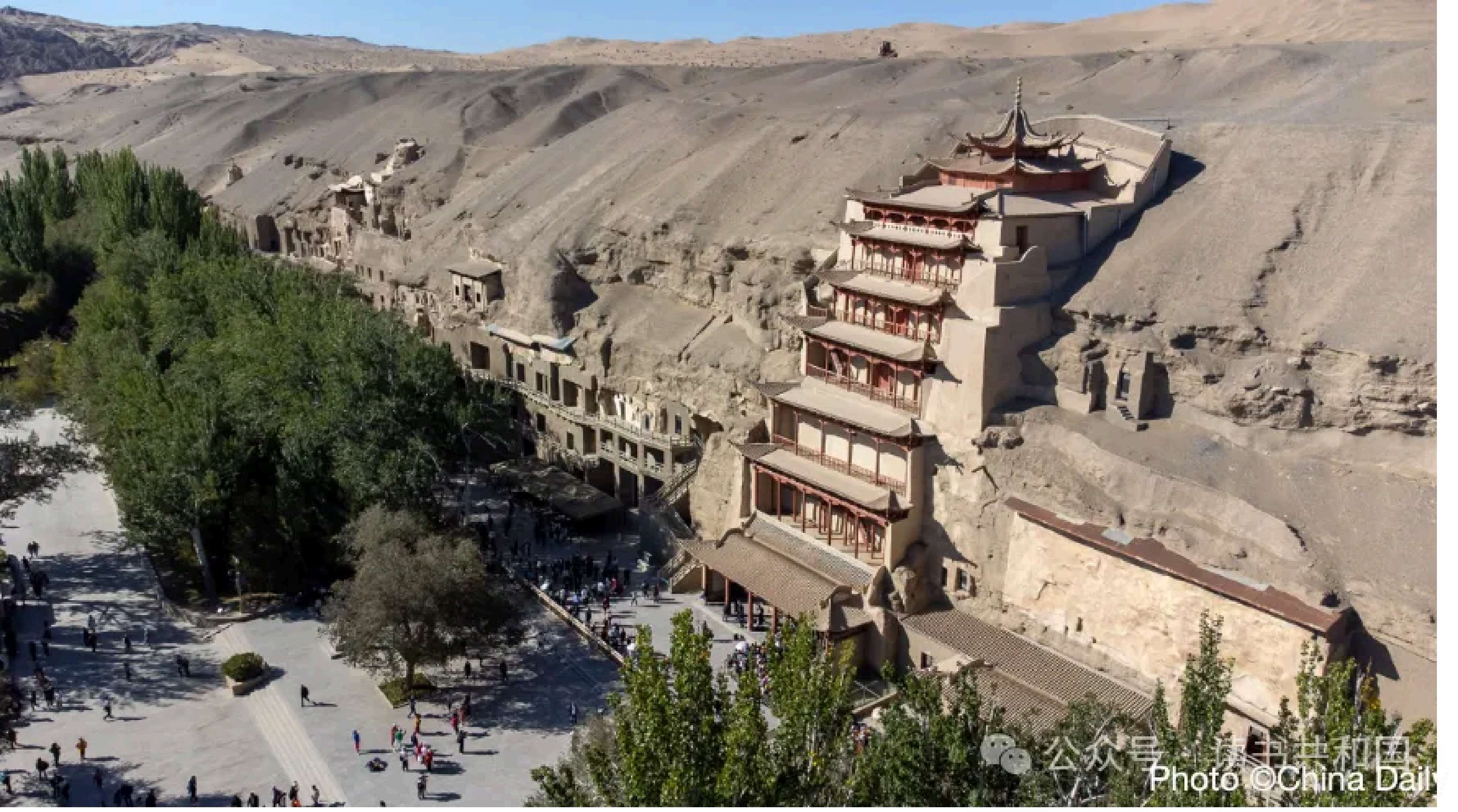
This lecture will focus on the artistic links between China and Afghanistan, located at the heart of the Asian continent, and will offer an in-depth analysis of several major Buddhist sites: the Mogao Caves in Dunhuang, the Bamiyan Caves, and the monastic site of Hadda.
These ancient Buddhist sites were mentioned in the travel accounts of Faxian, Song Yun, and Xuanzang. Xuanzang passed through Afghanistan during his long journey to India and on his return. After crossing Xinjiang and the desert, he reached Bamiyan around 632 AD, then Hadda in 634 AD.
Before briefly presenting Hadda and the Bamiyan Caves, perhaps less well-known to the public than Mogao, I wish to clarify that this lecture is primarily based on the research of my late master, Professor Zémaryalaï Tarzi, whom I deeply revered.
Professor Tarzi was an eminent specialist in Afghan Buddhist archaeology. He successively directed the Afghan National Authority for Antiquities and Historical Monument Preservation, as well as the archaeological excavations at Hadda and Bamiyan. As a professor at the University of Strasbourg, he played an essential role both as a field archaeologist and as a teacher-researcher.
His foundational work made an invaluable contribution to the development of archaeology in Afghanistan and Central Asia.
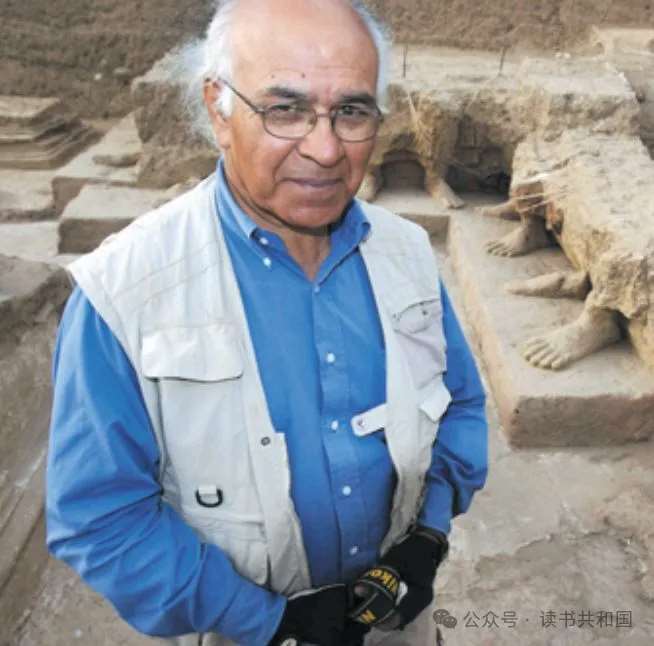
Hadda and Bamiyan were two great renowned religious centers of the Silk Road. Since antiquity, pilgrims have traveled this route, crossing the Greater Gandhāra region to journey between India and China.
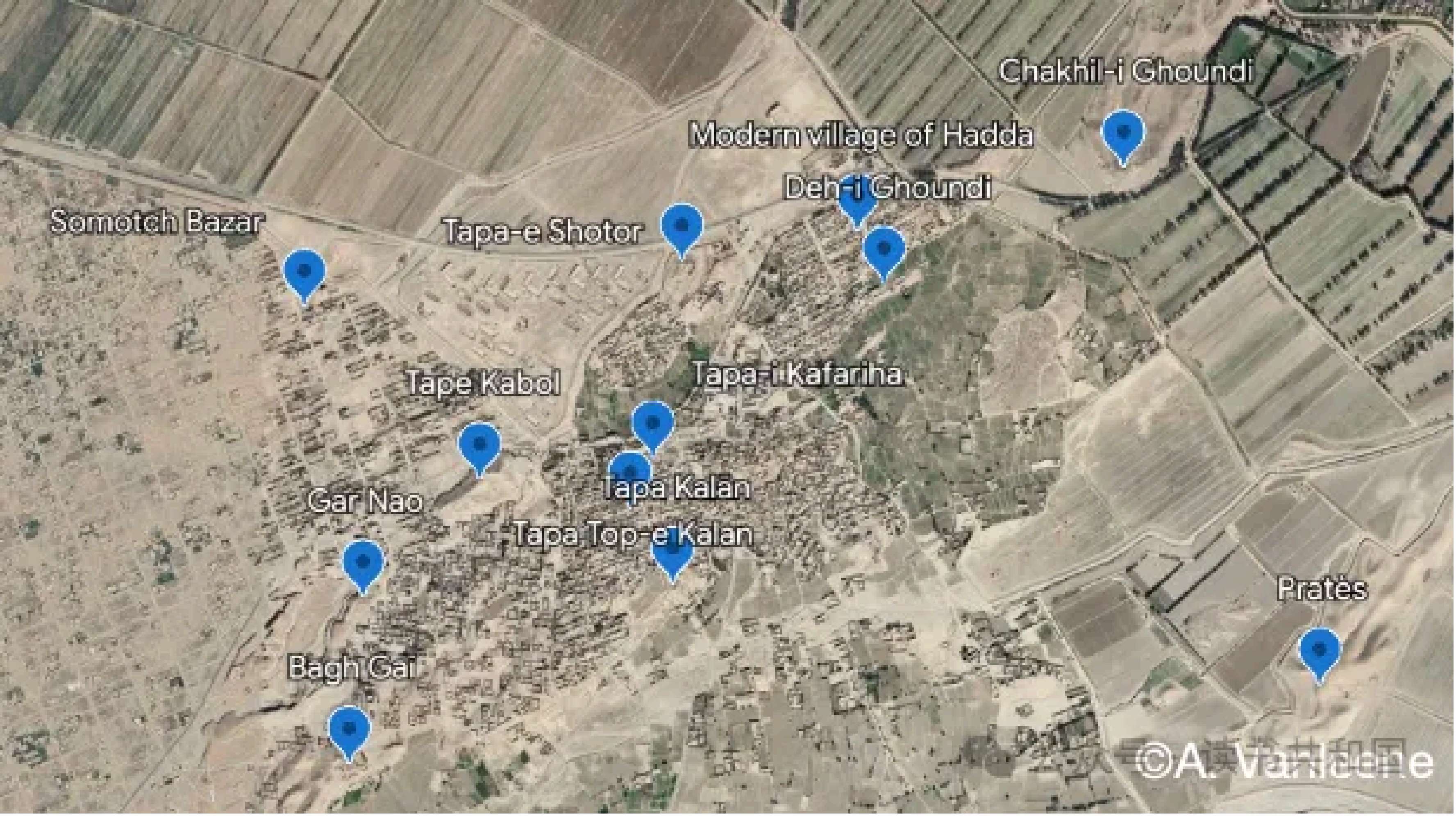
The Hadda site is located approximately 12 kilometers south of the present-day city of Jalālābād, in Nangarhār Province, Afghanistan, at a strategic location opening the route to India. The site consists of several dozen large monasteries, of which about ten have been excavated: Tape Kalān, Bāgh Gaï, Gār Naô, Pratès, Chakhil-i Ghoundi, Deh-i Ghoundi, Tapa-i Kafarihā, Lalma, Tape Shotor, and Tapa Tope Kalān.
The monasteries of Hadda primarily belonged to the Sarvāstivāda and Theravāda Buddhist schools. They experienced a long period of activity, from the 2nd to the 9th century CE. When Master Xuanzang visited the Jalālābād region, then the kingdoms of Nagarāhāra and Hadda, he described a flourishing Buddhist kingdom, rich in vegetation, with a prosperous cult. The monasteries preserved precious relics of the Buddha, attracting pilgrims from all directions.
Xuanzang vividly depicts: "Here, trees and flowers abound; the lakes are as clear as mirrors." And these are only a few of the many marveling descriptions he left behind.
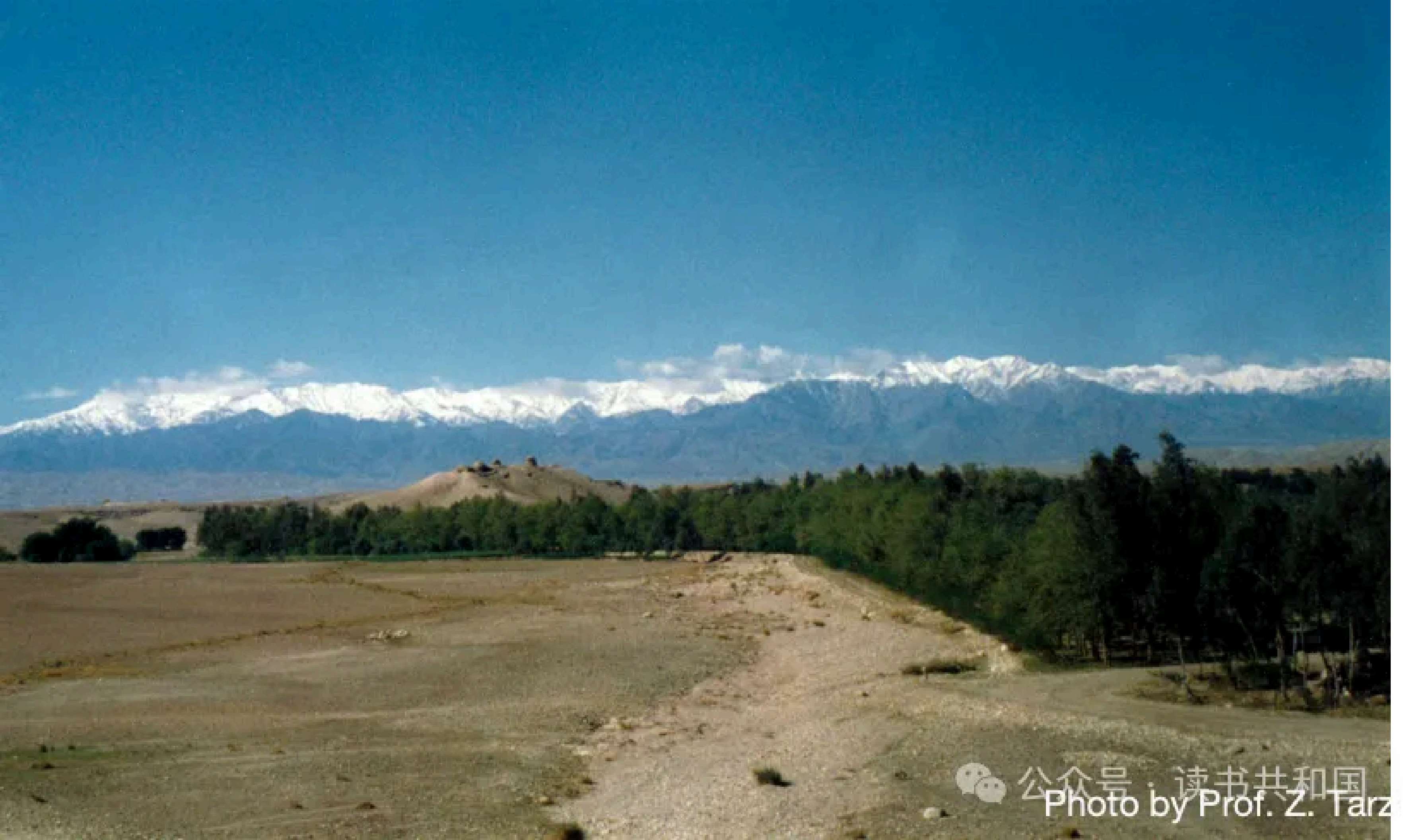
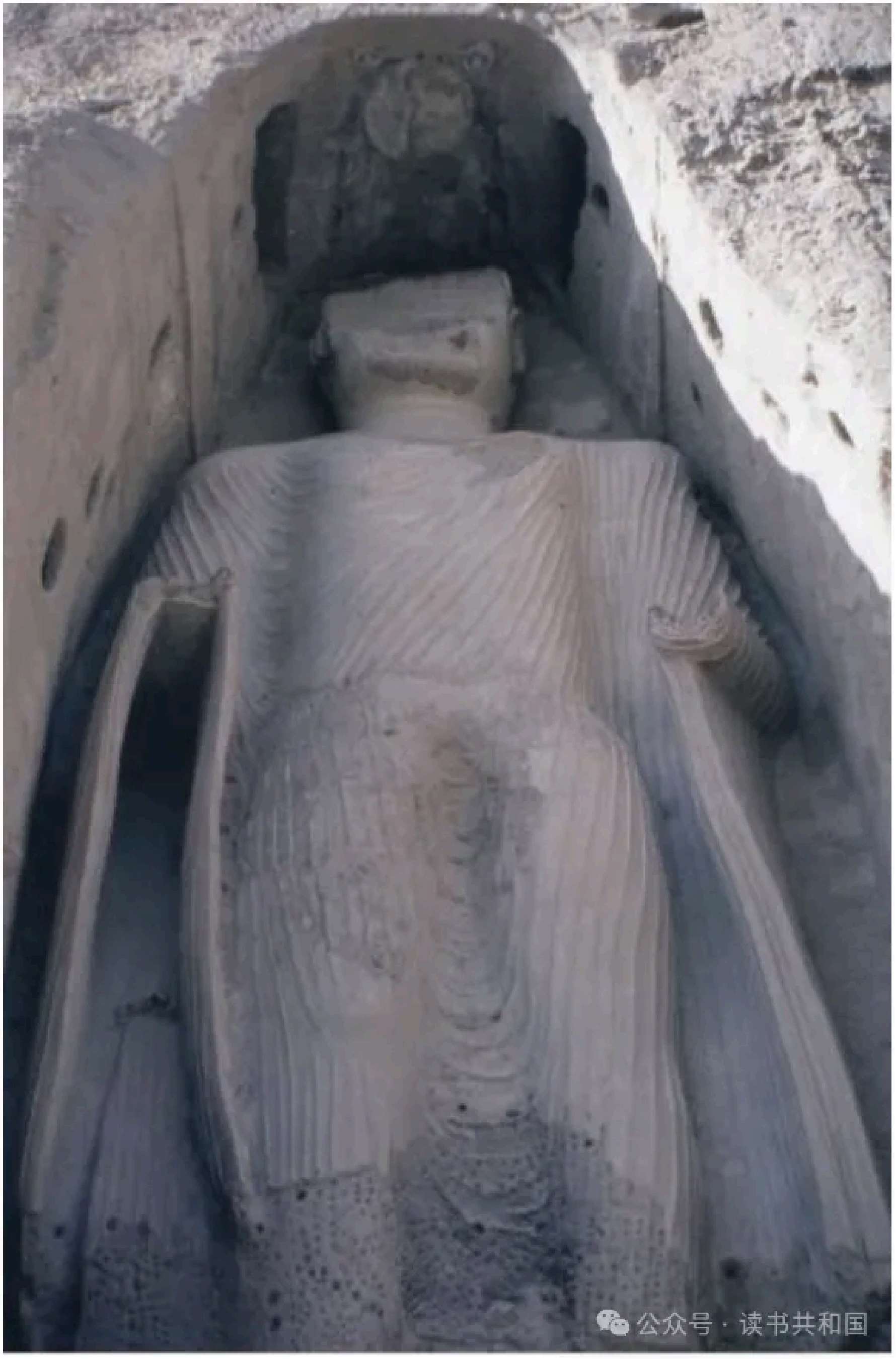
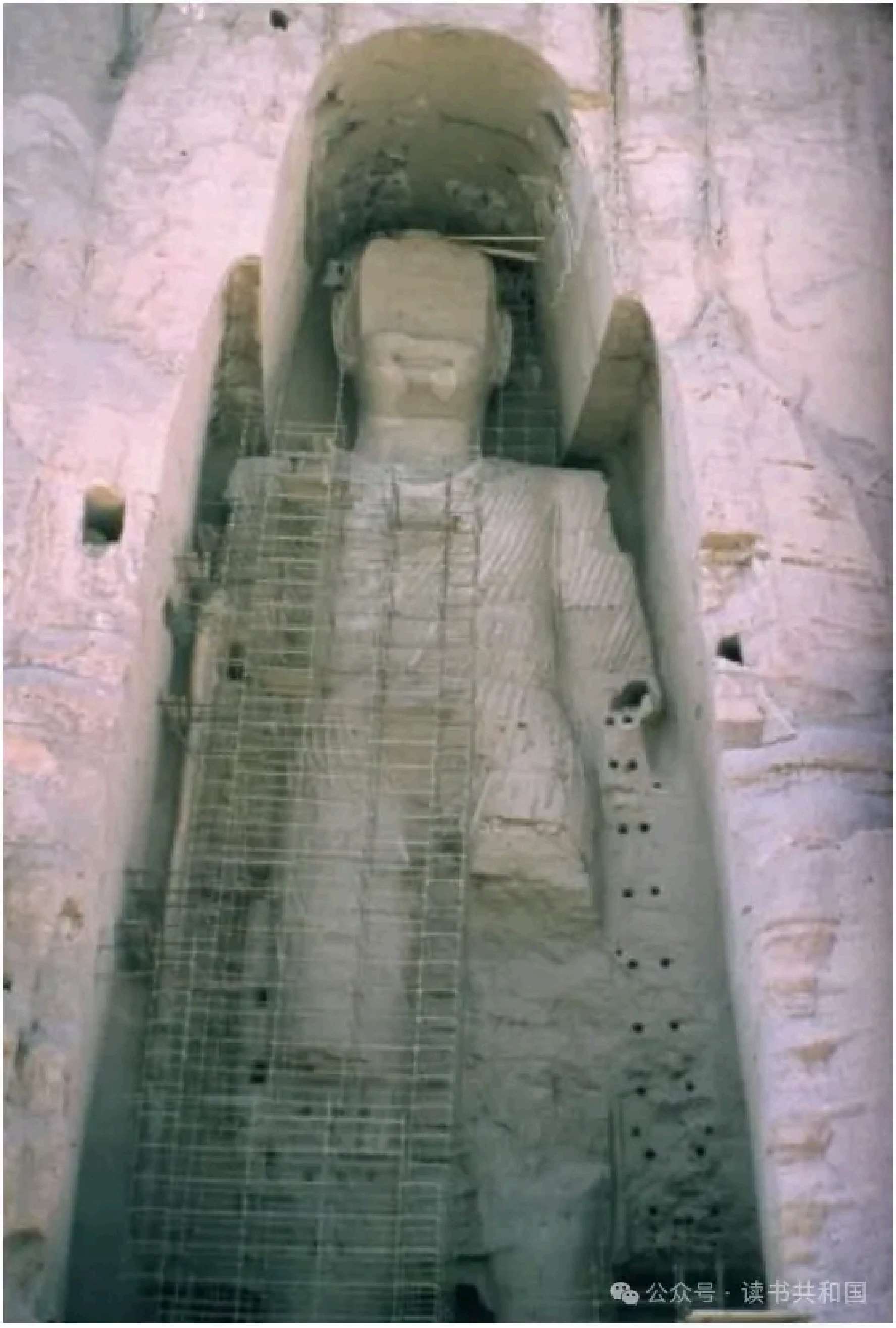
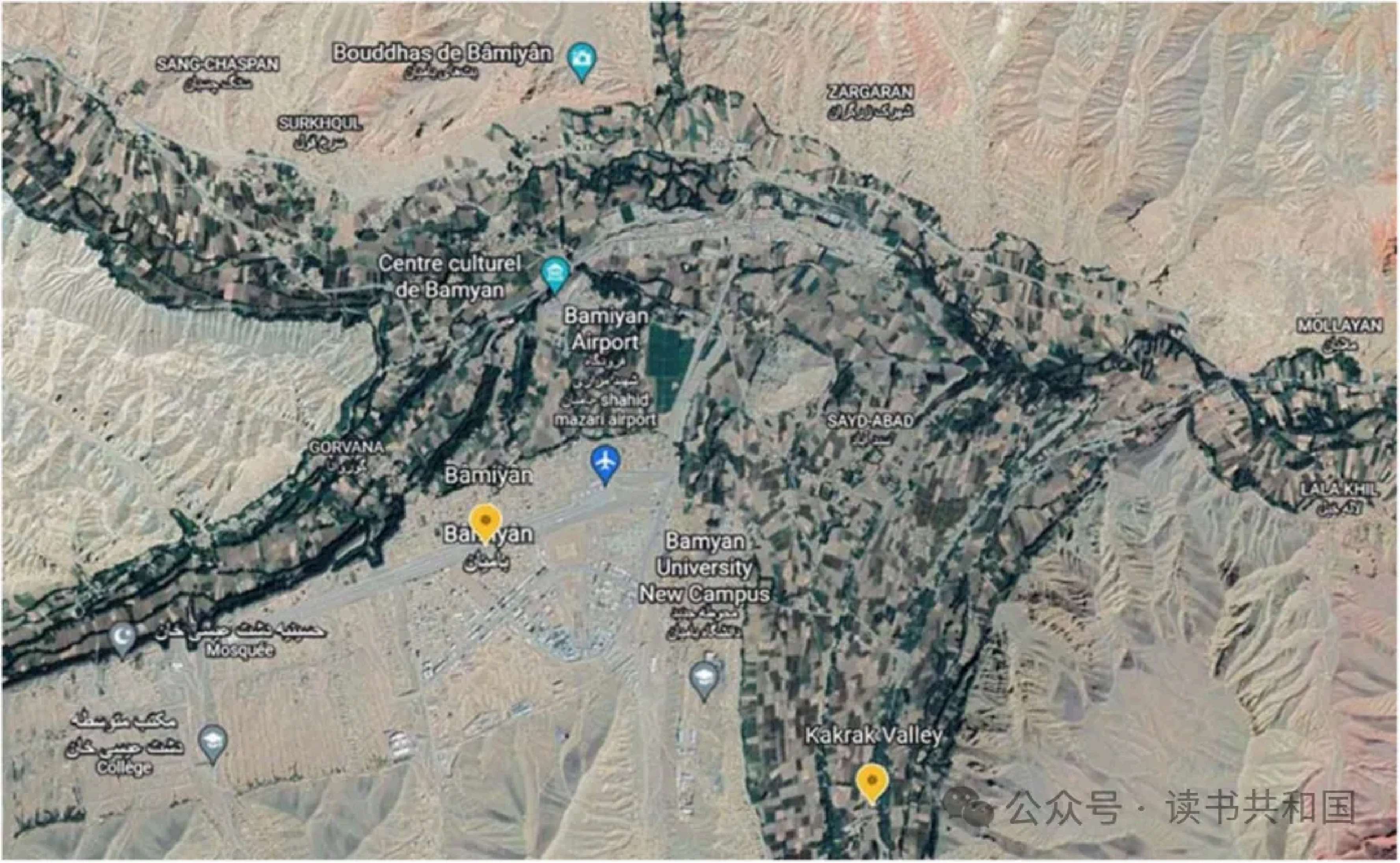
Bamiyan is located approximately 200 kilometers west of Kabul, at the strategic heart of the Hindu Kush mountain range. For centuries, pilgrims have admired the splendor of this valley, the prosperity of its Buddhist monasteries, and the immense cliff stretching from east to west, carved with tens of thousands of richly decorated caves. Two colossal statues dominated the landscape: several centuries later, they were designated in Dari as Buddha xord ("the smaller," the eastern statue of 38 m) and Buddha kalān ("the greater," the western statue of 55 m).
Thanks to the detailed descriptions left by Xuanzang, Professor Tarzi was able to determine the location of the eastern and western monasteries. His research conducted over several decades revealed two major construction phases:
– The first, beginning in the 3rd century (possibly as early as the 2nd century), continued until the late 5th or early 6th century, with a period of interruption between two peaks of activity.
– The second was marked by restoration work and a vast program of stupa construction. Tarzi dates it to the mid-6th century or early 7th century.
This second period corresponds to a revival, illustrated by:
- the construction of the 55-meter Buddha,
- the carving and decoration of numerous caves,
- the restoration of the 38-meter Buddha, including the renewal of the stucco coating of the great stupa No. 1.
The restoration of stupa No. 1 likely played a catalytic role, leading to large-scale renovation, expansion, or even partial reconstruction of the eastern monastery.
According to historical sources, in 871 AD, an Arab general offered to the Abbasid court in Baghdad a golden statue from Bamiyan, an event that sealed the end of this period of splendor.
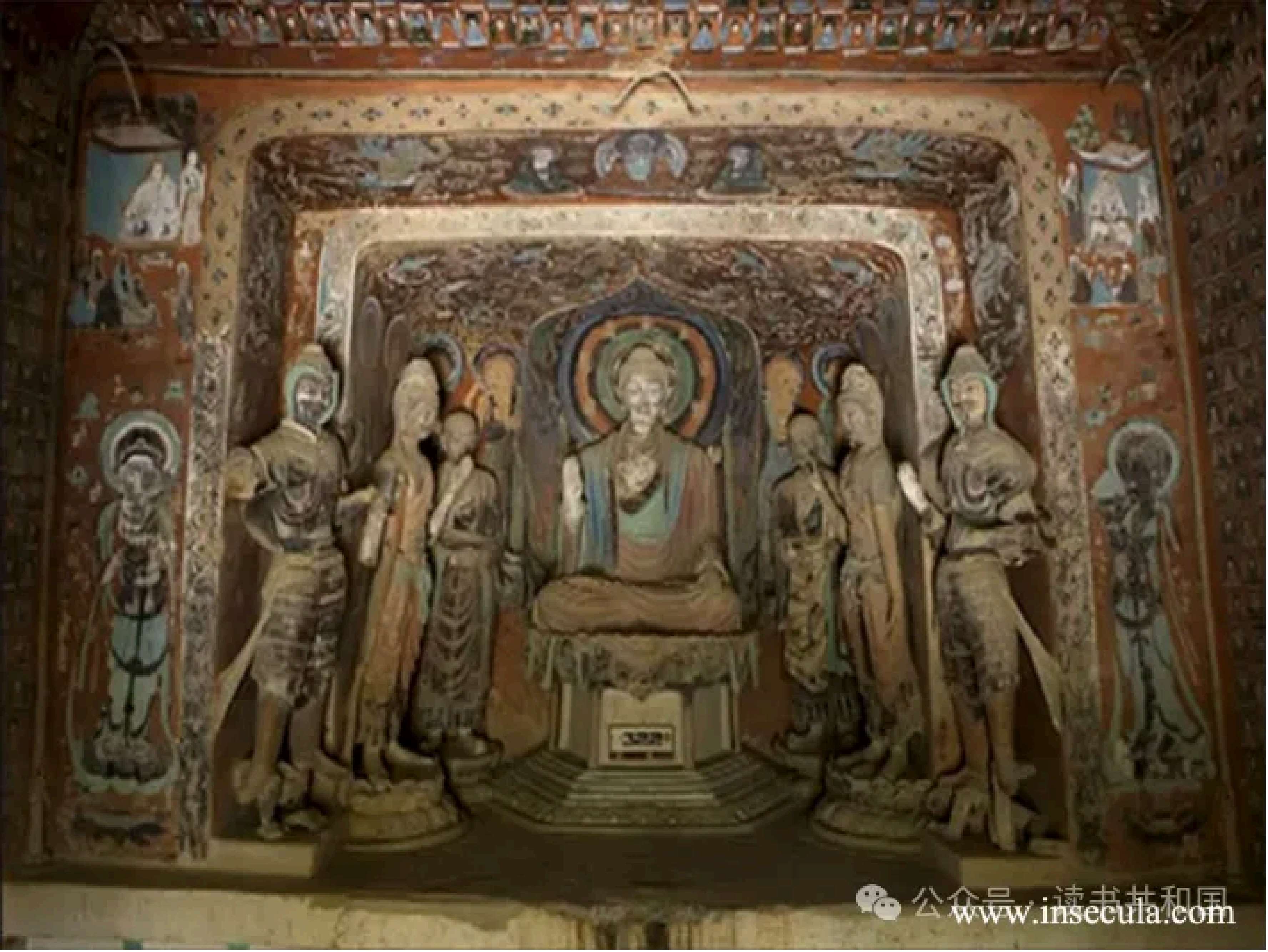
The Mogao Caves, located in an oasis near Dunhuang, are among the most important ensembles of Buddhist art in China. From the 4th to the 14th century, more than 700 caves were carved into the cliff overlooking the Daquan River: they served simultaneously as monastic cells, meditation sites, and devotional centers.
The murals and sculptures adorning these caves are remarkably rich and vividly illustrate the spread and evolution of Buddhist art along the Silk Road.
Let us now turn our attention to the Buddhist monasteries of Hadda.
From their discovery, the works of Hadda have inspired admiration for their exceptional aesthetic value. Their artistic decoration reflects a complex blend of influences: local elements, Indian, Iranian, Greco-Roman, and Central Asian styles. Their influence extended from Bamiyan and Kapisha to Xinjiang.
Regarding Hadda, I wish to present a research project that I myself conceived and developed over many years in close collaboration with Mr. Thierry Beat: the Hadda Archaeological Database project, launched in 2016 (https://haddaarcheodb.com).
This project aims to preserve the artistic and archaeological heritage of the Hadda monasteries, and more broadly of Afghanistan, while providing researchers and students with complete access to scientific data. The digitization of these materials promotes the study of works, exploration of artistic influences, and analysis of iconographic themes.
I warmly invite you to discover this project.

Let us return to the central theme of our meeting: the artistic exchanges between these great Buddhist sites of antiquity.
I will present several examples comparing murals and sculptures, as well as certain compositional and architectural design solutions specific to precise rock-cut contexts, in order to highlight kinship ties and reciprocal influences.
Regarding painting, let us take the example of Cave A of the Tape Shotor monastery, discovered and studied by Professor Tarzi in 1976. Its construction dates back to the second half of the 3rd century CE, while its paintings were executed between the mid-4th century and early 5th century, during repair work following a collapse.
The cave consists of a vaulted corridor 9.6 m long, 2.85 m wide, and 2.2 m high.
The lower part of the walls is adorned with hangings in alternating colors.
In the upper part, ten monks in contemplation are depicted: dressed in monastic robes, seated in meditation posture, in an Indian style, each under a tree, their names inscribed in Brāhmī script.
On the wall facing the entrance is a skeletal figure with black outline, placed between two monks.
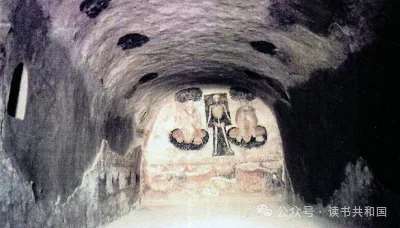
Above the entrance is represented a protective deity, wearing an ornate crown and angular-patterned armor.
Its appearance recalls the murals of Bamiyan, Xinjiang, and other sites: similar figures are found at Miran, Bezeklik, and Dunhuang.
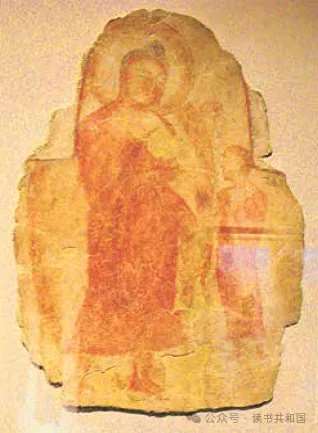
Similarly, in the paintings of Building No. 56 at Bāgh Gaï in Hadda, representations of the Buddha accompanied by monks clearly demonstrate influence from Central Asian China.
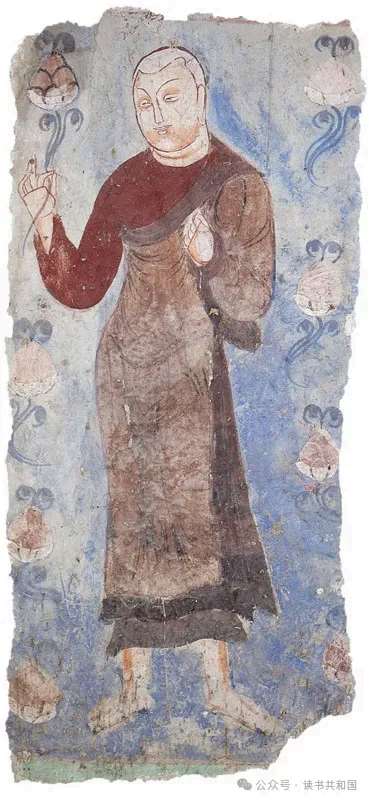
Let us now examine the sculptures of Hadda: they present very distinctive characteristics and show strong similarities with those unearthed at Tumshuq, Kucha, and Dunhuang.
However, what particularly captures our attention, as European researchers, is the clearly identifiable presence of three distinct artistic styles in the sculpted heads of Hadda: Greco-Roman, Central Asian, and Indian.
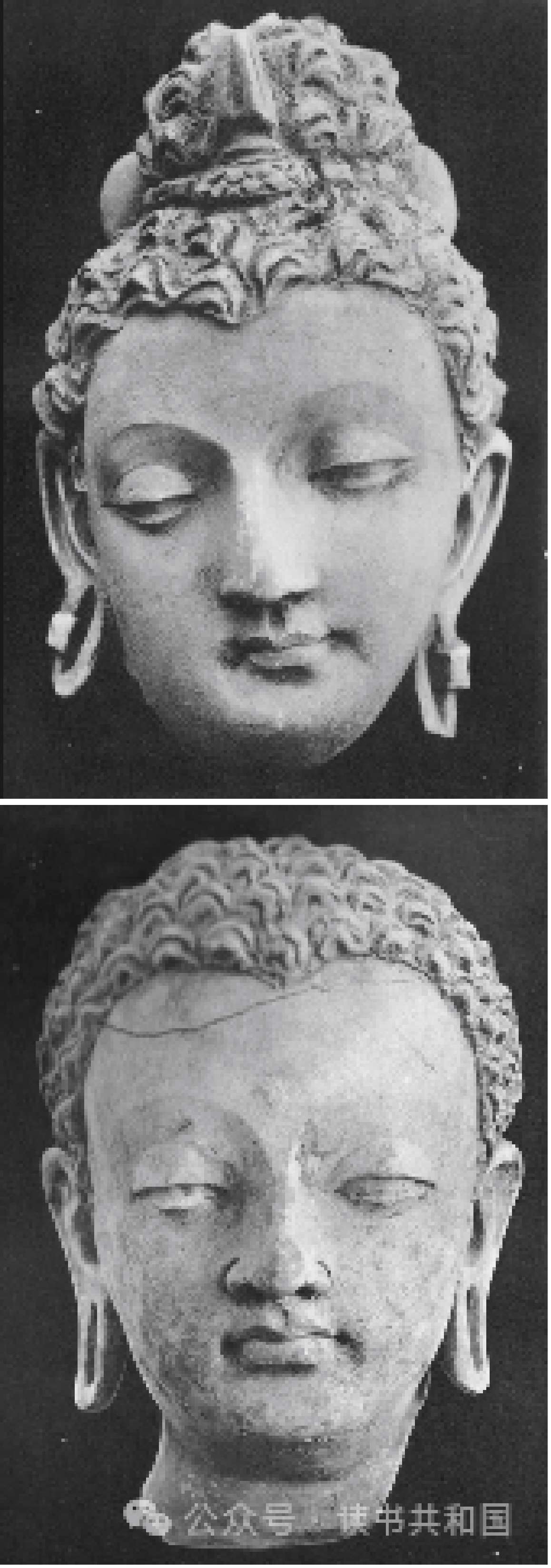
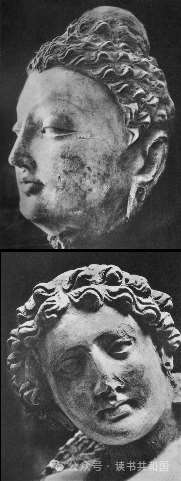
Let us take an example: admire this Central Asian-style bodhisattva head.
In this style, the forehead presents a characteristic curve, emphasized by painted eyebrows forming a broad and distinctive arc. The lower part of the face is square, while rounded cheeks add volume.
The hairstyle is remarkable: a sumptuous crown composed of round pearls, increasing in size as they approach the center, topped by a fan-shaped motif evoking palm leaves. On each side of the crown, at ear level, rise two pointed protuberances. The curled locks of the chignon frame the forehead with parallel waves.
The facial features are idealized: half-closed eyes, subtle smile, full and serene face.
At the center of the forehead, just above the eyebrows, a disc modeled in stucco represents the ūrṇā, a sign of spiritual perfection. The eyebrows are painted, and traces of polychromy can still be seen on other parts of the sculpture.
A similar style is found in bodhisattva heads discovered at Kucha: the square shape of the lower face, contrasting with full cheeks, accentuates the impression of width and majesty.
Although differences exist in the treatment of the hairstyle, crown, or ornaments, the artists of Hadda clearly drew inspiration from Central Asian artistic models when shaping the faces.
Let us now move on to another aspect.
At Hadda, the caves and monasteries contain numerous examples of three-dimensional sculptures. In caves V1, V2, and V3 of Monastery No. 1 (Vihāra I) at Tape Shotor, dating back to the second half of the 2nd century, the Buddha sits in meditation posture on a high pedestal adorned with scrollwork, while monks, protective deities, celestial beings, and donors stand on small platforms against the side walls.
This compositional scheme is typical of the Mogao Caves, which shows that Afghanistan's caves served as a source of inspiration for Dunhuang's artists.
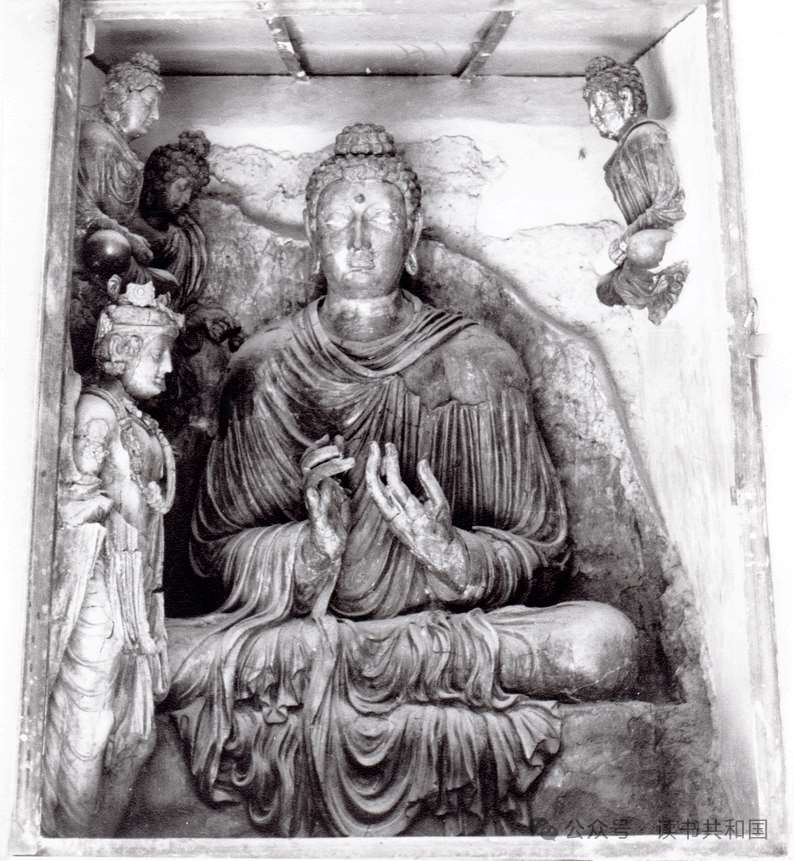
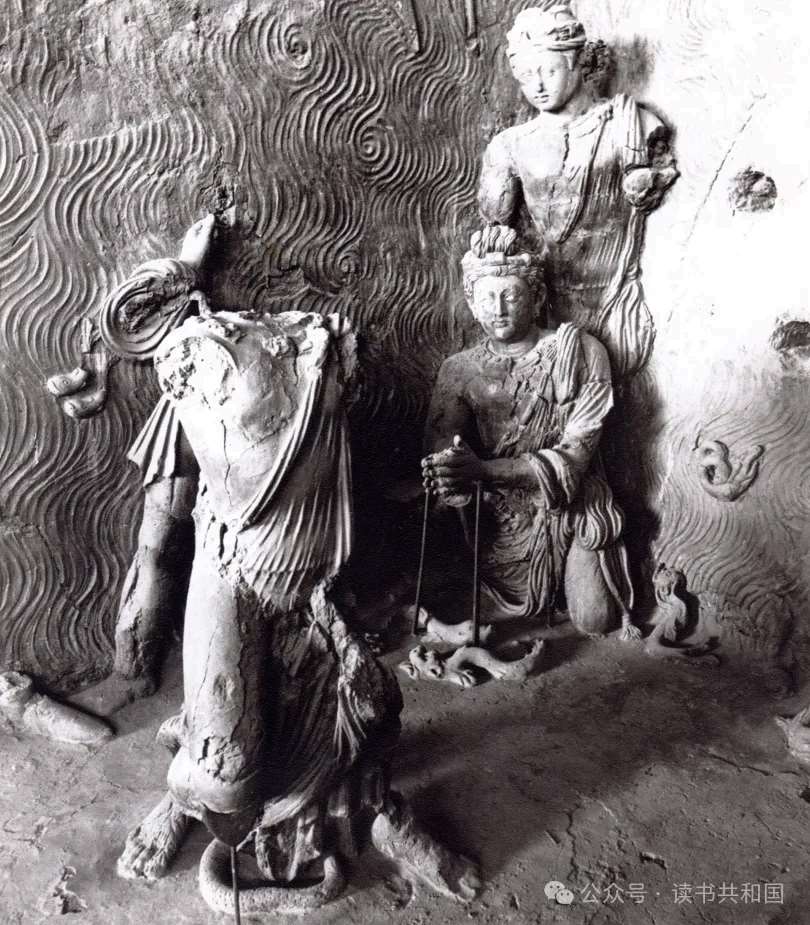
The cave art and sculptural mastery of Hadda reach their peak in Cave No. 13, also called the "Dragon King Cave" (Niche of the Nāga).
This cave was carved in the second half of the 2nd century, but its sculptures date from the late 3rd or early 4th century. It was severely damaged by fire: the vault collapsed, the internal wooden armature of the statues burned, leaving only a fragment approximately two meters high.
Among the thirteen to fourteen statues approximately 1.5 meters high, executed in the round or high relief, six are relatively well preserved: Buddhas, the Dragon King, a guardian deity (Vajrapāṇi), and some bodhisattvas.
The entire cave represents a vast aquatic universe: the walls and floor are covered with sinuous waves, and in the whirlpools appear lotus flowers, fish, and fantastic marine creatures.
The Dragon King occupies the central position of the scene. Remarkably: he is no longer against the wall, but slightly offset to the left, a major technical innovation. According to Professor Tarzi, the Buddha must have stood right in front of the Dragon King.
Beyond its iconographic importance, this cave represents an exceptional artistic achievement.
The boldness of the project lies in the use of life-size statues to fill a three-dimensional space, organized in multiple planes of depth. To our knowledge, such a sculptural staging, enveloping the viewer in a space entirely inhabited by figures, has no known equivalent in the same region and period.
There is no doubt that the Mogao Caves at Dunhuang later adopted this three-dimensional approach.
It can be stated that Bactrian art from Afghanistan exerted a profound influence throughout Central Asia. Sir Aurel Stein was among the first to note the similarities between plaster and stucco sculptures from Xinjiang and those from Hadda, a subject that still deserves in-depth research.
Let us turn our gaze once more to Bamiyan, particularly to the murals of its Buddhist caves.
Specialists have long emphasized the close ties between Bamiyan and the Miran style in Xinjiang.
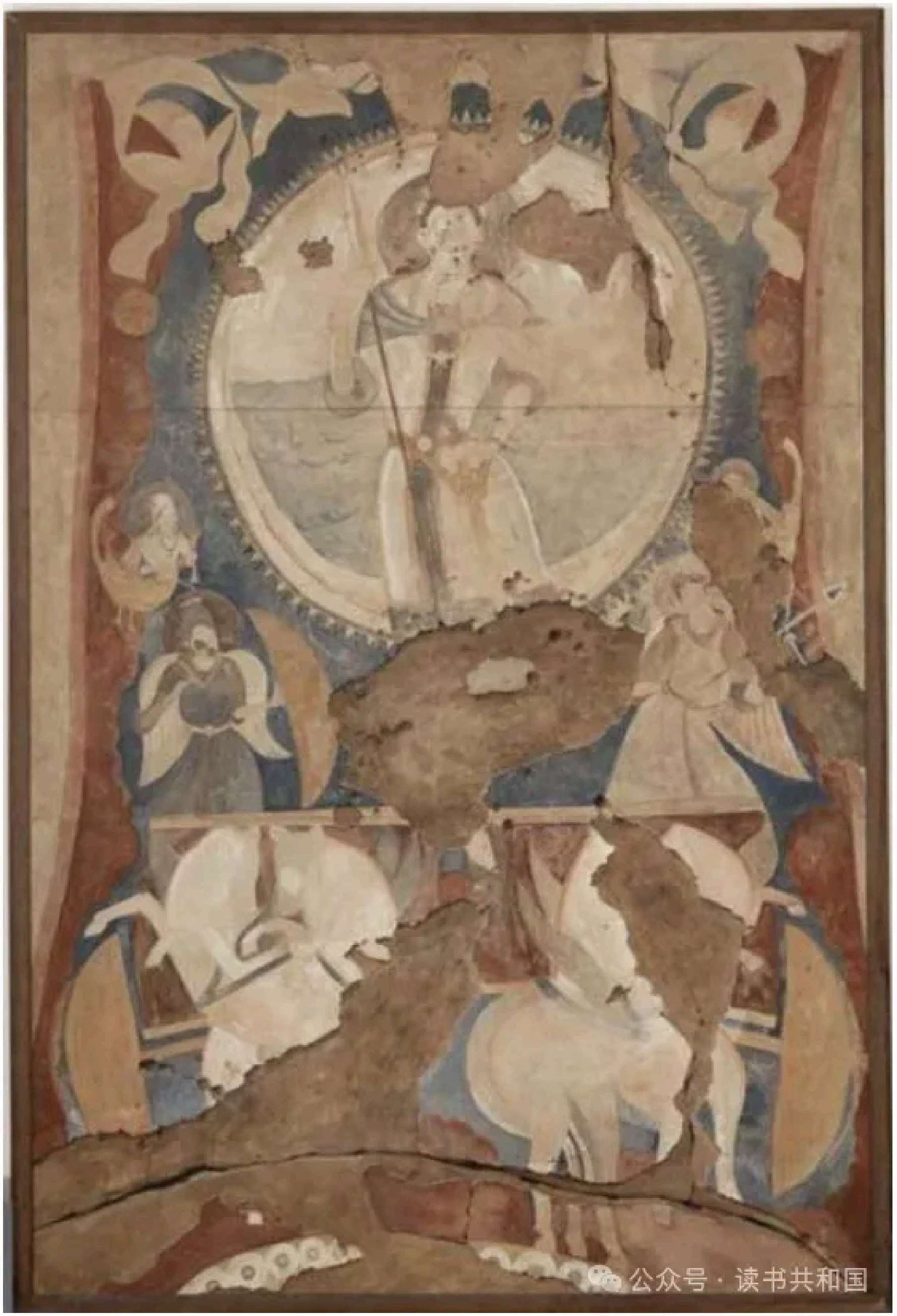
Although severely damaged, the paintings of the 38-meter Great Buddha niche remain remarkably fine.
Above the Buddha's head, at the top of the vault, is represented the sun god Surya, driving a chariot with four winged horses (quadriga). The red tones probably symbolize the flaming clouds of the sun.
Behind the deity, a serrated nimbus is surmounted, in its lower part, by a crescent moon, a detail that has led some to confuse this figure with the moon god Chandra, when it is actually just the edge of the mantle tied around the deity's neck.
The floating ribbons, rising upward, are typical of Sassanid art.
Surya wears a necklace with three pendants, a belt, a sword, and holds a long spear. He is surrounded by various celestial symbols. A remarkable detail: a winged Victory (nikè) wearing a Greek helmet, as well as the way the charioteer's feet are represented, directly recall the effigies of the Kushan king Kanishka.
On each side of the scene are donors represented as priests with bird bodies.
Despite this mixture of diverse inspirations, Surya's face retains distinctly Central Asian features.
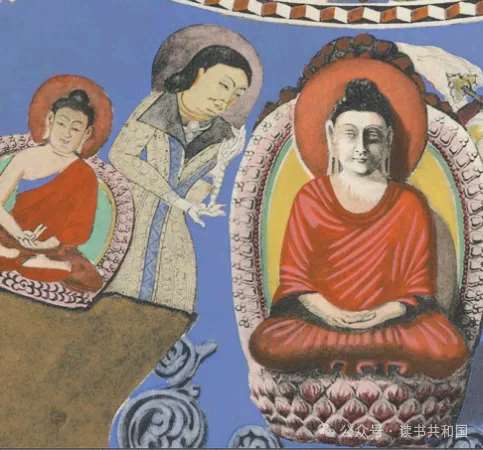
On both sides of the vault of the same sanctuary, a particularly interesting scene is represented.
A procession of royal family members follows a bearded monk holding a reliquary box: this is an illustration of the Buddhist ritual of mahā-dāna, the "ceremony of unreserved donation."
During this ceremony, the king "symbolically gives himself" to the monastery, then redeems himself by offering gold, silver, and treasures, a mechanism that clearly served to finance monastic institutions.
The king is represented with Sassanid features (curly beard).
The princess accompanying him wears Central Asian-style costume and a crown adorned with three lunar crescents; her features more readily evoke a Turkish or Central Asian type.
Thus we can distinguish characters belonging to two iconographic traditions: one Central Asian, the other Sassanid.
Based on these elements, as well as the study of costumes, crowns, and comparison with coins, Professor Tarzi dated these paintings to the period immediately preceding the advent of Islam.
Cave G deserves particular attention: it yielded a large number of precious objects, stupa bases, manuscripts, sculptures, as well as a wooden statue from Sui-Tang dynasty China. Murals were also discovered there.
According to Professor Tarzi's analyses, one of them represents a donor from the Western Turks, dressed in a long Central Asian tunic with double lapels.
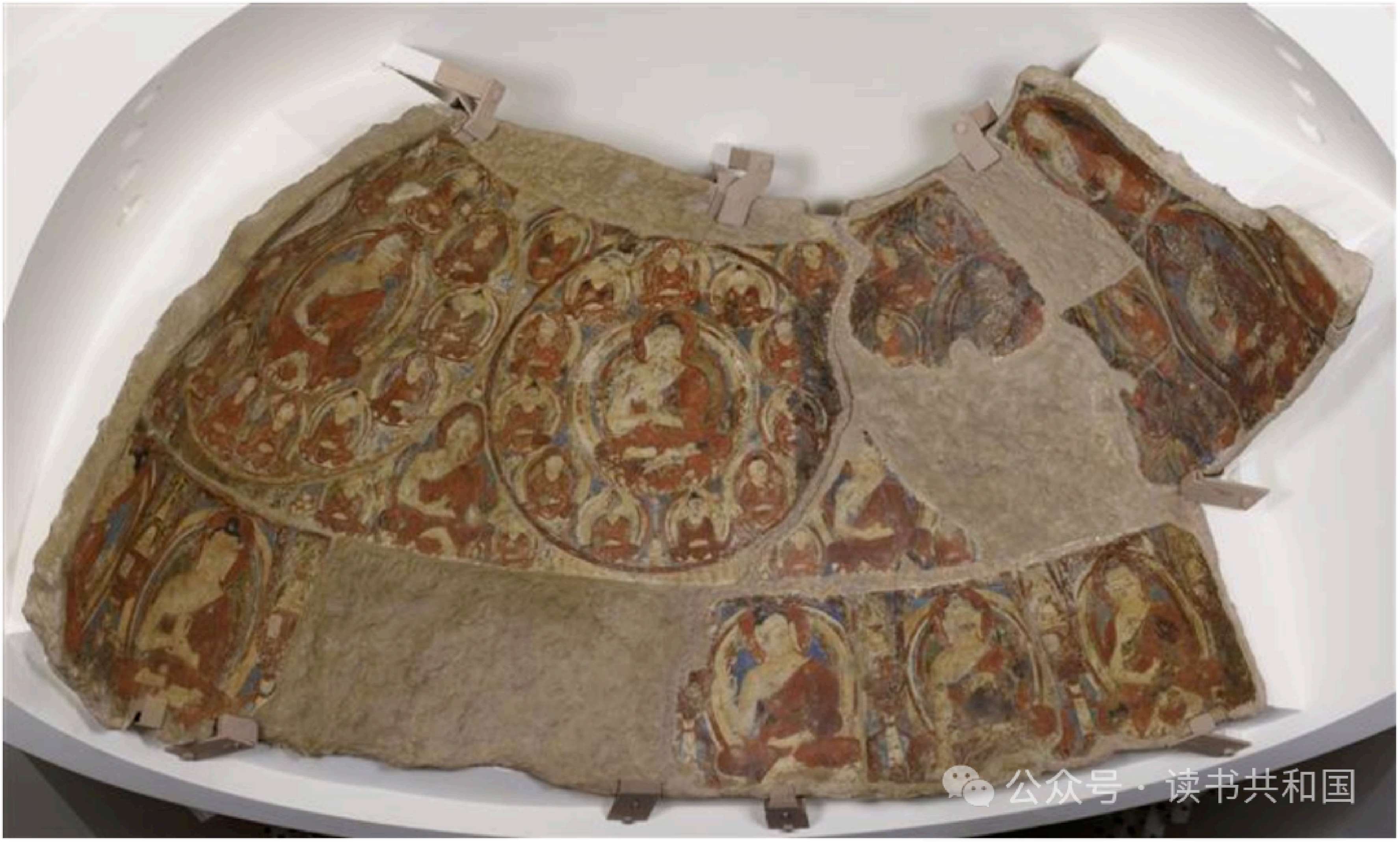
On the vault, the seated Buddha and "thousand buddhas" motifs strongly recall those of Dunhuang.
Notably, the standing statue to the right of the main Buddha also represents a donor in Turkish costume; on the left, a celestial deity (or perhaps Vajrapāṇi), as well as a bodhisattva face fragment retaining its polychromy, clearly demonstrate East Asian influence.
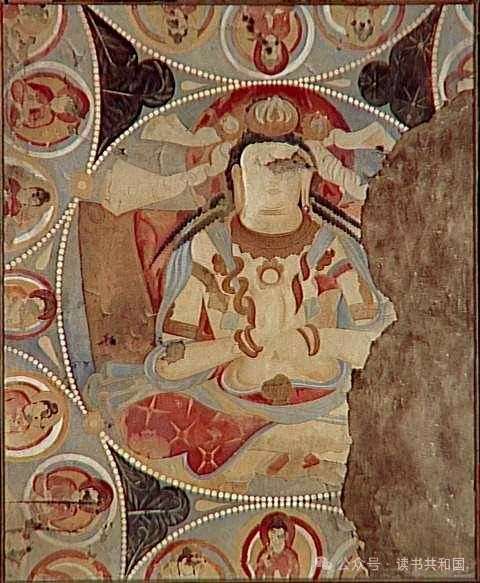
The K cave group also preserves several important murals, and cave K3 is the most remarkable example.
It contains a polychrome painting representing a bodhisattva dressed in a rich garment adorned with spear-shaped motifs, wearing a flat necklace with round pendants, as well as a crown composed of three crescents and three discs, embellished with floating ribbons.
Professor Tarzi particularly emphasizes the exceptional color harmony of the garment, dominated by red.
The figure could represent Maitreya, holding the water flask (kamaṇḍalu); its style clearly shows the mark of Central Asian art.
Furthermore, the vault of K3 is decorated with lotus motifs, symbolizing the "thousand Buddhas" of meditation: a type of decoration that will directly influence the series of "thousand Buddha caves" from Miran to the Mogao Caves.
I will now present the archaeological work conducted by Professor Tarzi at Bamiyan between 2002 and 2012.
In corridor A9, located immediately east of stupa No. 1 in the valley, a large quantity of sculptural fragments was discovered: about twenty heads, a Buddha statue in meditation in lotus position (padmāsana), as well as various fragments of decorative figures throwing flower petals or whose garments seemed to float.
Along the west wall, a Buddha statue was identified (preserved up to the knees). These discoveries provide better understanding of the spatial organization of the entire corridor.
In the northern part of this same corridor, a celestial bust (deva) and other sculptures fallen from the upper part and deformed by collapse were also found.
In the stupa base against the west wall, five Kushano-Sassanid coins were discovered, from five workshops of the Kidarite period (Kidar).
Based on these elements, Professor Tarzi dates this corridor between the 3rd and 5th centuries.
In parallel, similar representations of celestial deities are observed in the upper parts of walls and vaults at the Tumshuq site in Xinjiang.
When discussing the remains of Bamiyan, it is impossible to ignore the Kakrak valley.
It connects perpendicularly to the main Bamiyan valley, along a north-south axis.
On its cliff once stood an 8.5-meter Buddha statue, standing on a lotus. It was excavated and restored by Professor Tarzi between 1977 and 1978.
The study of the elbow angles allowed him to establish that the Buddha's right hand must have been in vitarka-mudrā (teaching gesture), and the left in varada-mudrā (gift gesture). The hairstyle suggests a later dating.
Kakrak is especially famous for the "Hunter King" painting.
The composition, dominated by ochre-red tones, shows a king holding a bow, in a relaxed attitude, an arrow resting against his knee.
He wears a circular nimbus, a crown with three lunar crescents, and bodhisattva ornaments, representing a royal figure in a moment of relaxation.
He sits on a trapezoidal throne, perhaps covered with a carpet, while his feet rest on a lotus.
The painting also shows dogs and geese, illustrating the scene of a royal hunting return.
Under the archway, the hunter king is represented at the same visual height as the surrounding Buddhas, sometimes even taller than them.
The arch shoulders are decorated with various types of stupas, constituting a precious repertoire for 7th-century stupa typology.
Other painting fragments from Kakrak are now preserved in the Guimet Museum.
The vaults of the caves at Bamiyan and its surroundings present a great variety of architectural structures.
The most widespread is the nested coffered ceiling (Laternendecke), a model imitating wooden frame architecture.
Remarkably: this type of vault is also found throughout Xinjiang, at Dunhuang, and in the Yungang region.
Let us now turn to sculptural technique in Afghanistan.
Clay and stucco statuary, resting on a limestone or plite base, constitutes a know-how transmitted and perfected by Greeks settled in Hellenistic Bactria (of which the city of Aï Khanoum is emblematic).
The first Kushan rulers inherited this technique and developed an artistic tradition of exceptional level, reaching its peak at Hadda.
In the post-Kushan era, this technique spread to many regions; the traditions of Hadda and Bamiyan thus show very strong kinship.
Between these two neighboring schools, the Kabul-Kapisha school occupies an intermediate position, its works revealing evident affinities with both traditions.
Placing this technique in a broader context, one observes that excavations at Gandharan sites in Pakistan frequently mention molded sculptures.
And in Central Asian China, from Tumshuq to Dunhuang, the spread of these techniques is clearly attested.
The great artistic tradition of Bamiyan preserved Western elements throughout its evolution, until significant changes appeared during the Turco-Hephthalite period (6th-9th century).
It can also be noted that at Bamiyan, Gandharan influences from Hadda and elements from Central Asian China meet and blend subtly.
The study of clay sculptures discovered in corridor A9 of the eastern monastery, particularly the Buddha heads and statues or deities, which represent perfect examples of Hadda art, shows that these works influenced Chinese Xinjiang art while also receiving contributions from it.
This reveals undeniable affinities between these great artistic traditions and underscores the essential role of Bamiyan and Hadda in the spread of Buddhism.
To date, comparative studies on Bamiyan art (both sculpture and painting) and Central Asian Chinese art remain insufficient.
This field offers vast research potential.
The complexity of artistic and religious exchanges between these Central Asian regions remains largely to be explored.
We are fully aware of the extreme fragility and capital importance of these Afghan historical witnesses: they hold essential keys to understanding many historical questions.



Author's Note:
Becoming a field archaeologist is, for me, one of the most fascinating things there is; and Dr. Vanleene is the first female archaeologist I have met.
Beyond the prestigious aura of her profession, these five days spent together revealed to me a lively, whole, and deeply endearing person: she adores colorful traditional clothing, loves spicy Sichuan cuisine, but as soon as she immerses herself in her work, she instantly shifts registers.
Before the lecture, she had already carefully prepared her text, and even in the car she was silently rehearsing.
And after a whole day of effort in the field, she never lets her lower back pain, a consequence of her career, slow anyone down.
The mountains and rivers are vast: I sincerely hope to have the chance to see this wonderful lady again in China next year. ~
Special Thanks:
Director Liu Qi, Mrs. Li Zhengrong, as well as volunteers Yu Wenhua and Wang Xiaodong and his spouse.