Chakhil-i Ghoundi
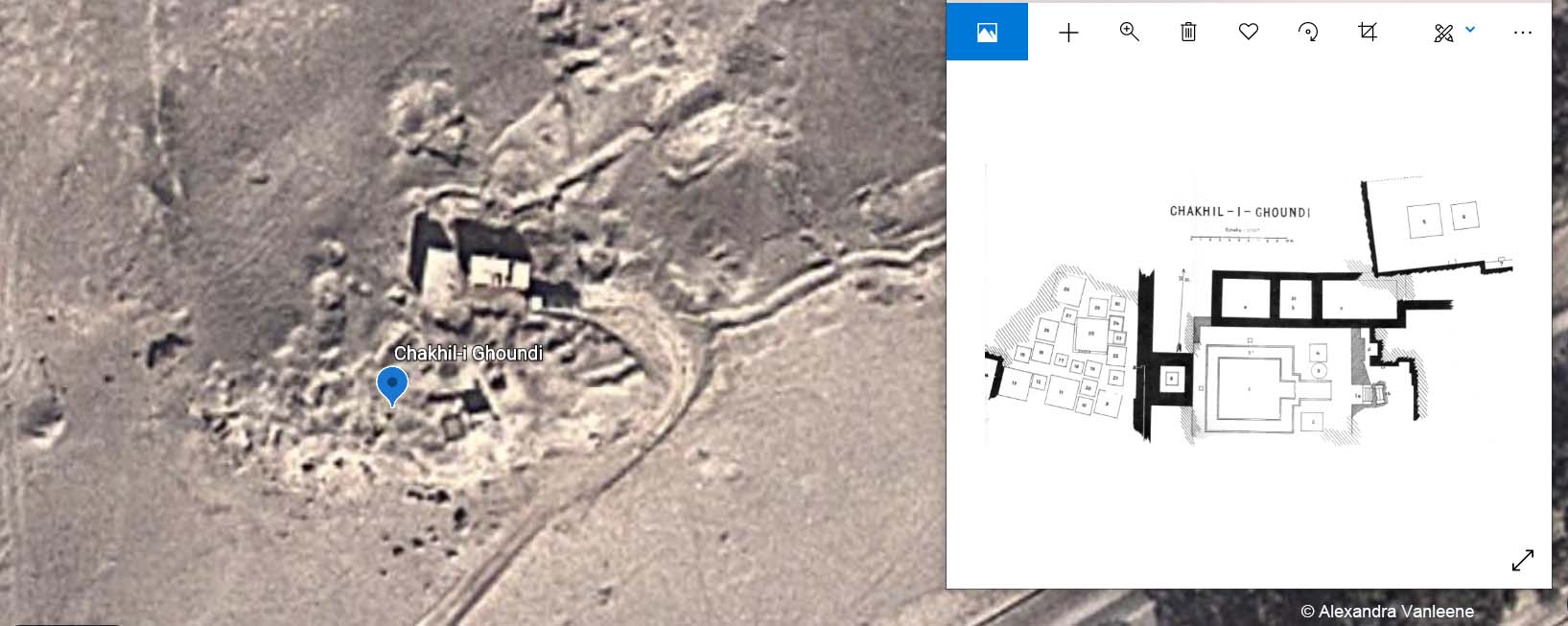
Perspective view of the plan of Chakhil-i Ghoundi drawn by J. Barthoux (Barthoux, 1927) and the current state of the site according to Google Earth satellite imagery.
Below stood small stūpa arranged on an artificial platform around one of them, slightly larger, whose orientation was close to that of the Great Stūpa. This stūpa C25 was probably the oldest, since it had been half-buried by the raising of the neighbouring buildings. This chaotic and disorganised arrangement left no room for the ritual circumambulation path of pradakṣiṇā.
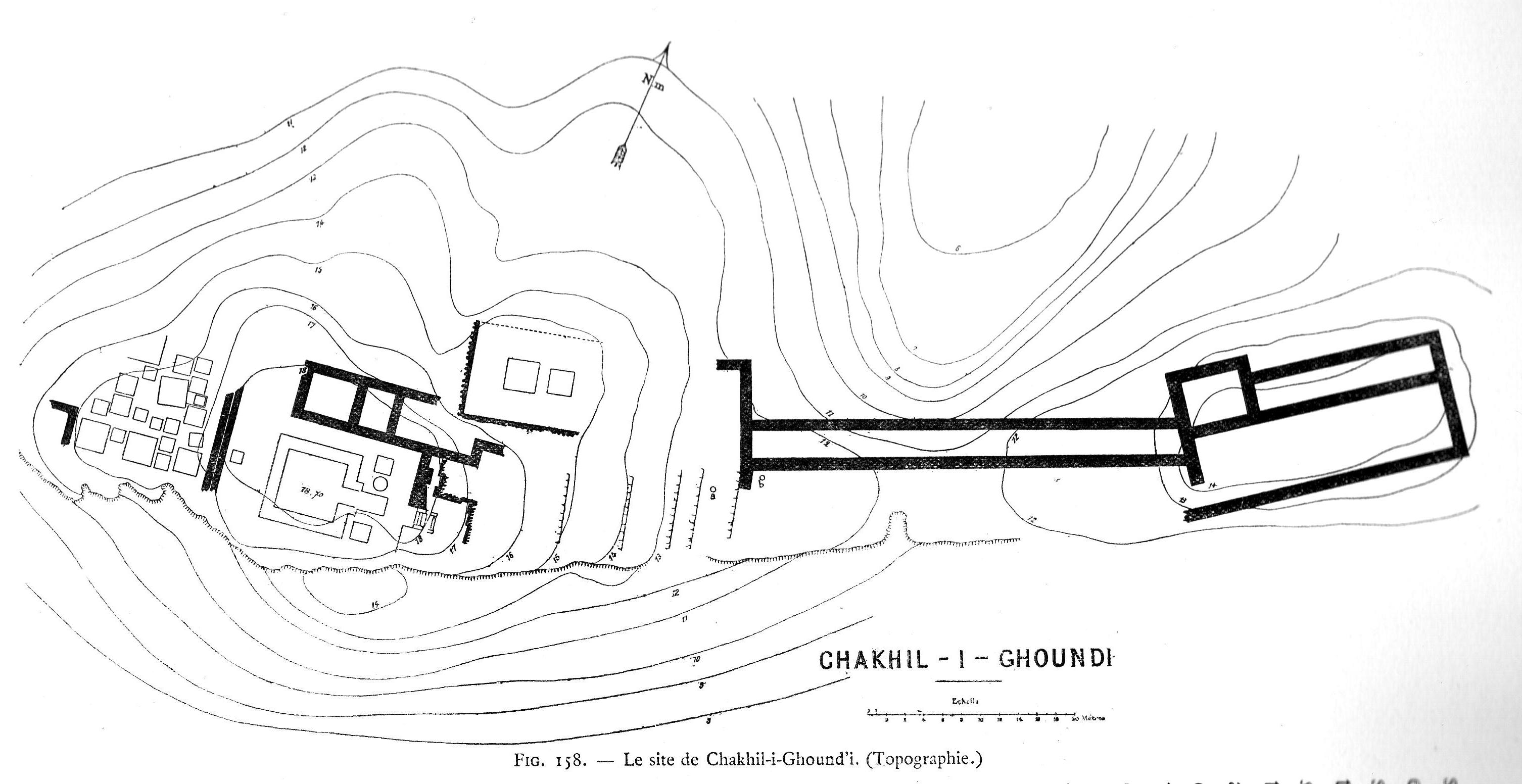
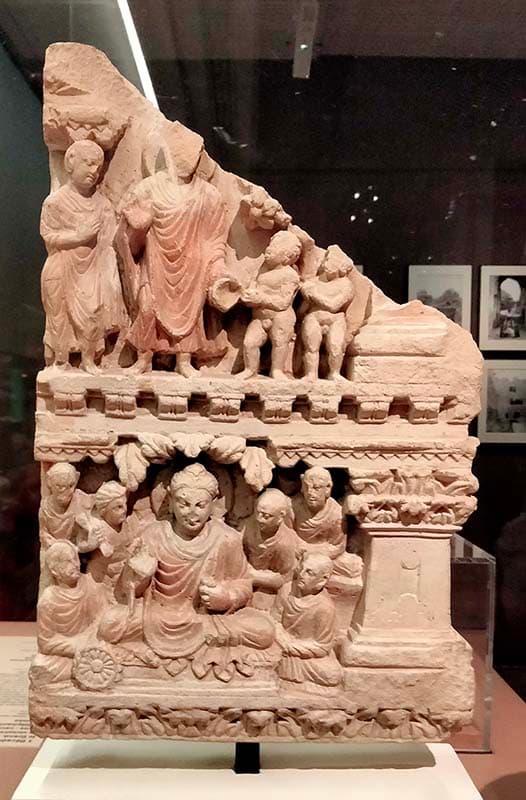
The third part was located to the north and consisted of a series of three rooms in enfilade. Beyond, at a lower level, a large chamber contained two stūpa. An earthen staircase, displaced by the deterioration of the platform, was situated opposite that of the main Stūpa. It gave access to an empty space that appeared to isolate the building. Previous excavations seemed to have damaged this forecourt, which had revealed traces of a stūpa. A step allowed one to leave this space. One descended eastward along a gentle slope divided into five steps. It was at the end of this slope that the entrance gate to the site must have stood, but nothing remained of it. Then began the dwellings of the saṃghārāma: a long corridor led to three rooms, two of which were elongated and parallel. A limestone relief depicting the Offering of a Handful of Dust (on the upper register) and the First Sermon at Benares (on the lower register) was discovered at Chakhil-i Ghoundi, but its exact location has been lost.
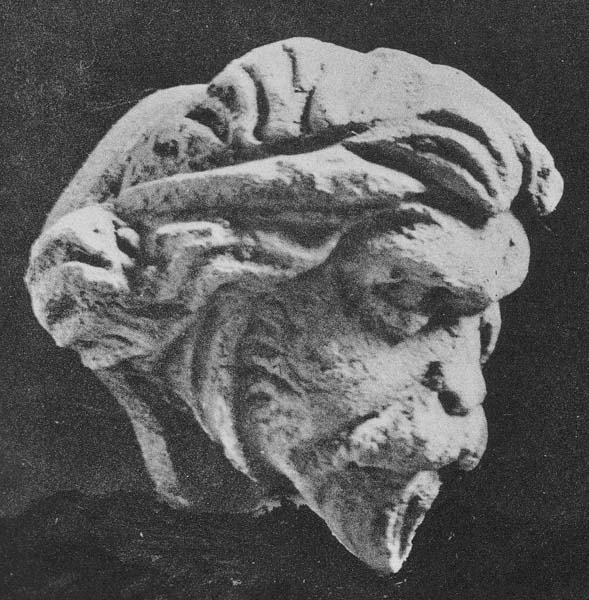
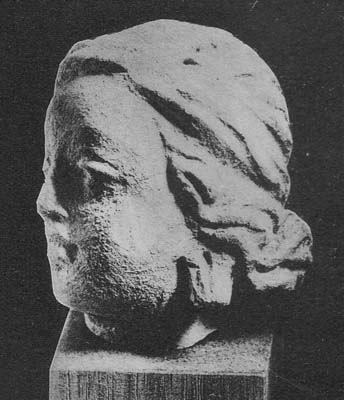
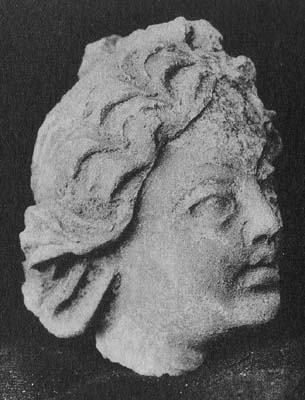
Explore the objects from this site in the database or on the interactive map.
Objects from this site
12 objects catalogued