Path 09 of 17 · 20 works
The Hellenistic echo
Aquiline noses, straight brow lines, deep-set gazes and expressive pathos: on many faces from Haḍḍa, the canons of Hellenistic art blend with Indian ones. This tour brings together twenty sculptures where this influence is most visible: Buddha profiles, Bodhisattvas with the grace of putti, deities, grimacing heads and demons with handsome, stern faces.
Locate these works on the excavation plan(4/20)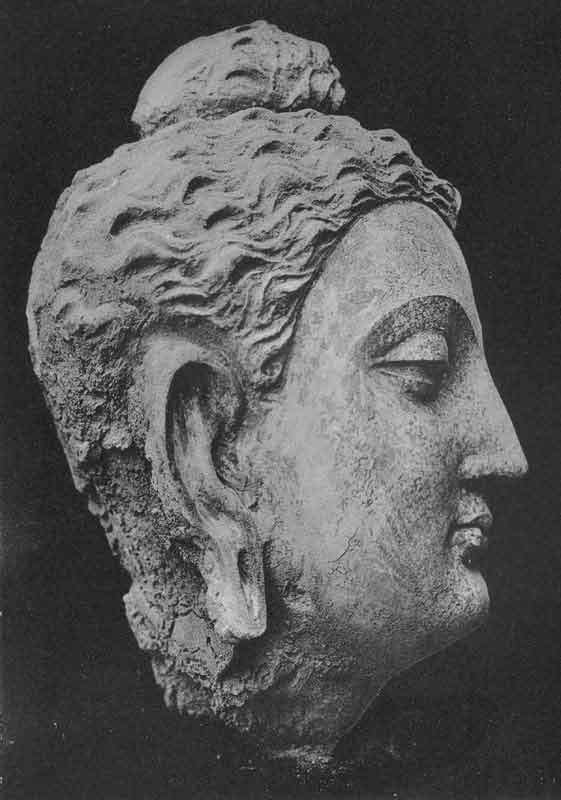
1 / 20
Head of Buddha
Tapa Kalān · Stucco
The face is of Hellenistic inspiration: straight brow line, aquiline nose and fine mouth.
2 / 20
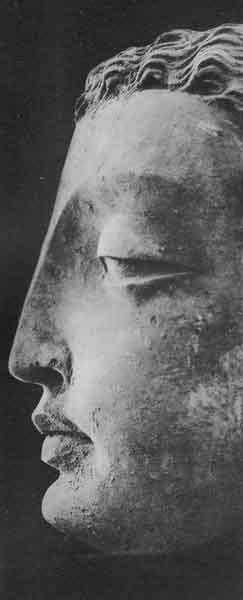
Head of Buddha
Tapa Kalān · Stucco
The features show strong Hellenistic influence: straight-cut eyes, a long aquiline nose and a jutting chin.
3 / 20
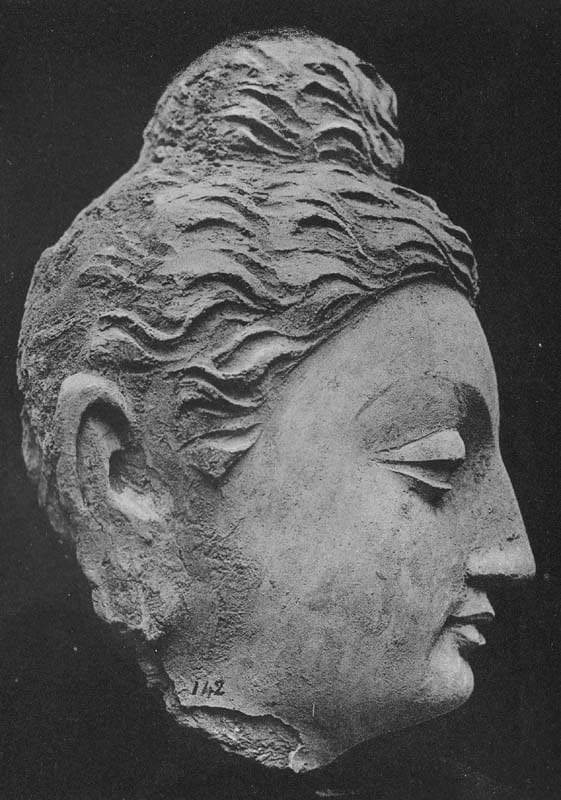
Head of Buddha
Tapa Kalān · Stucco
Classical features: marked brow, straight-cut eye, aquiline nose, fine mouth.
4 / 20
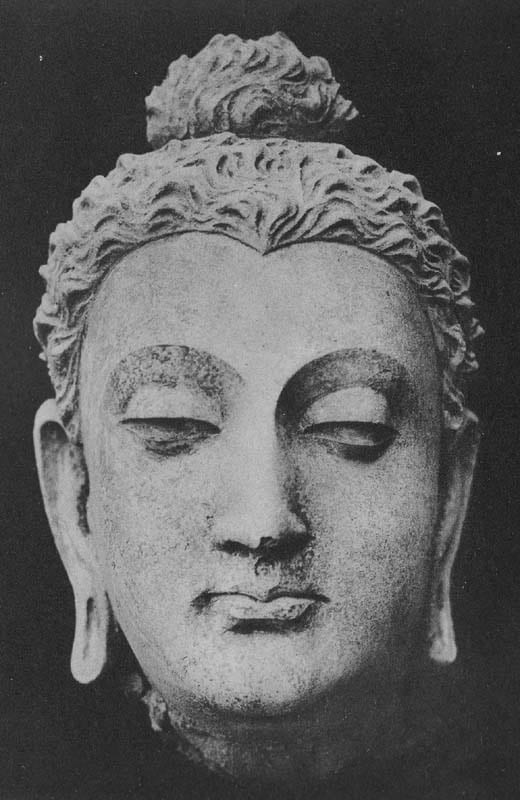
Head of Buddha
Tapa Kalān · Stucco
The fine oval face is Hellenising: straight brow, prominent eyes, high cheekbones.
5 / 20
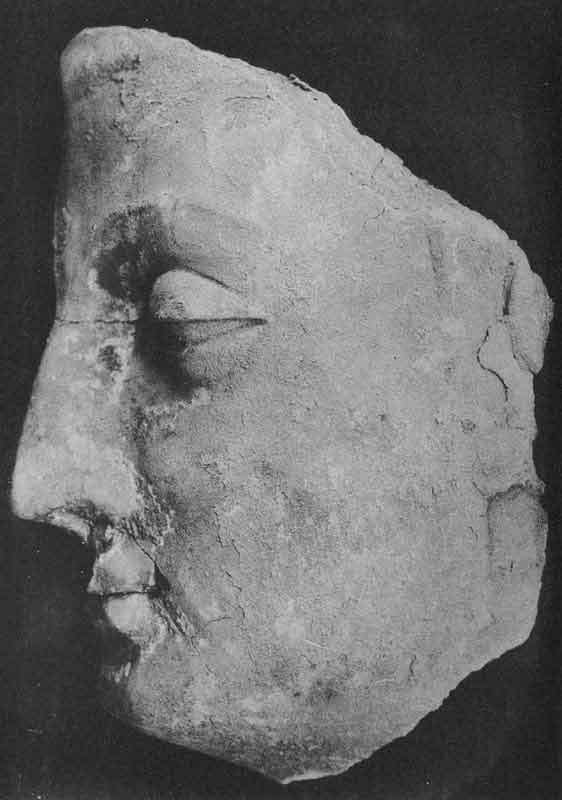
Head of Buddha
Tapa-i Kafarihā · Stucco
Only the mask of the face remains, with a Hellenising profile: swollen eyelids over half-closed eyes, high cheekbones.
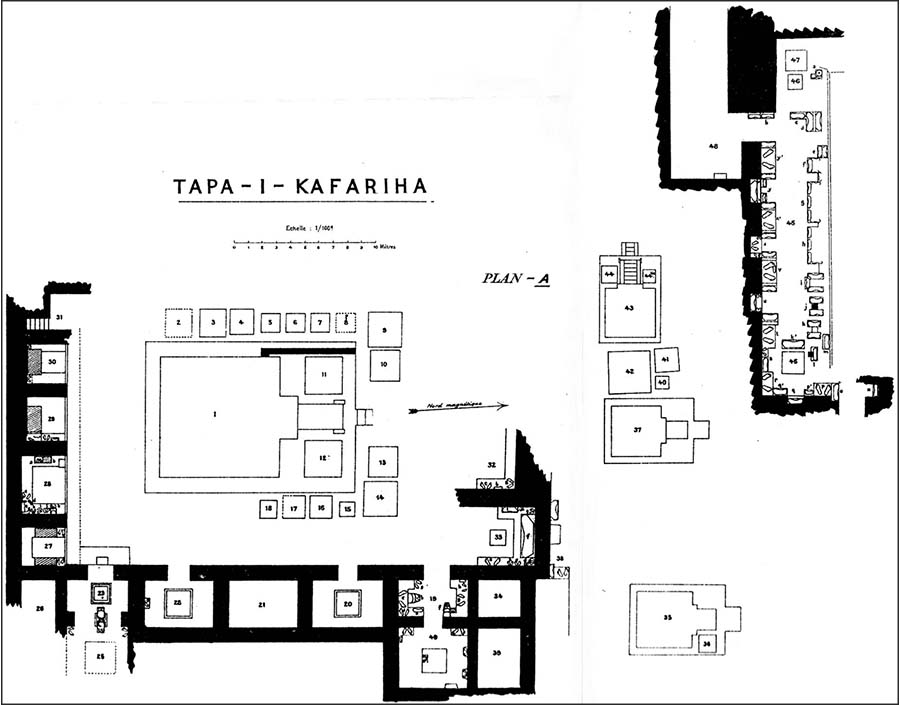
FindspotTapa-i Kafarihā 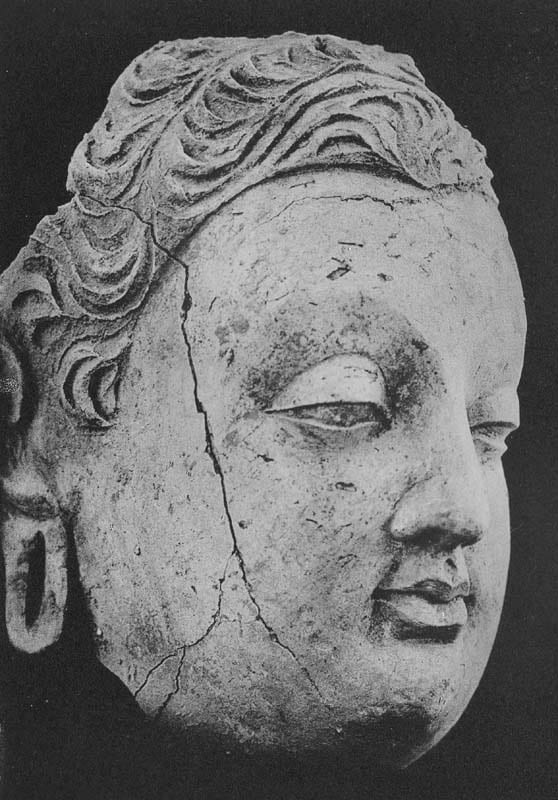
6 / 20
Head of Buddha
Tapa Kalān · Stucco
The synthesis in a single head: the type is Hellenistic in inspiration, the round, chubby face in the Indian manner.
7 / 20
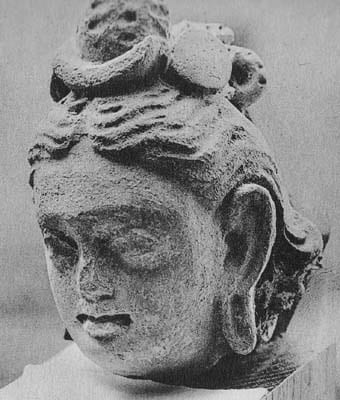
Head of Bodhisattva
Tapa-i Kafarihā · Stucco
The round, idealised face of this Bodhisattva with a Hellenising profile recalls that of certain putti.
FindspotTapa-i Kafarihā 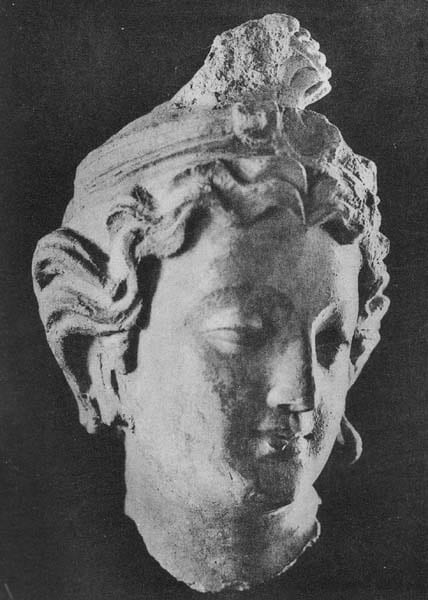
8 / 20
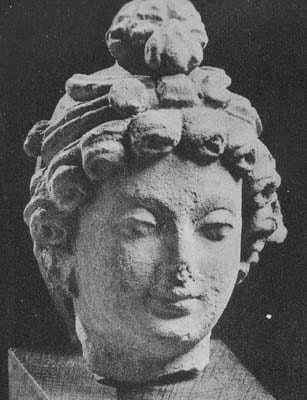
Head of Bodhisattva
Tapa-i Kafarihā · Stucco
Of an entirely feminine grace, he wears a diadem with a worked band topped by a fan-shaped palmette.
9 / 20
Head of Bodhisattva
Bāgh Gaï · Stucco
The hair is arranged in large curls rolled upon themselves, framing the forehead.
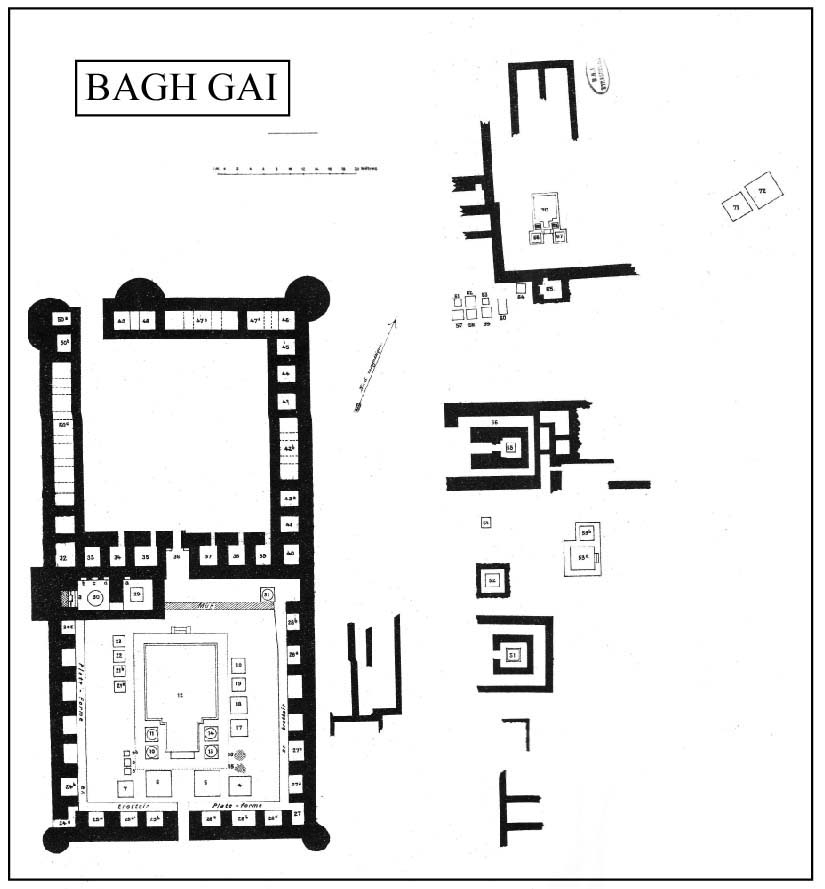
FindspotBāgh Gaï 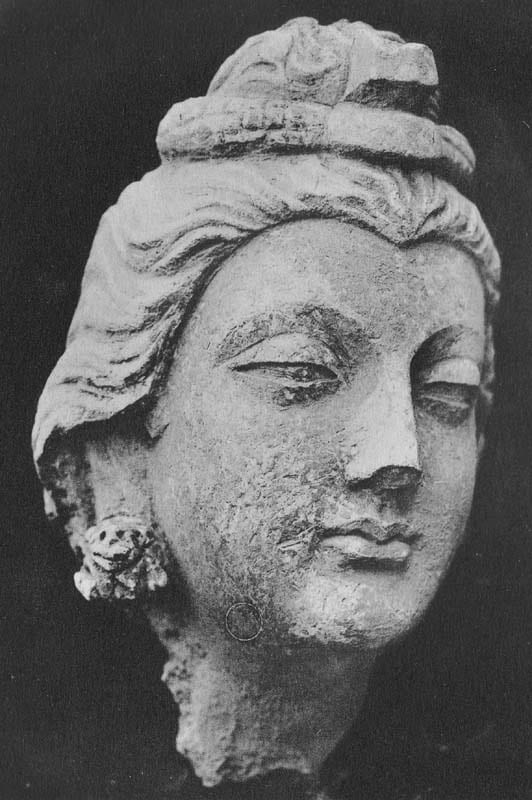
10 / 20
Head of Bodhisattva
Tapa Kalān · Stucco
The delicate, feminising face reveals Hellenistic influence; the posture suggests movement.
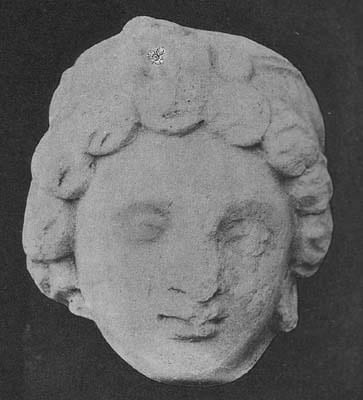
11 / 20
Head of Bodhisattva
Bāgh Gaï · Stucco
The Hellenising influence shows in the execution of the face, the expression of the gaze and the movement of the figure.
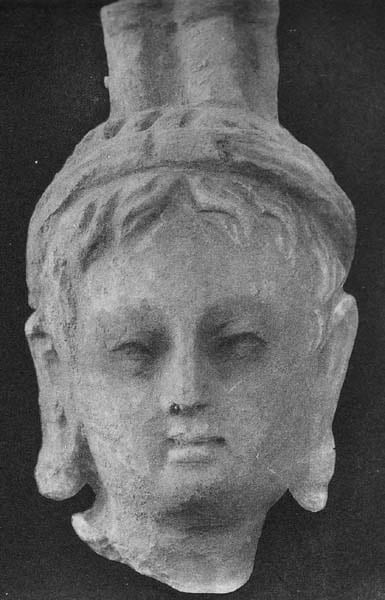
12 / 20
Head of goddess Hāritī topped by the City
Tapa Kalān · Stucco
The goddess Hāritī crowned by the City: an Indian iconography inspired by a Hellenistic model.
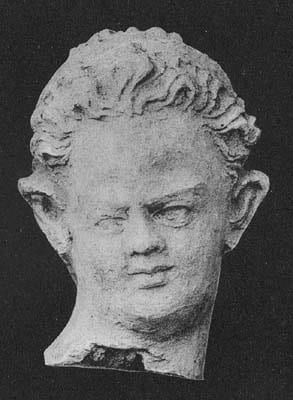
13 / 20
Head of Vajrapāṇi
Tapa Kalān · Stucco
Vajrapāṇi, with furrowed brows and a deep gaze, is inspired by Hellenistic works.
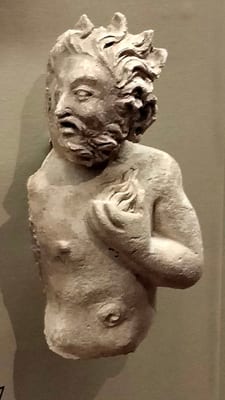
14 / 20
Torso of Demon
Tapa Kalān · Stucco
The expression is that of Hellenistic pathos: deep gaze, parted lips. The torso is restored on its bust at the Guimet museum.
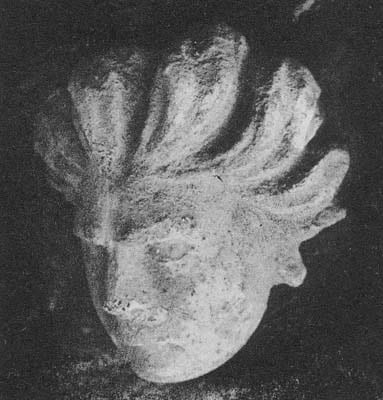
15 / 20
Head of Demon
Tapa Kalān · Stucco
Neither deformed nor grimacing: the demon's face is handsome and stern, brows furrowed, gaze hard.
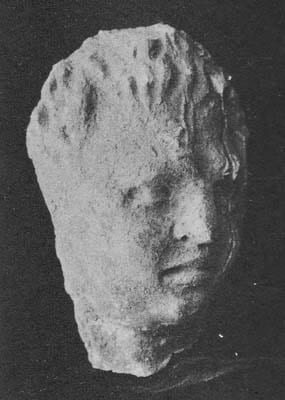
16 / 20
Grimacing head
Tapa Kalān · Stucco
This short-haired young man, Hellenistic in inspiration, expresses sadness or resignation.
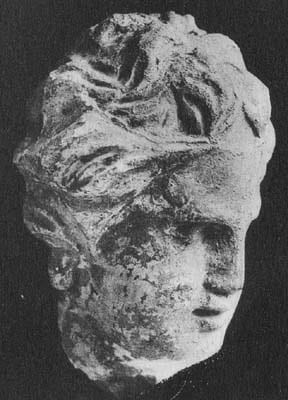
17 / 20
Tête grimaçante
Bāgh Gaï · Stucco
Grimacing beneath a great mass of shaggy hair: furrowed brows, grave eyes, parted lips.
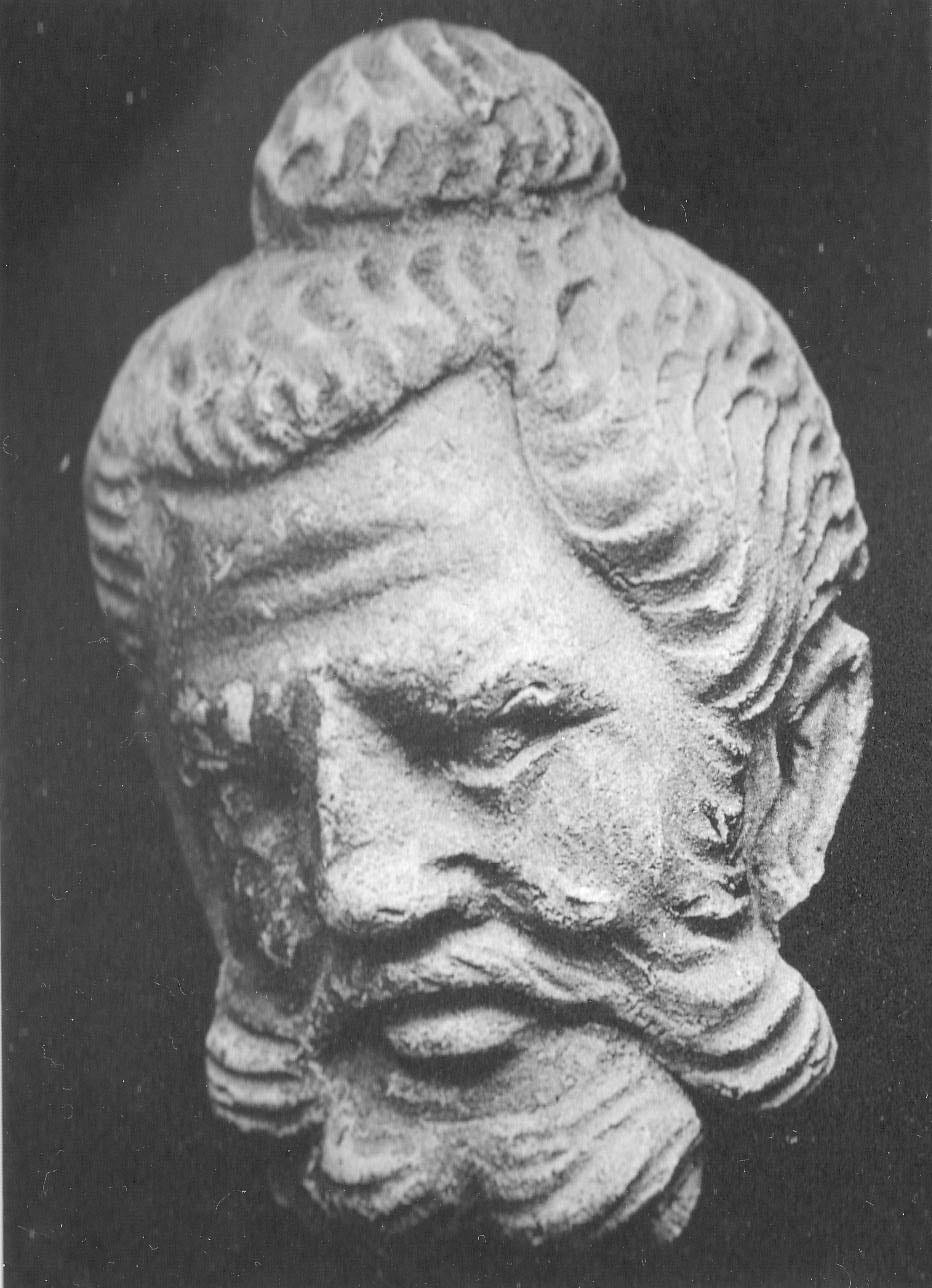
18 / 20
Head of Brahman
Bāgh Gaï · Stucco
This brahman's strongly Hellenised features recall certain classical works: wrinkled forehead, furrowed brows, sunken eyes.
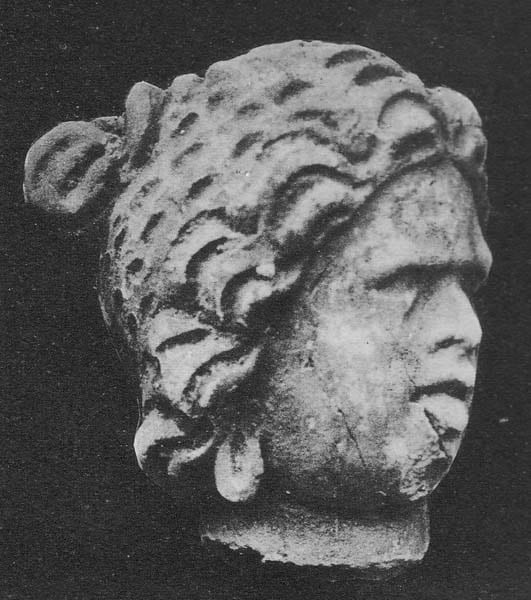
19 / 20
Head of brahman
Tapa-i Kafarihā · Stucco
A Hellenising type: knitted brow, deep gaze, parted lips beneath thick wavy locks.
FindspotTapa-i Kafarihā 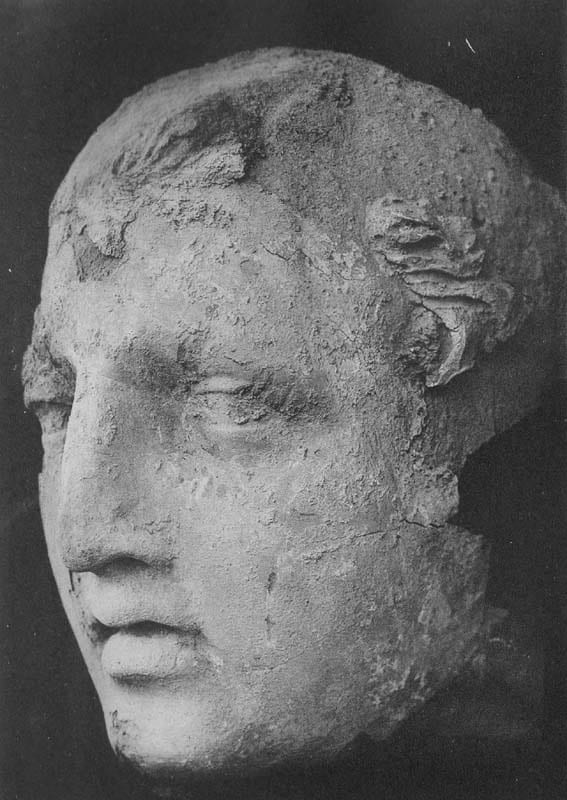
20 / 20
Head of a young donor
Tapa-i Kafarihā · Stucco
The Hellenising character is striking: deep gaze, curved nose, parted lips.
FindspotTapa-i Kafarihā